
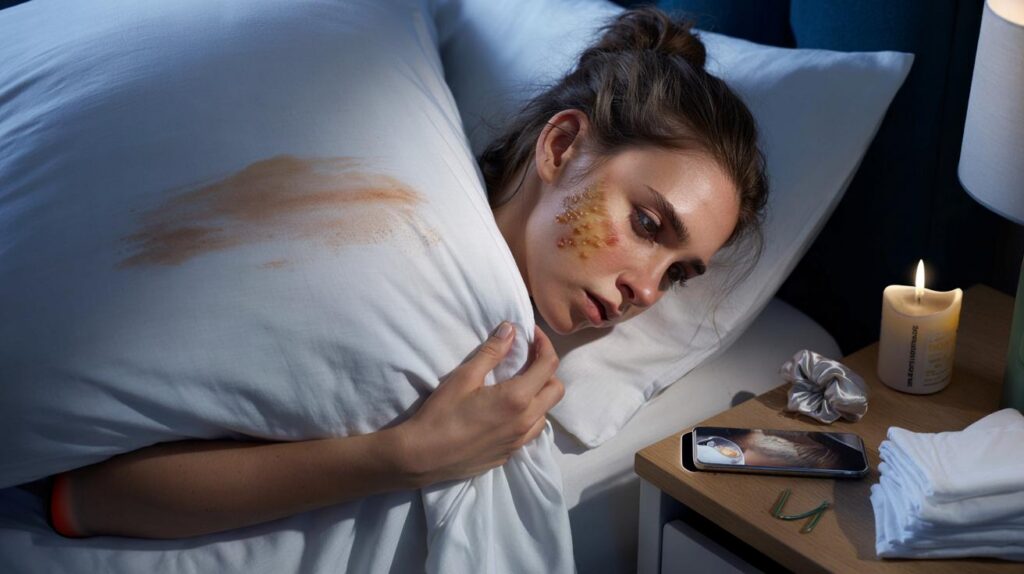
You go to bed with clean-ish sheets, a good moisturiser, maybe a candle still flickering on the chest of drawers. You wake up with a new constellation of spots along your cheek and jaw, as if your skin had a party while you slept. The culprit isn’t the big, dramatic thing you expect — it’s the quiet, nightly habit right under your nose.
The room is dark, phone glow fading, and your face nestles into the same soft corner of the pillow as always. A whisper of hair products, a trace of SPF you thought you’d rinsed off, the day’s oil and city dust pressed into fabric. We’ve all had that moment when you catch your reflection at 7 a.m. and a tender red bump is waving hello where none existed at midnight. You rub at it, blame hormones, and shrug. You’re closer than you think to the real reason. It’s hiding in plain sight.
The quiet culprit on your bed
Your pillowcase is not just cloth; it’s a nightly sponge for face oil, hair products, sweat, and airborne particles. Press your skin into that mix for six to eight hours and you’ve got friction, occlusion, and a bacteria buffet. **Your pillow collects more than dreams.** That’s why breakouts often cluster on the side you sleep on — cheek, jaw, sometimes even the temple where fringe rests. Small pattern, big clue.
When Anna, 29, a PR in London, started getting stubborn spots on her right cheek, she changed her cleanser twice and ditched dairy for a month. Nothing. Then she switched to a fresh pillowcase every other night and tied her hair up. Two weeks later, the map of angry specks faded. Informal swab tests often show week-old pillowcases rivaling grubby touchscreen levels. It’s not glamorous science, but it tracks in real life.
Here’s why it snowballs. Pores dislike being suffocated, and cotton fibres rubbing the same area can trigger micro-inflammation — the kind that feeds acne mechanica. Add transfer from leave-in conditioners, facial oils, and rich night creams that haven’t fully absorbed. Detergent fragrances and fabric softeners layer on potential irritants. Each is small on its own. Together, they load the dice against calm skin while you sleep.
Stop it tonight (yes, tonight)
Start with the fastest win: **Change your pillowcase tonight.** If laundry isn’t happening, flip to the clean side or wrap the pillow in a freshly laundered T‑shirt. Wash your face gently — micellar to lift the day, then a mild gel or cream cleanse to actually clean. Give skincare ten to fifteen minutes to settle before your head hits the pillow. Tie or clip hair up and away. If you can, sleep on your back to cut cheek friction.
Go fragrance-free with detergents and skip fabric softener for pillowcases. Hot wash once a week, swap the case every two to three nights, and keep pets off the pillow. Wipe your phone and don’t scroll with your cheek pressed to the screen in bed. Let’s be honest: nobody actually does that every single day. Aim for “mostly” and your skin will still thank you. Small rules you actually follow beat perfect routines that melt by Tuesday.
Think of this as housekeeping for your face, not a punishment. You’re creating a calm, clean landing pad your pores can live with.
“Treat a pillowcase like a T‑shirt you wear eight hours straight,” says consultant dermatologist Dr A. “You wouldn’t wear the same top all week and expect zero consequences.”
- Swap or flip your pillowcase tonight. Quick win, instant reset.
- Tie hair up. Oils and styling sprays shouldn’t meet your cheek.
- Rinse cleansers fully; pat dry with a face‑only towel.
- Go lighter at night if you’re oily. Layering six products invites transfer.
- Choose tightly woven cotton or silk; both reduce friction on skin.
The tiny habit that changes your mornings
You don’t need a twelve‑step routine to see a difference; you need one mindful swap and a bit of consistency. Map your breakouts by side for a week. If left cheek is spottier and you’re a left‑side sleeper, you’ve got your smoking gun. Share pillowcases with your partner or let the dog nap on your pillow at noon? That’s another variable. **Small swaps at bedtime add up.**
If your skin’s reactive, think less perfume all round — in sheets, in hair, in laundry. Rotate two or three pillowcases so a fresh one is always ready. Save heavier night creams for cooler months and apply a pea-sized retinoid on dry skin, not drenched. A calm pillow plus a simple routine lets your treatments work rather than fight fabric.
Some nights won’t go to plan. You’ll fall asleep on the sofa or forget the hair tie. That’s life. The win is knowing the lever you can pull when your face flares. Flip, swap, breathe, sleep. Tomorrow’s mirror looks different when your pillow stops arguing with your pores.
| Point clé | Détail | Intérêt pour le lecteur |
|---|---|---|
| Dirty pillowcase = friction + transfer | Oil, product and bacteria build up across nights | Explains side‑specific cheek and jaw breakouts |
| Quick fixes work tonight | Fresh case or clean T‑shirt, hair up, let skincare settle | Immediate action without buying anything new |
| Laundry and fabric choices matter | Fragrance‑free wash, skip softener, cotton or silk | Reduces irritation and helps calmer skin long term |
FAQ :
- Is my pillowcase really causing acne?Often it’s a co‑conspirator. Friction and transfer can tip pores over the edge, especially on the side you sleep on.
- How often should I change my pillowcase?Every two to three nights for acne‑prone skin. Weekly hot wash, and rotate spares so it’s easy.
- Which fabric is best?Tightly woven cotton or silk. Both reduce drag; silk also absorbs less product, which helps.
- Do silk pillowcases prevent wrinkles and acne?They won’t cure acne, but less friction can mean fewer irritated spots and creases on waking.
- What about hair oils and leave‑ins?Use sparingly and keep hair off your face at night. They travel onto fabric and then onto skin.



Wow, never thought my pillowcase was the villan. Swapped to a clean one and tied my hair up for a week — cheek bumps calmed down alot. Also ditched the fabric softner and it made a differnce. Thanks!
Isn’t acne mostly hormones and diet though? Any actual data comparing pillowcase changes vs. control? Sounds plausable but I’m skeptial.