
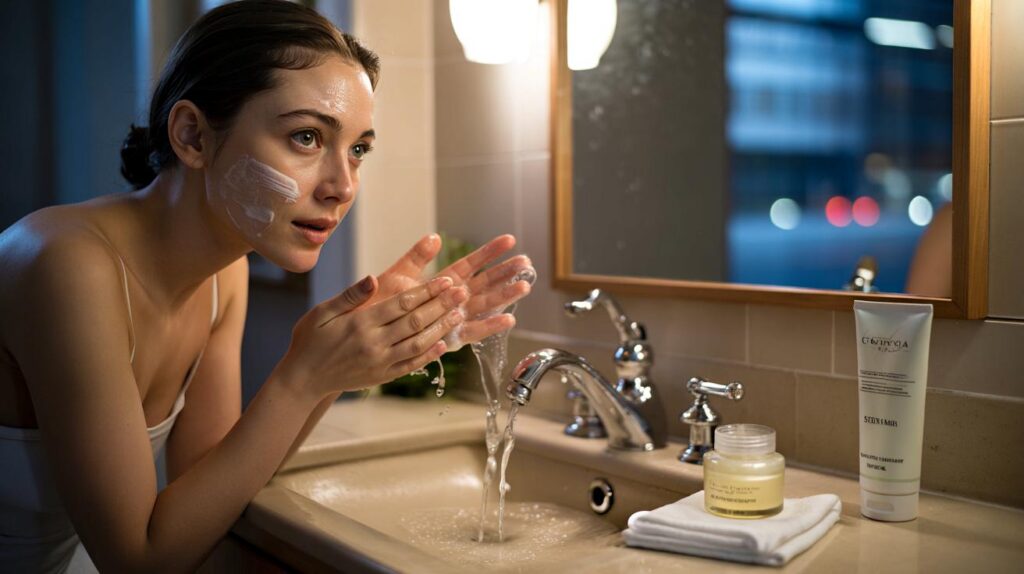
Across Britain, bathroom cabinets bulge with serums and night creams, yet one humble habit gets skipped when eyes are heavy and the kettle hums. Dermatologists call it the foundation of every routine, the quiet act that decides whether everything else works or not. It isn’t glamorous. It doesn’t photograph well. But it sets the stage for smooth, calm, reliably glowing skin by morning.
The bus lurches down the High Street and the city fog clings to your face like a film. By the time you turn the key in the door, you can feel the day sitting on your skin: SPF, sweat, train grit, a whisper of mascara. The sofa beckons. Netflix pings. You look at the sink and think: not tonight. A quick swipe and bed. In the morning, there’s a tiny cluster of bumps that wasn’t there before. The crucial step is the one no one sees.
The bedtime step we skip: the cleanse that actually counts
Most British women don’t fully cleanse at night. They wipe, splash, or trust a micellar pad to do a job that needs more time and touch. Air in our cities is dense with fine particles that nestle into pores and sit there all night. **The real anti-ageing move starts at the sink, not in the jar.** It’s the difference between active ingredients landing on bare skin or trying to push through SPF, sebum, makeup, and street-level grime.
Surveys over recent years suggest a big chunk of us fall asleep in makeup at least sometimes, often after work drinks or late trains. We’ve all had that moment where a warm bed beats a cold tap. One reader told me she “didn’t see the harm” in using a wipe and a spritz because her skin “looked fine”. It looked fine until it didn’t: dull tone by Wednesday, flaky patches by Friday, and a sting when the serum hit on Sunday.
Here’s what’s happening in the background. Daytime layers are designed to cling to skin, resist sweat, and survive the commute. Oil binds to oil, so SPF and makeup hold hands with sebum. A quick water splash won’t break that bond. A proper cleanse—ideally a gentle oil or balm followed by a mild gel or cream wash—lifts film, removes pollutants, and leaves the barrier intact. That clean surface lets night formulas sink evenly, which quietly reduces inflammation over time.
How to do it tonight: the two-step wash that pays you back
Start with an oil or balm the size of a 10p coin and warm it between dry palms. Massage over dry face for 60 slow seconds, including the sides of the nose and along the hairline, then add a little water to turn it milky and rinse with lukewarm water. Follow with a soft gel or cream cleanser for 30–60 seconds to sweep away leftovers. Move slowly and let the product do the heavy lifting.
Skip wipes if you can; they tend to smear rather than lift. Water that’s too hot can rile up redness, and scrubbing hard does the same. If you wear heavy eye makeup, soak it first with a damp cotton pad and your oil cleanser, then glide it off rather than rub. Let’s be honest: nobody really does that every day. Aim for most nights and notice how your skin starts to behave.
Think of this as brushing your face’s teeth. **This is not a luxury step; it’s maintenance.** If your skin is dry or sensitive, keep your second cleanser fragrance-free and short-contact. Oily or breakout-prone? Light, low-foam formulas with salicylic a few nights a week can help, then switch back to gentle. If you’re short on time, do one thorough cleanse and a lukewarm rinse, then pat, don’t rub.
“Cleansing at night is the difference between treating skin and treating product,” a London consultant dermatologist told me. “You’re not just removing the day. You’re setting tomorrow’s skin up to heal.”
- Wear SPF or makeup daily? Go for a balm or oil, then a mild gel or cream cleanser.
- Minimal makeup? One slow cleanse, then a soft, damp cloth press is plenty.
- Keep water lukewarm; hot water can stir up sensitivity and tightness.
- Pat skin dry and apply hydrator within a minute to trap that moist glow.
- Neck and hairline count; they collect sweat and spray too.
The quiet payoff: why your future face cares about tonight
Night after night, a proper cleanse lowers the background noise in your skin. Pores look smaller because they’re not packed. Tones even out because pigment isn’t being pushed by low-grade irritation. **Skin likes rhythm more than novelty.** When actives meet a clean, calm surface, the whole routine needs less effort to do more. There’s a confidence in waking to a face that feels smooth before you even touch it. Maybe you start using less concealer. Maybe your moisturiser finally works the way it promised. Share what helps you keep the habit—timer on your phone, balm you love the smell of, cloth by the tap—and notice how small nightly choices ripple through your week.
| Point clé | Détail | Intérêt pour le lecteur |
|---|---|---|
| Night-time cleansing is the non-negotiable | Lift SPF, makeup, and pollution with oil/balm, then a gentle wash | Better glow, fewer breakouts, calmer skin by morning |
| Keep it gentle and warm | Lukewarm water, soft formulas, no harsh scrubbing | Protects the barrier and reduces redness |
| Consistency beats intensity | Do it most nights, even if short and simple | Visible gains without faff or irritation |
FAQ :
- Is double cleansing only for people who wear heavy makeup?Not really. SPF and city air cling to skin too. If you wear light makeup, try a single thorough cleanse or a balm followed by a quick gentle wash.
- Won’t two cleansers strip my skin?Not if they’re mild and you keep water lukewarm. The first step dissolves, the second sweeps; both can be barrier-friendly.
- What if I’m exhausted and can’t face a full routine?Park a balm and a soft cloth by the sink. One slow cleanse, pat dry, moisturiser, bed. Done in two minutes.
- Can I just use micellar water on a cotton pad?It’s fine in a pinch, but it often leaves residue. Rinse after, or follow with a quick gel cleanse to finish the job.
- How long until I see a difference?Many notice smoother texture within a week. Over a month, tone looks brighter and products seem to work harder.



This finally explains why my serum stings on Sundays—turns out I was just wiping and hoping. Starting the oil + gel cleanse tonight; timer set, lukewarm only. Wish I’d learned this sooner, defintely not glamorous but sounds worth it.