
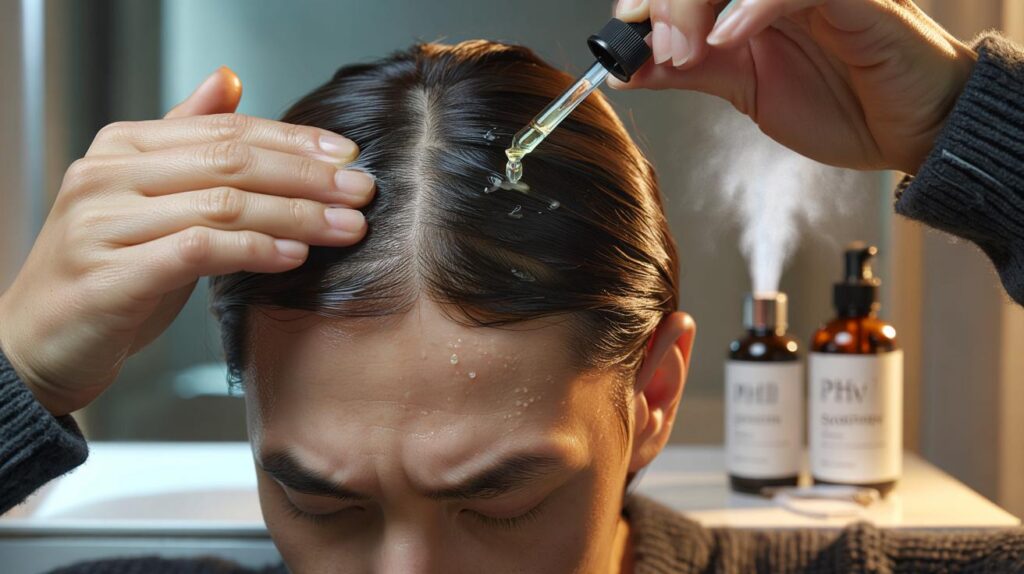
You’re wearing a dark jumper, the heating’s on, and there it is again: that tell-tale prickle under the hairline, the tiny snowfall on your shoulder. It’s not dramatic, just relentless. The itch nags on Zoom, on the train, in the queue for coffee. You change shampoos. You cut back on washing. You try a dab of oil. The scalp stays tight and cross. You stop touching it for five minutes and then forget, fingers right back at the nape. The relief lasts a heartbeat.
I clocked it on a busy bus to Oval, watching a woman scratch delicately behind her ear with the edge of a card. London air dry as toast. Beanies everywhere. The way she glanced down at her coat, brushed, then looked annoyed in that private, quiet way. Later that night in the bathroom mirror, I did the same thing without realising—caught between wanting to wash and wanting to leave well alone. A question wouldn’t leave me.
What if dryness isn’t about oil at all?
Why your scalp feels dry — and what it isn’t
Most “dry scalp” cases are actually a cranky skin barrier or a touch of dandruff rather than true dehydration. The difference shows up in feel: tightness that eases after washing suggests stripped lipids; flaking with itch that returns quickly points to a yeast-driven dandruff cycle. Real scalp dryness is rarer than you think, because the scalp has more glands than the face. It’s more like a mismanaged microclimate than a desert.
We’ve all had that moment when you shake your head and watch a small galaxy drift off your shoulder. That flurry doesn’t always mean you need heavy oil or to stop washing. Dandruff touches up to half of adults at some point, especially in colder months when indoor humidity slumps. Central heating pulls moisture from air and skin. The scalp overreacts, shedding more cells in clumps. Cue the itch, the embarrassment, the hat.
Under the hair, a few actors are at play: the barrier (a brick wall of cells and lipids), your natural oils, and a yeast called Malassezia that thrives on those oils. Strong surfactants and very hot water strip the barrier, leaving nerves exposed and skin snappy. That scratch brings fleeting relief while triggering more inflammation. Malassezia loves chaos; it feeds, the skin speeds up shedding, flakes stick in the hair, you scrub harder. Breaking that loop means calming irritation, lifting scales gently, and managing the yeast without nuking the ecosystem.
What actually works: routines, actives and small fixes
Try a gentle, repeatable routine for two weeks. Pre-wash, smooth a teaspoon of light oil (squalane or coconut) over the scalp and part lines. Leave 20–30 minutes. Shampoo with a mild, low-foam formula; massage with pads of fingers, not nails. Rinse lukewarm. If flakes are stubborn, rotate in an anti-dandruff shampoo with ketoconazole 1% or piroctone olamine twice weekly. Finish with a pH-balanced scalp tonic containing glycerin, urea (5–10%) or niacinamide. Let the scalp dry, then style. It’s boring. It works.
Easy traps: relying on dry shampoo day after day, blasting with hot water, or marinating the scalp in heavy butters. Dry shampoo is a stop-gap; it doesn’t clean. Heavy oils can plug follicles and stir up folliculitis. Fragrance in leave-ins can sting when the barrier is already frayed. Be kind to the temperature of your shower and the pressure of your fingers. Let’s be honest: no one really does that every day. Start with every other wash and build from there.
Think of your scalp as face skin with thicker hair through it; what soothes your cheeks often helps your crown. Pre-wash oiling reduces surfactant bite. Salicylic acid (0.5–2%) loosens compacted scales; urea hydrates while softening. Menthol at low levels cools itch so you scratch less and heal faster. *You don’t have to choose between clean hair and comfortable skin.*
“Treat your scalp like skin you plan to keep. Clean enough, not stripped; nourished, not smothered; and a tad acidic, not squeaky.”
- Actives to look for: ketoconazole 1%, piroctone olamine, selenium sulfide, salicylic acid, urea 5–10%, glycerin, panthenol, niacinamide.
- When you see “sulphate-free”, still check for gentle surfactants (coco-betaine, isethionates). Mild beats harsh, not foam-free at any cost.
- Acid rinses work when diluted: think a splash of apple cider vinegar in a mug of water, not a neat pour.
- Tea tree oil can help at 5% in a shampoo base; patch test and avoid neat application.
- Where zinc pyrithione isn’t permitted, stick with ketoconazole or piroctone olamine for the anti-yeast job.
A gentler relationship with your scalp
Drier months ask for small lifestyle edits. A bedside humidifier can keep indoor air in the 40–50% zone where skin sighs with relief. Wash rhythm matters: too rarely and yeast parties; too often and the barrier sulks. Aim for every 2–3 days for straight to wavy hair, weekly for tight curls with a proper cleanse, and add a pre-wash oil if you’re heat-styling. Microfibre towels, lukewarm water, and a little patience with detangling calm the whole system.
If itch wakes you at night, reach for soothing rather than scratching. A leave-on with polidocanol or low-dose menthol distracts nerve endings long enough for inflamed spots to settle. If plaques are thick, a short course of keratolytic scalp mask (urea + salicylic acid) clears the path for actives. Stress links to flare-ups, so build your ritual into a wind-down: massage in the tonic slowly, breathe, lights low. It’s strangely satisfying.
There’s also a line where home care should hand over to a GP or a trichologist. Raw, bleeding patches, hair loss in circles, or thick silvery plaques point to psoriasis or severe seborrhoeic dermatitis. Anti-inflammatories or prescription antifungals change the picture fast. On diet, omega‑3s may nudge skin toward calm, but there’s no magical “hydrate your scalp with eight glasses of water” fix—it’s not a houseplant. If someone promises an overnight cure with a kitchen concoction, smile and go back to your steady little routine. Your future self will be grateful.
What shifts most is the way you listen to your scalp. Instead of shaming flakes or hiding under a hat, you start to observe patterns: the day after spin class, that meeting in overheated rooms, the week you switched shampoos. You tweak one lever at a time. A different brush. A cooler rinse. A tonic that doesn’t sting. Change feels modest, almost boring, yet itch quietens and the tightness relents. You notice how much of your day used to be bent around a scratch you didn’t talk about. And then the black jumper isn’t an enemy. It’s just a jumper.
| Key points | Details | Interest for reader |
|---|---|---|
| Dry scalp vs dandruff | Tightness suggests barrier issues; rapid flaking with itch points to Malassezia and needs antifungals | Stops guesswork and guides the right product choice |
| Build a two-week routine | Pre-wash oil, mild shampoo, targeted actives, pH-balanced tonic, lukewarm water | Clear steps that fit real life and reduce flare-ups |
| What to avoid | Daily dry shampoo, hot water, heavy occlusive oils, strong fragrance | Fewer setbacks, faster relief and better hair days |
FAQ :
- How do I tell dry scalp from dandruff?Tightness and fine powdery flakes lean dry barrier; oily roots with yellowish clumps and persistent itch lean dandruff. If scales are thick or silvery, speak to a GP.
- Will oil fix a dry scalp?Light pre-wash oiling protects during cleansing, but oil alone won’t calm yeast or rebuild the barrier. Pair it with gentle shampoo and leave‑on hydration (urea, glycerin).
- How often should I wash?Every 2–3 days suits most straight/wavy hair; weekly with a thorough cleanse works for tight curls. If dandruff is active, use an antifungal shampoo twice weekly for a few weeks.
- Can stress make my scalp itch?Stress skews immune responses and can ramp up oil changes, making flares more likely. Small rituals—massage, consistent routine—help nudge things back to calm.
- Are home remedies like vinegar safe?Diluted, yes: a splash in a mug of water as a rinse can help pH. Never use acids or essential oils neat on the scalp; patch test and stop if it stings or worsens.



Finally, a guide that treats the scalp like skin, not a grease trap. Bookmarked—trying the urea tonic tonight 🙂