
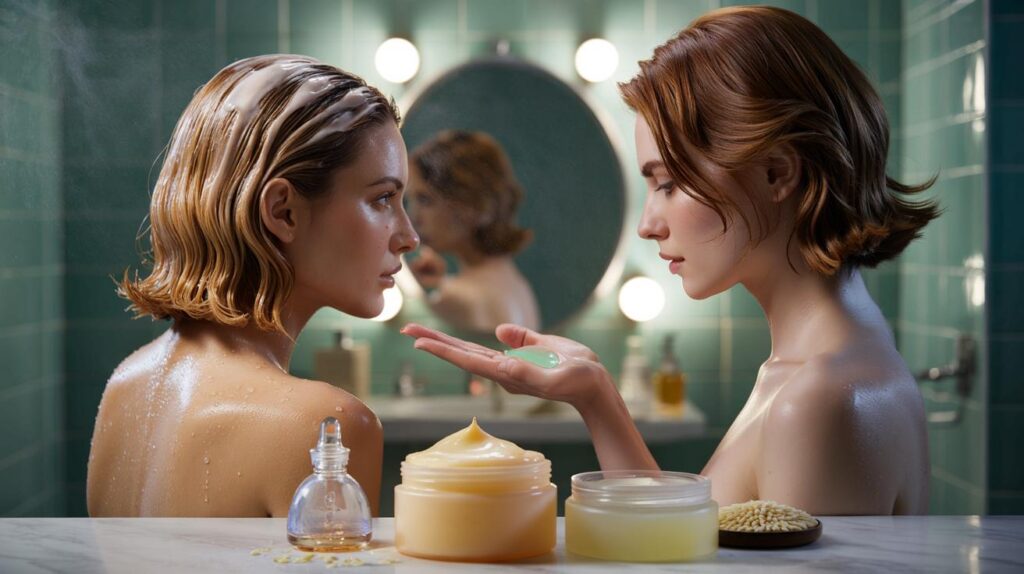
Your hair wants different things on different days. Bleached ends beg for water and strength; fine roots plead for lift without grease. The right mask can fix both in ten quiet minutes.
Sunday night, bathroom light humming, you twist open a jar that smells faintly of holidays. Steam curls up from the shower, you scoop a walnut-sized blob, and hope this week’s hair will feel softer, shinier, lighter. Your friend swears by a bond-builder, your mum by coconut oil, your feed by a dozen “must-haves” that all promise miracles. You want something real. We’ve all had that moment when the mirror asks tougher questions than your calendar. You spread the mask, count to 300, then rinse, waiting for that glazed, glossy slip. The trick isn’t time; it’s targeting.
What your hair actually needs from a mask
Hair masks aren’t one-size-fits-all, not even one-week-fits-all. Bleached hair often needs deep hydration plus structure; fine hair wants lightness and a little grip. Think of the strand like a rope: frayed fibres need patching, dry fibres need water, flat fibres need airy scaffolding. *Some hair just wants water; some hair wants structure.* A good mask reads the room. It wraps each fibre with what it’s missing, then steps back. That’s why the same tub can feel magic on one head and heavy on another.
Take Maya, who lifted her brunette to a soft champagne. The shine was bliss; the frizz, not so much. She tried thick butters that left her ends silky for a day, then gummy. When she switched to a bond-building mask with ceramides and a hit of glycerin, the change stuck. Her ends stopped snapping when she brushed. On workdays, she used a featherweight rice-protein mask before shampoo, and her crown finally kept a bend. One routine, two masks, two very different jobs.
Here’s the logic. Humectants like glycerin and hyaluronic acid pull moisture into parched hair, great for bleached or curly textures. Emollients such as argan oil, squalane and shea butter soften the cuticle so it lies flatter, which reads as shine. Proteins (look for “hydrolysed” on the label) create tiny patches that reduce mushiness. Bond builders support internal links stressed by bleach and heat. For fine hair, lightweight film-formers—rice protein, panthenol, polyquaterniums—add body without grease. Your best mask is the one that answers your hair’s loudest complaint.
How to choose and use the right mask
Start with a strand test. After washing, squeeze your hair until it’s damp, not dripping. Apply a 10p-sized amount mid-length to ends, comb through, and leave for 5–10 minutes. For bleached hair, alternate: one week a bond-builder, the next a hydration mask heavy on humectants and ceramides. Fine hair often loves a pre-shampoo mask—massage it in for five minutes, then wash and condition as normal. Rinse in lukewarm water and finish cool. That seals the deal without suffocating volume.
Common pitfalls do sneaky damage. Over-protein makes hair feel straw-like and stubborn; swap in a hydrating mask if your strands feel stiff. Heavy oils on fine hair can flatten it for days, so go light and skip the roots. Roots need clarity, not butter. Don’t pile on mask after mask when results stall—clarify once, reset, then rebuild. Life is busy and routines slip. Let’s be honest: nobody does that every single wash day. Pick a rhythm you’ll actually keep and let small wins compound.
Pros keep the advice simple.
“Match the mask to the week your hair has had,” says London colourist Amara Leigh. “Heat and bleach call for bonds and ceramides. Humidity and frizz call for moisture with a light seal. Fine hair? Treat before shampoo, not after.”
- Bleached or snapped ends: bond builders, ceramides, hydrolysed keratin.
- Fine or flat hair: rice protein, panthenol, weightless silicones; use as a pre-shampoo.
- Curly or coily: glycerin, aloe, shea; add steam or a shower cap to boost slip.
- Frizz in humidity: amino silicones, squalane; focus on mid-lengths to ends.
- Oily or flaky scalp: clay or salicylic acid masks on scalp, hydrating mask on ends.
- Colour fade: UV filters, antioxidant-rich masks; cool rinses help the cause.
- Sensitive scalps: fragrance-free, minimalist formulas with oat or niacinamide.
Make it a ritual that actually sticks
Think of masks like strength training for hair—tiny, regular reps. Choose one hero for your main need and one sidekick for the curveballs. Keep them in the shower where you can see them. On weeks with lots of heat styling, reach for bonds. On weeks of central heating or sea air, go hydrating. If your hair is fine, treat before shampoo and skip your roots. If curls live on your head, add steam or wrap in a warm towel, then finish with a cool rinse. Small, repeatable wins beat rare, heroic routines. Share what actually worked for you, not just the pretty jar. That’s how the right fix finds the next person who needs it.
| Point clé | Détail | Intérêt pour le lecteur |
|---|---|---|
| Match mask to need | Hydration for bleached/dry; bond repair for breakage; light film-formers for fine hair | Choose faster and skip the guesswork |
| Timing matters | Fine hair: pre-shampoo; damaged hair: weekly bonds + hydrating alternate; curls: add steam | Better results without heaviness or build-up |
| Ingredients to know | Glycerin, hyaluronic acid, ceramides, squalane, hydrolysed proteins, rice protein, panthenol | Shop smart and read labels with confidence |
FAQ :
- How often should I use a hair mask?Once a week suits most. Bleached or very dry hair can handle twice, while fine hair often thrives on a light pre-shampoo once weekly.
- Can a mask replace conditioner?Not quite. Conditioner detangles and closes the cuticle daily; a mask is a focused, weekly (or biweekly) treatment.
- Do bond-building masks work if I don’t bleach?Yes if you heat style or colour. They can reduce snapping and improve feel, but you still need hydration alongside.
- Are silicones bad for volume?Not inherently. Lightweight, water-soluble or volatile silicones can add slip and shine without collapsing roots—apply mid-lengths to ends.
- What boosts volume without dryness?Use a rice-protein or panthenol mask as a pre-shampoo, comb through, rinse, then rough-dry upside down. Skip heavy oils near the scalp.



Loved this breakdown—matching the mask to the week is genius. The rice protein pre-shampoo tip finally explains why my fine hair felt flat after oils. Bookmarked!
Bond-builders always feel like marketing to me. Is there any peer-reviewed evidence they actually rebuild anything, or just coat the hair? If you have sources, I’d love links.