
Everywhere you look, homes are bristling with tech—cameras, keypad locks, apps that chirp every time a fox blinks at 2 a.m. Yet break-ins persist, and sirens still wail into empty air. We’ve all had that moment when a distant alarm screeches and we do… nothing. The feature that actually makes intruders fade into the night is far cheaper, and it’s hiding in plain sight.
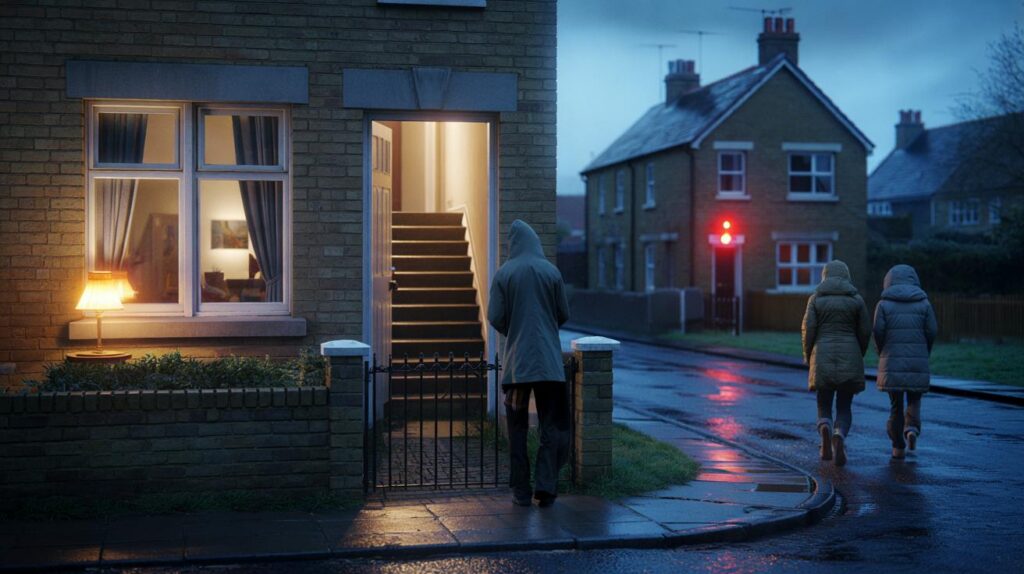
It’s a December dusk on a quiet British terrace, the kind where everyone knows the sound of everyone else’s boiler. A high-end alarm across the road begins to scream, and two dog walkers glance up, shrug, and carry on past the row of bins, their breath catching in the cold. A minute later, a different house flicks from hallway glow to living room flicker, then a kitchen light nudges on like someone’s popped in to boil a kettle, and you can almost hear the clink of a mug; a figure in a dark hoodie lingers by the gate, then melts away. It wasn’t the siren.
The cheap smart home feature that actually spooks burglars
Ask frontline police, reformed burglars in old studies, or any insurance investigator and you’ll hear a version of the same line: intruders avoid people more than hardware. **Burglars fear people more than technology.** Smart presence—randomised lights and subtle cues that make a home look lived in—changes their mental maths instantly.
It isn’t a disco. It’s little things: a lamp snapping on near dusk within a rough window, a soft TV-like shimmer in the front room for half an hour, a hallway light breathing awake briefly at 10.37pm as if someone came down for paracetamol. Multiple surveys of convicted burglars in the UK and US rank “someone at home” as the top deterrent, and the Office for National Statistics notes that many domestic burglaries happen when the property is unoccupied, with offenders in and out in minutes. The conclusion is blunt: look occupied, and most will pass.
Why it beats sirens comes down to psychology and noise fatigue. Alarms screech so often that neighbours treat them like car alarms in the 90s—background blare rather than a call to action, and offenders know emergency response isn’t instant while they work to a quick clock. Smart presence, especially when it’s varied and a bit messy, creates uncertainty, and uncertainty is risk, and risk is the one thing opportunists hate; they’ll drift to a darker, quieter target. **It’s the ambiguity that wins, not the decibels.**
How to set up smart “presence” for under £20
Start absurdly simple: a single smart plug connected to a cheap lamp near a window, and a bulb with warm, lived-in tone. Use the app’s Away or Random mode so the lamp clicks on after dusk within a shifting window, then off again before midnight, and pair a second period late evening now and then; if your platform supports it, add gentle variation day to day. This tiny tweak changed how my flat felt when I travelled.
Layer in one more zone, like a hallway or upstairs landing, and give it a different schedule so the pattern doesn’t look robotic. A TV simulator bulb or a low-watt LED behind a curtain can create that soft flicker that reads “person on the sofa”, while a smart speaker routine can play muted living room ambience for ten minutes just once in the evening. Link it all to geofencing so it activates when the last phone leaves the house and goes quiet the moment you’re back. Let’s be honest: nobody actually does that every day.
Err on the side of natural, not theatrical. Avoid leaving the same lamp blazing past 1am like a stage light, and skip those rigid on/off times that line up to the second because they scream automation to anyone scouting. Keep brightness modest, vary rooms, and match the rhythms of your street so your home feels like part of the flow rather than a lighthouse.
Make your home look occupied and unpredictable; burglars hate uncertainty.
- Use at least two zones: front-facing lamp + hallway/landing.
- Randomise within windows, not exact times.
- Keep light warm and dimmer than “task” lighting.
- Tie to geofencing, not manual taps you’ll forget.
- Change the pattern weekly or when your routine shifts.
The bigger picture: presence over paranoia
Smart presence is humble, which is why it works. It’s not trying to dominate the street or announce itself with stickers and sirens; it just slips into the background and whispers, “someone’s in.” That whisper beats a shout on most nights, because a shout invites a challenge and a whisper invites doubt. **Doubt wins more fights than noise ever will.**
| Key points | Details | Interest for reader |
|---|---|---|
| Presence beats alarms | Randomised light/activity cues deter more effectively than sirens | Cheaper, quieter, actually reduces risk |
| Start with one plug | £10–£20 smart plug + lamp near a window | Low-cost entry, immediate impact |
| Keep it natural | Vary rooms, times, and brightness within realistic windows | Looks lived-in, not automated |
FAQ :
- What’s the single cheapest setup that still works?A smart plug on a living-room lamp with Away/Random mode, plus dusk-based activation.
- Will bright exterior lights deter intruders more?They help visibility, but “someone home” cues inside tend to shift behaviour faster than floodlights alone.
- Do I still need an alarm?Yes, alarms aid insurance and post-event response; presence is about prevention, not replacement.
- How often should I change the routine?Weekly is fine, or let the app randomise within windows so it never repeats precisely.
- Won’t neighbours notice fake lights?If you keep it warm, subtle, and varied, it reads as normal life—exactly the point.



I tried this last winter and it defintely reduced that “empty house” feeling. The randomized windows were key. Love the reminder to keep it warm and subtle. Cheaper, calmer, smarter—thanks for cutting through the gadget hype.