
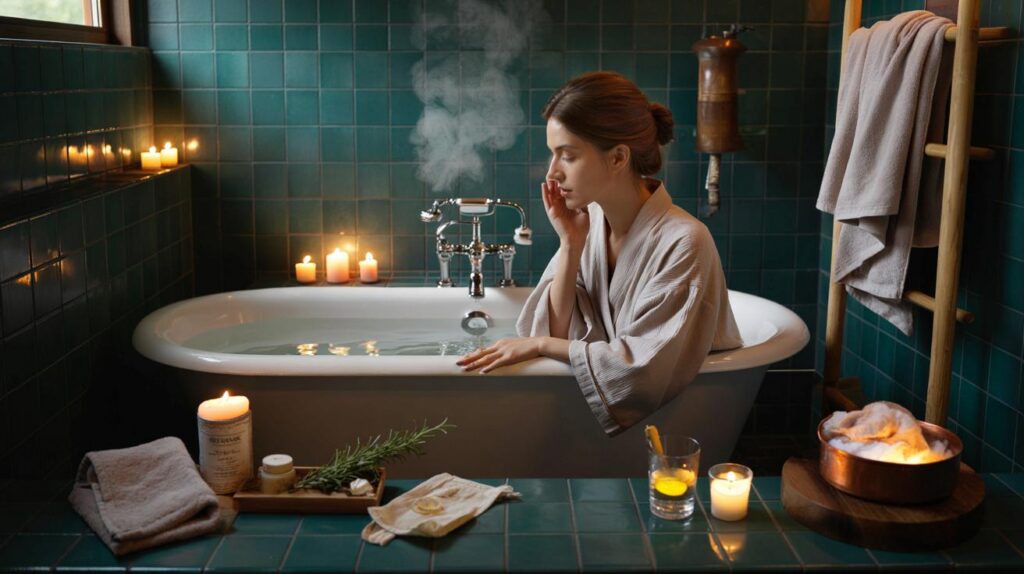
Cold plunges are trending, timers are ticking, and recovery has turned into a sport. Yet an older rhythm is humming underneath: the hot bath on the fourth day. Not day one, when everything aches and the mind fizzes. Day four, when the storm edges off and the deep work starts.
I first heard about the “fourth‑day bath” in a tiled bathhouse tucked behind a corner shop in North London. Steam was blooming off the ceiling, and two older women traded quiet gossip like it was currency. One of them, a retired doula, said she always told new mums, dancers, even grieving friends: wait three days, then bathe on the fourth. The room had that warm, woolly hush you can feel on your skin.
In that quiet steam, the body finally listens. Why day four?
The hinge in the week: why the fourth day changes everything
We’ve all had that moment when the adrenaline fades and reality rolls in like weather. The first days are noisy: swelling, soreness, a mind that won’t sit still. By **the fourth day**, the dial often shifts from shock to repair, and *that* is a different conversation.
Think of training: delayed‑onset muscle soreness tends to peak on day two or three, then eases. After a long flight or hard deadline, sleep steadies after a few ragged nights. Many new parents meet the “day‑three blues”, then find their footing around day four. It’s not magic; it’s a rhythm you can notice if you pay attention.
A hot bath works with that turn in the tide. Warmth brings blood to the surface, eases tight fascia, tells clenched shoulders they’re off duty. **Gentle heat** doesn’t bulldoze stress; it lowers the volume so your system can do its job. Day four is not about blasting shock away. It’s about meeting recovery at the door when it knocks.
How to bring back the fourth‑day bath at home
Keep it simple. Run the water a little warmer than body temperature — 37–39°C is a sweet spot — and give yourself 15–20 minutes. Dim the lights, add a mug of Epsom salts or a palm of dried rosemary, and leave your phone in another room.
Set the tone before you get in. Drink a glass of water with a pinch of salt or a slice of lemon, lay a towel to warm on a radiator, and choose one small comfort — a playlist, a candle that smells like a walk in rain. Let’s be honest: nobody actually does this every day. Doing it on day four makes it special, not a chore.
People trip on two things: rushing and overheating. If you step out dizzy, it was too hot or too long. If the bath feels flat, it’s usually because your brain stayed in notification mode. A nurse once told me, “Lower the stimuli and the body finds its way back.”
“Think of it as a tiny rite of passage,” says Lara, a community midwife who swears by the fourth‑day soak. “The first three days belong to the storm. The fourth is yours.”
- Temperature: comfortably warm, not scalding (aim for 37–39°C)
- Time: 15–20 minutes, then rest another 10 wrapped in a towel
- Add‑ins: Epsom salts, oat sachet, rosemary or lavender, slice of orange
- Keep nearby: water, soft cloth for your neck, loose pyjamas
- Aftercare: light snack, quiet room, screens off for half an hour
The roots, the science, and the small print we don’t talk about
Across cultures, heat comes after the shock. Postpartum traditions in parts of West Africa, Latin America and East Asia bring warmth and herbs when the first wave passes. Athletes lean on contrast bathing later in a recovery cycle rather than right at the finish line. The pattern lines up with how inflammation crests early, then recedes.
Warm water nudges parasympathetic tone, the body’s “exhale”. That can soften the edge on stress chemistry and help muscles unclench. You’re not “detoxing” in some wild fantasy; your skin is not a drain. You’re creating the conditions where circulation, breath and a calmer nervous system do what they do best.
A word on safety. If you’re pregnant, immediately postpartum with complications, dealing with heart issues or dizziness, speak with a health professional. Keep baths below hot‑tub temps, skip alcohol, and stand up slowly. **Make it small, make it yours** and listen for the quiet cues — heavy head, too‑fast heart, light sweat — that say, not today.
What do you actually do on day four?
Plan it like meeting a friend. Circle the fourth day after whatever stretched you — a big race, a house move, a week of night feeds. Treat the bath as a soft checkpoint, not a fix. Lower the lights, unclench your jaw, let your toes decide the temperature before the rest of you commits.
Add meaning without fuss. Slip an oat‑filled sock under the tap for silky water if your skin is sulking. Drop in rosemary if your head feels foggy, or lavender if your breath won’t come down. Sit back. Count six slow breaths in, eight out, and let your shoulders find the waterline.
Hold a tiny ritual after you step out. Wrap up. Drink something warm. Jot one line about what shifted since day one. There’s no exam, no performance. On the fourth day, you’re allowed to be a person again, not a project.
You don’t have to believe in old rituals to borrow their timing. The fourth‑day bath is really a practical pause shaped by biology and folk memory. It says: wait for the turn, then lean in with warmth and patience. Some weeks the turn is loud, other weeks it’s a whisper under the kettle’s hiss.
If you try it after training, you might notice legs that stop buzzing at bedtime. After grief, maybe it’s the first moment you breathe without bracing. After birth, it might be a small island of okay in a very new sea. There’s grace in waiting for a hinge, then taking it.
Not every season needs soaking. A ten‑minute hot shower with the lights low can carry the same intention. What matters is the message you send yourself on **the fourth day**: the storm had its say. Now the work of healing gets a chair at the table.
| Point clé | Détail | Intérêt pour le lecteur |
|---|---|---|
| Why day four | Inflammation eases, nerves settle, repair takes the lead | Choose a moment when warmth supports, not fights, your body |
| How hot and how long | 37–39°C for 15–20 minutes, then rest wrapped and hydrated | Feels good without leaving you light‑headed or wiped out |
| Small extras | Epsom salts, oats, rosemary or lavender, low light, quiet music | Easy ways to turn a bath into a restoring ritual at home |
FAQ :
- What is the fourth‑day hot bath?It’s a simple soak taken on the fourth day after a demanding event — birth, big training block, travel, heavy stress — timed to meet the body as it shifts from shock to repair.
- Is it safe after birth or illness?Often, yes, with care. If there were complications, stitches, fever or dizziness, speak with a midwife or clinician first. Keep water warm not hot, keep sessions short, and stop if anything feels off.
- What temperature and how long?Aim for comfortably warm, around 37–39°C, for 15–20 minutes. If you don’t have a thermometer, use your forearm as a guide and err on the side of gentler heat.
- What should I add to the water?Epsom salts for a silky feel, an oat sachet for sensitive skin, rosemary for focus, lavender for calm. Skip anything that irritates your skin or turns the bath into a slip hazard.
- No bathtub — now what?Use a slow, hot shower. Dim the room, breathe in counts, place a warm flannel across your shoulders. The timing and intention do most of the work.



Je l’ai testé après un déménagement: 38,5°C, 18 minutes, Epsom + lumière basse — et j’ai dormi comme un caillou 😊. Le timing du 4e jour est bluffant: plus de courbatures aiguës, juste assez d’énergie pour « laisser faire ». Merci pour les repères clairs !