
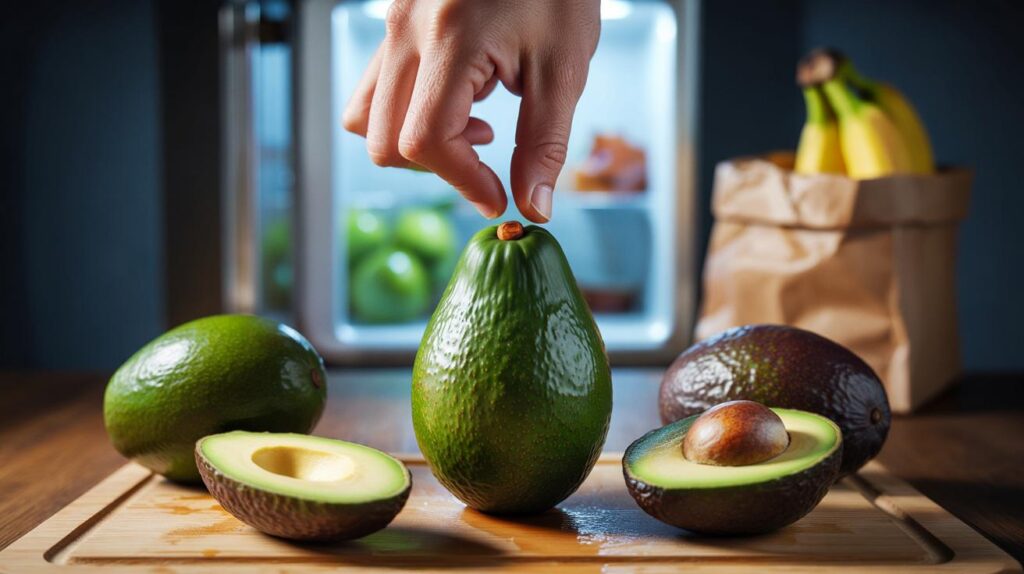
It’s the fruit that sits there looking smug on the counter, either stubbornly solid or suddenly slumped. We buy it “ready to eat” and still mistime it. Then we swear we’ll crack the code next week. The truth is simpler — and trickier. This fruit ripens fast, and the perfect day hides in plain sight.
I watched a man at the Saturday market press an avocado with the delicacy of a violinist. He weighed it in his palm, tapped the skin, then swapped it for the next. Beside him, a woman peeled back a tiny stem like she was checking a secret door. I went home with two, convinced I’d mastered it. One was granite. The other sighed into mush.
We’ve all had that moment when the knife slides in and your hopes slide out. The flesh is streaked, the timing is off, the toast waits. And there’s something maddeningly human in that. Because time plays tricks on us. The avocado just makes the joke visible. One day too soon, one day too late. The clock makes a fool of us all. One window. Blink and you miss it.
The fruit we never eat at the right time
Avocados are the Goldilocks riddle of the kitchen. Too hard and you’ll shred toast, too soft and you’ll need a spoon. The sweet spot lasts hours, maybe a day, and most of us wander past it. The skin doesn’t shout. The smell gives little away. The calendar can’t help.
The ripeness window is brutally short. That’s why so many end up with stringy veins or grey smudges under the skin. We prod them in shops until they bruise, then stash them in the fridge, then forget them behind the yogurt. A week later they’re technically edible, emotionally tragic. This fruit doesn’t reward hesitation. It rewards attention, and a tiny bit of practical cunning.
Walk into any British supermarket and you’ll see two boxes: “ripen at home” and “ready to eat”. The second box often lies. “Ready to eat” means within a day or two, not right now at 7.45pm when your friends have opened the wine. A greengrocer in Brixton told me he sees people returning the next day for the same fruit, only to find it has already tipped to soft. The change is sudden. It feels personal. It isn’t. It’s biology doing what biology does, quickly.
Avocados breathe. That breath is ethylene, a ripening signal that builds like a chorus until the flesh relaxes. Warm kitchens make that chorus louder; cold ones muffle it. Too cold, and the flesh gets a kind of internal frostbite — brown spots that have nothing to do with age. The Hass variety, with its pebbled skin, turns darker as it ripens, but colour alone fools people. Pressure at the top of the fruit tells the truth. Ripeness starts near the stem, then travels down. Your thumbs don’t need to guess; they need to listen in the right place.
How to stop missing the moment
Adopt a simple routine. Keep firm avocados on the counter, away from sunlight and radiators. Speed them up by tucking them into a paper bag with a banana for a night — the banana shares ethylene like gossip. Once an avocado feels just on the edge of tender near the stem, move it to the fridge. That pause button buys you two to three days of calm.
Use the stem test, but gently. Flick off the tiny cap with a fingernail. If it resists, the fruit is still early. If it lifts and the spot is bright green, you’re there. If it’s brown, you’ve overshot. Squeeze with the flat of your palm, not your fingertips, so you don’t bruise it. Cut around the widest part and twist. If the knife glides with a quiet whisper, you’ve nailed it. Do this once in the evening and once the next morning until you learn your kitchen’s rhythm.
There are classic traps. Fridging too early locks in stony flesh. Leaving a ripe one on a warm windowsill turns it into sludge. And that thing where you poke it five or six times in the shop? That’s a highway to bruise city. Be kind. Choose by feel near the stem, not by panic squeezing. I get the impatience. You want toast now, not Tuesday. Let’s be honest: nobody does that every day.
“Treat the stem end like a truth button,” says Carla, a London greengrocer who’s sold Hass by the crate for 14 years. “If it gives a little and looks green underneath, you’ve got 24 hours of peak.”
- Paper bag + banana = faster ripening overnight.
- Fridge at first sign of tenderness to slow the clock.
- Stem test for truth; palm pressure to avoid bruises.
- Too soft? Mash with lime, salt and a tiny squeeze of mayo for silk.
- Too firm? Dice thinly and marinate in lemon and olive oil for 30 minutes.
The science, the myths, and the tiny rituals that help
People argue about the colour of the skin, the shape of the fruit, the wobble of the seed. Most of it is noise. Rely on three cues: stem, feel, and timing. The fruit ripens from the top down, so top test first. Use the fridge like a brake, not a storage unit. If a recipe calls for instant ripeness, make a plan B: pea smash with mint, or a quick feta spread. Your dinner will survive. Your pride will, too.
Perfection is overrated. A slightly underripe avocado slices like butter and holds in a salad. A slightly overripe one makes rich dressings or a quick chocolate mousse when blitzed with cocoa and a dash of maple. Oxidation is a cosmetic worry, not a catastrophe. A thin slick of olive oil, or a pressed sheet of baking paper on the cut surface, slows the browning in the fridge. The seed doesn’t do much once the fruit is open. Lime juice does.
What about those strings and freckles? That’s vascular browning and chilling injury playing tag. If you stored it too cold before it softened, the texture pays a price. The flavour often holds, especially with salt and acid. If it looks tired, treat it like a sauce ingredient. Whisk it with yoghurt, garlic and herbs and pour over roasted veg. Or freeze ripe halves for smoothies — wrapped tightly, pit removed, splash of lemon, then bagged. A small ritual now saves a small heartbreak later.
| Point clé | Détail | Intérêt pour le lecteur |
|---|---|---|
| Ripeness cues | Stem test, gentle palm pressure, watch for first softness at the top | Fast, reliable way to hit the peak |
| Storage rhythm | Counter to ripen, fridge to pause at first tenderness | Extends the sweet spot by days |
| Plan B uses | Underripe: slice or marinate; overripe: dressings, mousse, guac | No waste, great flavour, less stress |
FAQ :
- How do I know an avocado is ripe today?Lift the tiny stem cap. Green underneath and a slight give near the top means it’s go time.
- Can I put avocados in the fridge?Yes, once they start to soften. Fridge slows ripening and buys you two to three days.
- How do I speed things up?Paper bag with a banana or apple overnight. Warm rooms also nudge the process along.
- How do I stop cut avocado going brown?Brush with lemon or lime, press baking paper onto the surface, then chill in a sealed box.
- Why is the inside stringy or spotted?That’s often chilling injury or internal browning. Texture suffers, flavour can be rescued with acid and salt.



Mon avocat passe de granite à purée pendant que je cligne des yeux. Je vais mettre une alarme sur mon frigo maintenant 🙂