
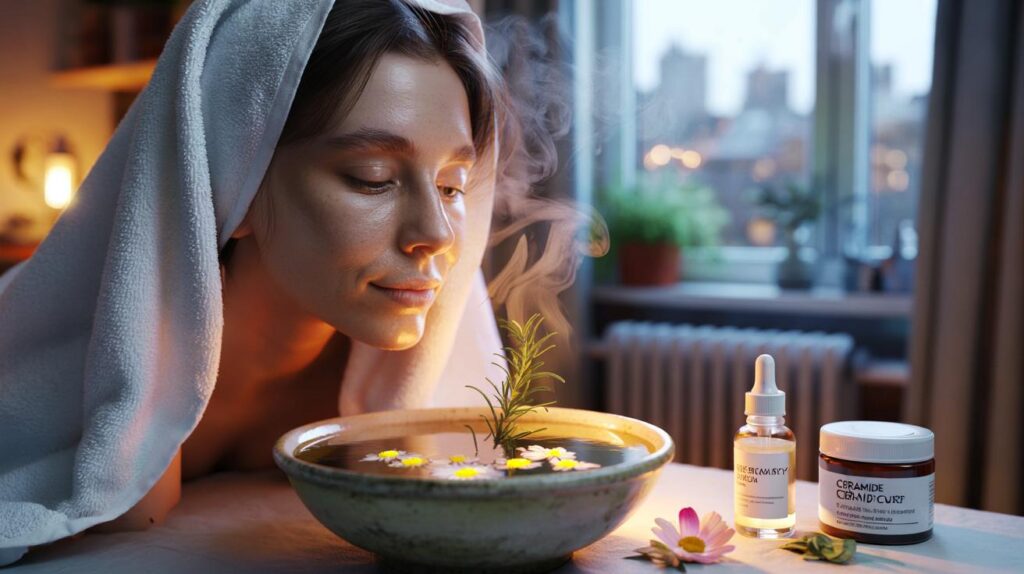
Your skin didn’t sign up for radiator season. Indoor heating drops humidity, saps moisture, and leaves cheeks papery by 6 p.m. You slather thicker creams, drink more water, even angle the sofa away from the radiator. Still, the tightness lingers. There’s a quiet fix people keep rediscovering each winter: a bowl, boiling water, and a handful of kitchen herbs. Not a spa day. A five‑minute reset. The kind that meets dry air head‑on, with breath and botanicals.
The radiators in my London flat kick in with a polite click around dusk. Inside minutes, the air turns thin, the kind that makes houseplants sulk and foreheads crease. I noticed it on the bus too: wool scarves, chapped lips, people rubbing at their noses where glasses sit. One evening I put a kettle on, tipped rosemary and chamomile into a bowl, and tented a towel over my head like a kid building a den. The first inhale felt like an apology. The second like a promise. Then the mirror surprised me.
Why heating season seems to punish your face
Central heating doesn’t just warm your home. It strips the air of moisture, pushing relative humidity down to desert levels. Skin loses water faster, and the outer barrier—the bit that keeps the outside out—loosens its grip. You feel that as tightness, flaking, and makeup clinging to rough spots. **Your radiator isn’t the villain—dry air is.** And dry air is sneaky, because it looks harmless while it leans on your skin all day.
In offices and flats where winter humidity sinks below 30%, dermatologists see more irritated cheeks and dullness. One small study found transepidermal water loss jumps in heated rooms compared with temperate ones, which tracks with what you see in the mirror at 9 p.m. Think of your face after a long-haul flight; heating season is the budget version of that cabin air. We’ve all had that moment when a scarf comes off and you feel the skin crackle like paper.
So why steam? Because warm vapour does two simple things at once: it brings water to the party and it softens the outer layer so it actually drinks. Herbs add light, skin-friendly compounds—antioxidants from green tea, calming bisabolol from chamomile, rosmarinic acid from rosemary—that ride the vapour. The goal isn’t to scald or sweat. It’s to nudge thirsty skin back toward balance in a way a cream alone can’t. Used gently, it’s a small pressure valve for winter skin.
The herbal steam ritual, without the faff
Grab a heatproof bowl, a kettle, and a handful of herbs or tea bags. Good options: chamomile for soothe, green tea for antioxidant support, rosemary or thyme for clarity, calendula or rose for softness. Pour in freshly boiled water, wait 60–90 seconds so the steam settles from fierce to friendly, then lean in from an arm’s length and drape a towel over your head and bowl. Breathe slow for 5–7 minutes. Keep enough distance to feel warm mist, not hot blasts. Finish with a hydrating serum and a simple moisturiser.
Pick blends that fit your mood and skin. Dry or tight? Chamomile + calendula + a slice of cucumber. Oily T-zone? Green tea + rosemary + a sprig of mint. Sensitive? Stick to single‑herb chamomile or linden and keep sessions short. Avoid essential oils in the bowl—concentrated drops can irritate lungs and skin when heated. Let the steam do the lifting, not the heat. Let’s be honest: nobody does this every day. Twice a week in peak radiator months is plenty.
Common wobble points: getting too close, steaming too long, or thinking sweat equals success. Think comfort, not endurance. If your face flushes bright or pricks, back away a little. If you live with rosacea, eczema flares, asthma, or broken capillaries, keep the steam even gentler or skip the towel tent. I like to think of it as a warm cloud, not a sauna.
“Steam is a carrier for water and scent—herbs make that cloud useful,” a London facialist told me. “Go mild, go short, then seal it in.”
- Five-minute fix: 1 green tea bag + 1 chamomile tea bag
- Glow blend: 1 tsp dried rose + 1 tsp calendula petals
- Clear head: small rosemary sprig + a few thyme leaves
- Ultra-gentle: linden flowers only, 4 minutes max
- Post-steam seal: hyaluronic serum, then ceramide cream
What’s actually happening on your skin
Warm humidity softens the stratum corneum—the outer skin layer—so humectants in your routine have something to work with. Antioxidants from green tea and rosemary can counter some indoor oxidative stress, while chamomile’s bisabolol helps calm that pink, chafed look heating brings. You’re not “opening pores” in a permanent way; you’re creating a moment where oils move and dead cells loosen. **The payoff is texture, not a miracle.** The trick is what you do right after: water binds, then you lock it. That’s the dance that keeps heating from winning.
A small winter ritual with big ripple effects
There’s a reason kitchens make the best bathrooms in January. You can hear the kettle, you can smell the rosemary, and you can feel your shoulders reset while the windows fog a little. A herbal steam is not a cure-all for winter skin. It’s a pause that interrupts the drying cycle that heating starts. On nights when the city air is thin and the to‑do list longer than your patience, five minutes over a bowl can shift the mood, then the mirror. **Think of it as weatherproofing with breath and leaves.** Some nights you’ll skip it. On the nights you don’t, your skin will remind you why you reached for the herbs.
| Point clé | Détail | Intérêt pour le lecteur |
|---|---|---|
| Heating lowers indoor humidity | Dry air accelerates water loss and barrier stress | Explains why skin feels tight and flaky at home or office |
| Herbal steam adds gentle humidity + actives | Chamomile, green tea, rosemary, calendula deliver soothing antioxidants | Simple ritual that softens texture and calms winter irritation |
| Method and safety matter | Distance, short duration, no essential oils, seal with moisturiser | Maximises benefit while avoiding redness or sensitivity |
FAQ :
- How often should I do a herbal steam in winter?One to two times a week is a sweet spot for most people during heavy heating months. Keep sessions around 5–7 minutes.
- Which herbs are best for sensitive skin?Start with chamomile or linden flowers alone. Short sessions, warm not hot steam, and a plain moisturiser after.
- Is shower steam the same thing?Not quite. A bowl concentrate delivers consistent warm vapour and herbal compounds without overheating your whole body.
- Can acne‑prone skin use this ritual?Yes, with care. Try green tea with a tiny rosemary sprig, keep it brief, and follow with a non‑comedogenic hydrator.
- Should I add essential oils to the water?Skip them here. Heated essential oils can irritate airways and skin; whole herbs or tea bags are gentler and effective.



Tried the chamomile + green tea bowl tonight—first inhale felt like an apology, second like a promise. My cheeks definitley stopped crackling by 9 p.m. Thank you for the no-faff instructions; the 60–90 sec wait made all the difference.
Is there any evidence beyond anecdotes that antioxidants from rosemary actually survive the steam and reach skin? Sounds nice, but I’m wary of spa folklore. Also, won’t frequent heat trigger rosacea even at arm’s length?