
When everyone around you is coughing on the train, the idea of “strengthening your immune system” stops sounding like a slogan and starts feeling like a plan. Not another tablet, not a neon powder, just something warm you can hold. People keep asking: is there a single herbal tea that genuinely helps the body’s defences tick along? Whispers point to a humble herb you already own. The one you toss on roast potatoes.
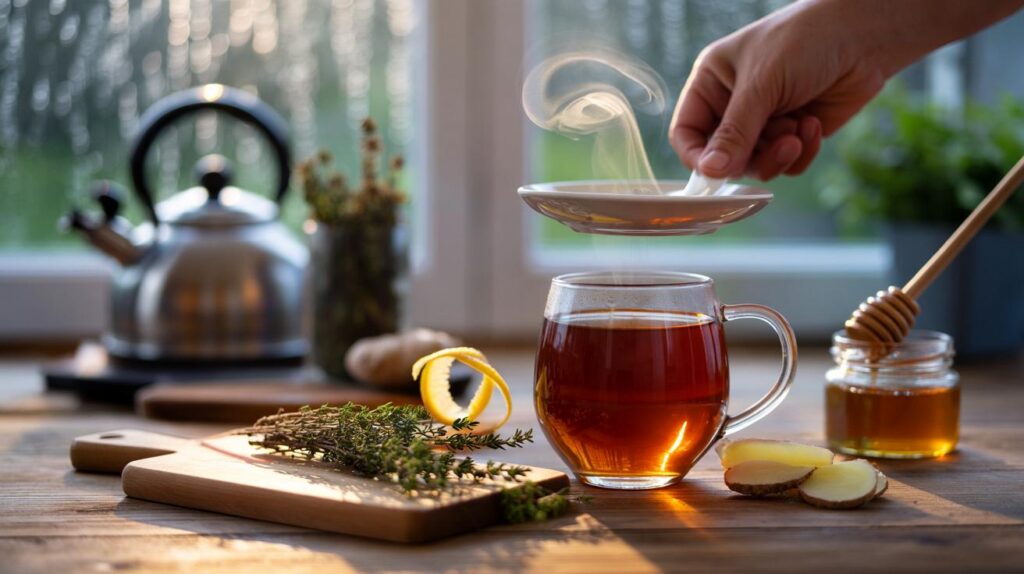
The kettle sang while rain curled off the window, and the whole kitchen smelled of soil after a storm. I pinched a little thyme into a cup, let the leaves bloom in hot water, and watched the steam fog my glasses. It felt like medicine without the white coat. Two sips in, my chest warmed, shoulders dropped, and I remembered my grandmother rubbing thyme between her fingers, telling me it was “small but mighty”. The mug didn’t fix the day. It made the day feel more fixable. The hero smelled like a hillside.
Meet the quiet hero: thyme tea
If there’s a single, everyday herbal brew that earns its place in flu season, it’s **thyme tea**. The resinous oils lift off with the steam and seem to clear the head as much as the cup clears the hands. You don’t need a tincture or a trip to a specialist shop. Just a teaspoon of dried thyme or a few fresh sprigs, and water that’s just off the boil. Tiny ritual. Noticeable comfort.
On the late shift at St Thomas’, a paramedic told me he keeps a jar of thyme at the station kettle. During winter, when ambulance crews are swimming in coughs, he swears it keeps his throat behaving. Brits catch several colds a year on average, and most of us still reach for tea before anything else. A modest habit, repeated nightly, often beats the “new miracle” supplement we forget by next week.
There’s a logic to it. Thyme carries thymol and carvacrol—aromatic compounds studied for antimicrobial action—along with rosmarinic acid, which appears in several culinary herbs. Warm liquids help loosen mucus and keep you hydrated, which supports the body’s natural barriers. And the very act of brewing signals the nervous system to exhale, which matters for immune balance. It’s **not a cure**, not a shield against every bug. It’s one supportive brick in the wall.
How to brew it so it actually works
Use 1–2 teaspoons dried thyme (or 4–6 fresh sprigs) per 300 ml mug. Lightly crush the leaves between finger and thumb to wake the oils. Pour water just off the boil, then **cover the cup** with a saucer for 7–10 minutes to trap those volatile compounds. Strain, sip slowly. Optional: a sliver of lemon peel or a thumb of fresh ginger for extra warmth and aroma.
Don’t let it sit uncovered; that precious steam is where the magic rides. Avoid boiling the herb on the hob until it tastes like a hedge—bitterness isn’t bravery. Start mild if you’re new to it, then edge stronger. If you’re pregnant, have a thyroid condition, or take regular meds, have a quick word with your GP or midwife before going heavy on any herb. Let’s be honest: nobody does that every day. Aim for most days in cold season, especially evenings.
Think routine, not rescue. One mug on waking or after the commute, one before bed. Breathe the steam, feel your shoulders drop, notice the night calm down.
“Consistency beats intensity. A small, daily brew helps the body more than a heroic pint when you already feel rough,” says a London herbal practitioner I spoke to.
- Best window: at the first tickle in your throat, after crowded trains, or post-run in cold weather.
- Good partners: lemon peel, ginger, a few rosemary needles. Honey for taste—avoid for under-1s.
- What to watch: go steady if you’re on anticoagulants or have chronic conditions—check with your GP.
- Storage tip: keep dried thyme in a dark jar; rotate every 6 months for potency.
Make space for the ritual, not the myth
We’ve all had that moment when a cold sneaks up the day before something big and you’ll try anything short of sorcery. Thyme tea isn’t sorcery. It’s a signal—quiet, reliable—that your body isn’t fighting alone. Keep your mug simple, your cupboard honest, and your expectations grounded: fewer scratchy throats, calmer nights, a bit more oomph when the weather bites. Pair it with sleep that actually lasts, food that remembers vegetables, and hands that meet soap often. Share a pot with a friend who sounds froggy on the phone. Tell them it tastes like sun on stone and early summer hedgerows. Tell them it’s not a promise; it’s a practice. The kind that sits easily in real life, on the drizzly nights when you want your home to feel like it’s helping. That’s the point. Not perfection. A habit you’ll keep.
| Point clé | Détail | Intérêt pour le lecteur |
|---|---|---|
| Star herb: thyme | Rich in thymol/carvacrol; soothing, aromatic steam | Pantry staple with gentle, everyday support |
| Brewing that counts | Lightly crush leaves, water off the boil, cover 7–10 min | Maximises active oils without bitterness |
| Real-life routine | 1–2 mugs on busy or sniffly days, especially evenings | Easy, sustainable habit through winter |
FAQ :
- Does thyme tea really “boost” the immune system?It supports your natural defences rather than turbocharging them. Warm, aromatic infusions aid hydration, comfort airways, and help you relax—factors that contribute to better resilience over time.
- Fresh or dried—what’s best?Both work. Dried thyme is convenient and consistent; fresh sprigs taste brighter. Use a little more fresh by volume. Either way, cover the cup to keep those volatile oils in the brew.
- Can kids drink it?A mild thyme tea is fine for older children. Start weak and check they like the taste. Add lemon peel for fragrance. Avoid honey for under-1s. If a child has ongoing conditions, check with your GP.
- Are there side effects or interactions?Thyme is generally well tolerated in culinary amounts. Large, medicinal-strength cups every day may not suit everyone, especially if you’re on anticoagulants or have chronic conditions—speak with your doctor if unsure.
- When should I drink it for best effect?At the first throat tickle, after crowded commutes, or in the evening to wind down. Consistency matters more than timing; a daily mug through the colder months is a steady bet.



Thanks for the clear brewing tips—covering the mug for 7–10 mins actually made it smell brighter. I’ve been using dried thyme and a sliver of lemon peel; felt calmer before bed. Not magic, but it’s a keepr.
Any peer‑reviewed evidence on thymol/carvacrol in a simple infusion like this, or is the benefit mostly hydration + heat? Genuinely curious, not snark.