
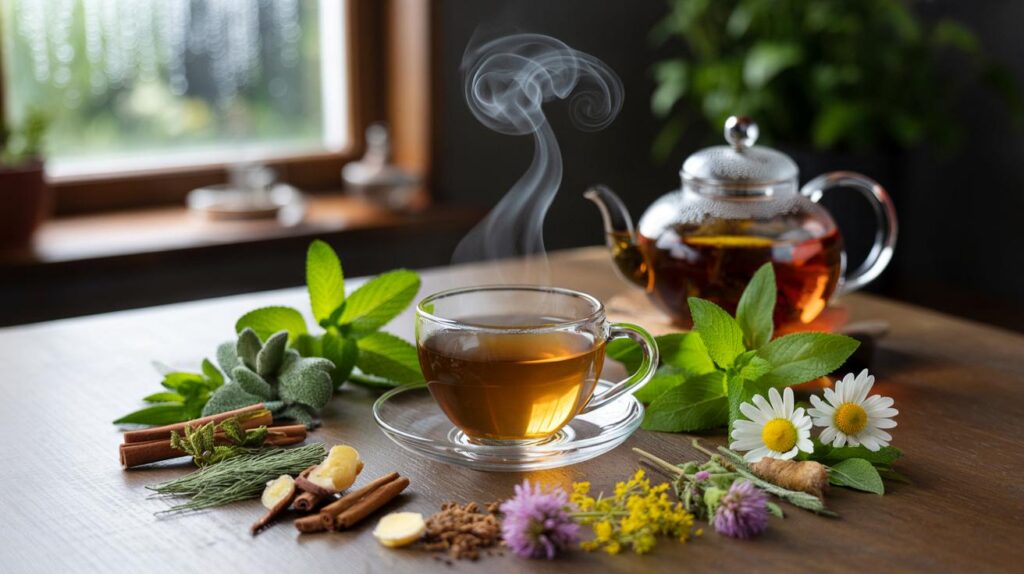
Hormones run the show quietly. When they drift, everything wobbles — skin, sleep, cycle, mood, appetite. You can chase lab tests, apps and supplements, yet the daily fix still has to fit a real life. A kettle fits. And some cups genuinely help the body find its rhythm again.
The woman at the café stirred her mint tea like it was a small ceremony. It was 8:12, rain fidgeting against the window, and she told me she’d swapped her afternoon coffee for spearmint to calm stubborn chin breakouts. Across the room, a man in his fifties was nursing sage tea, saying the night sweats had eased since he started. The steam curled up like a small weather system, and the place smelled clean, green, slightly sweet. We’ve all had that moment when the body sends a message you can’t quite ignore. I started to notice how many people were quietly managing hormones with a mug and a routine, rather than another big “fix”. What if balance began at the boil?
Plants, hormones, and the quiet reset
Some herbs contain compounds that nudge the body’s own signalling, not smash it. Think of them as an extra hand on the dimmer switch. Holy basil (tulsi) and ashwagandha help the stress axis feel less frantic. Chamomile takes the edges off at night. Spearmint has a knack with androgens. Plants aren’t a quick fix. Yet across weeks, these small nudges add up to a steadier baseline.
There’s research, even if it’s not blockbuster-level. In two small trials, drinking 2 cups of spearmint tea daily for a month lowered free testosterone in women with hirsutism, with some reporting calmer skin and thinner hair growth. A Swiss observational study found menopausal women sipping sage tea saw hot flushes ease within weeks. I met Priya, 32, who paired spearmint at lunch with cinnamon after dinner; her cycle didn’t change overnight, but by the third month her breakouts and sugar crashes stopped ruling the week before her period.
Hormones aren’t lines on a graph — they’re a choir. Cortisol hums through breakfast, insulin guides lunch, oestrogen and progesterone trade verses over the month. Teas that truly help don’t dominate the song; they tune it. Apigenin in chamomile whispers to GABA receptors to calm the nervous system. Rosmarinic acid in lemon balm and sage can take the heat out of flushes. Glycyrrhizin in liquorice shifts cortisol metabolism, which is powerful, so care is wise. Gentle doesn’t mean meaningless; it means consistent.
Brewing with intent
Method matters. Leaves and flowers infuse best at 90–95°C for 6–10 minutes. Roots and barks need time: simmer 1 heaped teaspoon per cup for 10–20 minutes with the lid on. Try a simple rhythm — tulsi on waking, spearmint after lunch, chamomile with cinnamon after dinner. Keep it for three weeks, then take stock.
Most people under-dose, under-brew, and expect fireworks by Friday. Go for 2–3 cups daily of your chosen blend and track one simple marker: better sleep, steadier energy, fewer hot moments, clearer skin. If you’re pregnant, have blood pressure concerns, or a hormone-sensitive condition, choose gentler options like chamomile, nettle, ginger, and always check interactions. Let’s be honest: nobody weighs leaves on a tiny scale each morning. Aim for “most days”, not perfection.
Here’s a way to keep it human and safe. Start from your main symptom, pick one tea, and give it a fair window before switching.
“Tea is a dialogue, not a prescription,” says a London herbalist I trust. “Give the body a steady conversation, and it often answers back.”
- For stress spikes and wired-at-9pm: tulsi or lemon balm.
- For oily skin and chin spots: spearmint (1–2 cups after meals).
- For hot flushes: sage leaf; add lemon balm if nights run hot.
- For PMS cramps: raspberry leaf with ginger.
- For evening sugar swings: cinnamon with chamomile.
- For minerals during heavy periods: nettle, 2 cups daily.
- Use liquorice sparingly if you have high blood pressure; skip red clover if you have an oestrogen-sensitive history.
The teas worth knowing, symptom by symptom
Spearmint: the androgen whisperer. Two cups a day can support those with higher androgens or PCOS-leaning symptoms, like chin acne or stubborn hair growth. Many notice fewer breakouts by cycle three. Pair with cinnamon at night if sugar cravings are part of the picture.
Sage: the cool head. Fresh or dried leaves, 1–2 cups, often take the sting out of hot flushes and drenched nights. The flavour is clean and savoury. If your nights are anxious too, blend in lemon balm to soften the edges and coax a deeper sleep.
Chamomile: the great softener. It’s not just a sleep tea; it helps the nervous system feel safe enough to switch gears. That matters for progesterone’s gentle sway in the luteal phase. Sip 30–60 minutes before bed, and watch rest deepen across a week.
Lemon balm: the hush for jangly days. Good for those who feel “wired but tired”, and a kind companion when oestrogen dips. Go steady if you manage thyroid concerns and chat with your clinician if unsure. The taste is bright, almost lemon sherbet.
Tulsi (holy basil): the steadier. This is the cup for the 3pm cortisol wobble. People describe clearer focus and less irritable hunger. Brew with a lid to catch those volatile oils, and try it for 21 days before judging it.
Raspberry leaf and ginger: the cramp combo. Raspberry leaf tones, ginger warms and improves blood flow. If your day-one cramps boss you about, start this blend three days before bleeding and keep it for the first two days. Many find the volume dial turns down noticeably.
Nettle: the quiet builder. Iron, magnesium, chlorophyll — all inside a slightly green, earthy mug. If your periods run heavy or you’re rebuilding after a rough patch, nettle twice a day can support energy. It’s also gorgeous iced with a slice of orange.
Liquorice root: the strong one. It’s sweet, soothing and potent in how it touches cortisol. Useful in short runs for worn-out nervous systems, but not daily if you’ve got high blood pressure or take certain meds. Blend a little with tulsi for a late-morning lift.
Red clover and fennel: the nuanced pair. Both carry gentle phytoestrogens that some find comforting around perimenopause. If you have or had an oestrogen-sensitive condition, skip these and choose sage, chamomile, and ginger instead. Your tea shelf can still work hard for you.
Blending is personal. One woman’s perfect cup is another’s “meh”. Your body likes patterns. Keep a scrappy note on your phone — what you drank, how you slept, whether your skin felt less inflamed — and let that guide you more than a trend post.
Ritual isn’t fluff here. Standing by the kettle at the same time daily tells the nervous system, “We’re safe.” That single message helps cortisol stop spiking at odd hours, which calms cravings, moods and night sweats. You’re not just brewing herbs. You’re training the day.
If you’re on medication, recovering from a complex condition, or pregnant or breastfeeding, keep the conversation open with a clinician. Most teas are companions, not competitors, yet it’s wise to check. Small sips, slow changes, repeat. Small, steady cups beat heroic, chaotic ones.
The quiet art of paying attention
There’s a reason tea keeps showing up in people’s hormone stories: it’s doable. Two or three cups a day is not an overhaul, it’s a tune. Start with one symptom you’d love to soften, choose a herb that speaks to it, and give the body time to answer. If something feels off, stop. If something feels kinder, keep going. Share what you notice with a friend; their pattern might help you see yours. The best feedback loop isn’t a dashboard — it’s how your mornings feel when you wake, how your skin behaves in sunlight, how your mood moves in the queue. Everyone wants fast changes. The body prefers honest rhythms.
| Point clé | Détail | Intérêt pour le lecteur |
|---|---|---|
| Right herb, right symptom | Match spearmint to androgens, sage to hot flushes, chamomile to sleep | Quicker wins with less guesswork |
| Method matters | Leaves 6–10 min; roots 10–20 min simmer; 2–3 cups daily | Stronger, consistent effects without overthinking |
| Safety first | Go gentle in pregnancy and with meds; be cautious with liquorice and red clover | Benefit without unwanted side effects |
FAQ :
- How long until I notice a difference?Many people feel shifts within 2–3 weeks. Skin and cycle changes may take 2–3 months.
- Can I drink different teas on the same day?Yes. Keep it simple: 1–2 “core” cups for your main goal, plus 1 comfort cup if you like.
- Is spearmint safe if I don’t have PCOS?In usual tea amounts, yes for most adults. If cycles get lighter or you feel off, pause and reassess.
- What if I’m on the pill or HRT?Most teas are fine, but skip red clover and go easy on liquorice. Check with your clinician if unsure.
- Loose leaf or tea bags?Loose leaf often gives better potency and flavour. Good-quality tea bags still work if brewing times are respected.



Merci pour cet article hyper clair ! J’avais des boutons au menton et j’ai remplacé mon café de 15h par de la menthe verte (spearmint). Pas de miracle, mais au bout d’1 mois, peau plus calme et moins de fringales. La chamomille le soir m’aide aussi à dormir (je la fais infuser plus longtemp, 8–9 min). Bref, petit rituel, gros effet sur mon équillibre. Merci bcp !