
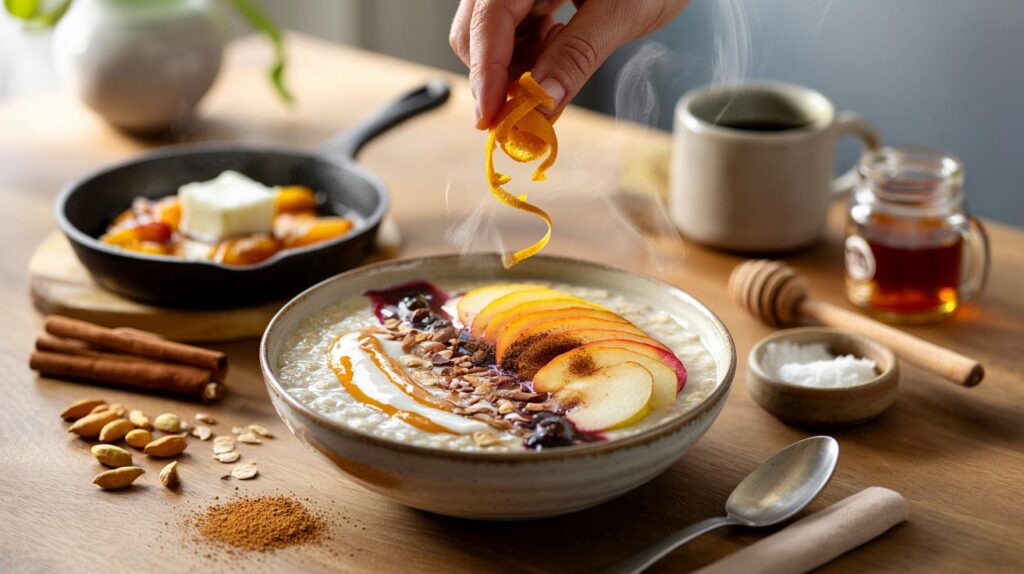
Morning porridge can be a quiet sugar trap. A drizzle here, a spoonful there, and suddenly the “healthy” bowl rivals dessert. You want comfort, warmth, and sweetness that doesn’t send your energy off a cliff at 11am. The answer isn’t punishment or bland oats. It’s swapping the usual sugars for flavours that feel indulgent, not worthy.
The kettle clicks, the hob whispers, and the kitchen smells faintly of coffee and wet coats. Someone is standing over the pan, stirring in autopilot, ready to crown the oats with a gleaming swirl of honey because that’s what mornings look like in their head. Then a pause: a soft pear on the counter, a pinch of cinnamon, a tiny pat of butter in a hot pan. Two minutes later, the bowl tastes like a bakery window. The spoon goes back in without thinking. The sweetness was already there.
Why your spoon keeps reaching for sugar
We’ve all had that moment when the oats taste “fine” and the hand reaches for the syrup out of habit. Porridge is neutral by design, which is both its power and its problem. Our brains chase simple signals at 7am, and sweetness is the loudest one in the room.
Last winter, Leanne from Bristol started swapping her morning honey for a quick pan-roasted apple. She used the same oats, the same pan, the same five minutes before school drop-off. She says the bowl felt bigger, warmer, more complete — and she cut the “free sugars” in her breakfast by more than half without missing them. The UK guideline is 30g of free sugars a day; those little morning habits move the needle fast.
There’s a reason these swaps work. Warmth wakes up natural sugars in fruit; fat carries aroma; a pinch of salt flips the sweetness “on” in your mouth. Spices like cinnamon and cardamom signal dessert to your brain, so your palate reads sweet even when fewer sugars are present. You’re not tricking yourself. You’re amplifying what’s already in the oats.
Seven stealthy swaps that change everything
Roast fruit, don’t drizzle syrup. Slice pear, apple, or plum and sear in a teaspoon of butter or coconut oil with a pinch of salt until edges caramelise. Add cinnamon or vanilla, then finish with a squeeze of lemon to sharpen the edges. Pile onto the oats. That’s a two-minute, pan-top shortcut to caramelised fruit that tastes like pudding without extra spoonfuls of sugar.
Make a five-minute “compote” instead of jam. Toss a handful of frozen berries into a small pan with a splash of water and a shred of orange zest. Let it bubble and thicken, mash lightly, and swirl through with Greek yoghurt for creaminess. Let’s be honest: nobody really does that every day. Keep a jar of this in the fridge from Sunday and you’ll feel smug until Thursday.
Round out sweetness with texture and aroma. Stir in tahini or almond butter for depth, scatter toasted seeds for crunch, or grate a little orange over the top so the smell primes your palate. A tiny pinch of salt is a non-negotiable.
“Sweetness isn’t just sugar on the tongue, it’s a whole sensory scene — heat, aroma, fat, salt,” says Dr Maya Patel, a London nutritionist. “Build that scene, and the sugar can step back.”
- Swap syrup for warm fruit: pear, apple, peach, plum.
- Use spices: cinnamon, cardamom, vanilla, ginger.
- Add richness, not sugar: tahini, almond butter, Greek yoghurt.
- Lift with citrus: lemon or orange zest at the end.
- Boost crunch: toasted oats, seeds, cacao nibs.
The bowl that teaches your tongue
Think about sweetness as layers, not a flood. Start your oats with milk-and-water mix for creaminess, toast the dry oats in the pan for 60 seconds, and add a soft fruit element near the end so the aroma is vivid. This is the small morning ritual that quietly shifts your day.
Dried fruit is a friend if you treat it like spice, not cereal. Chop three dates very fine and stir through the oats early so their sweetness diffuses. Fold in a spoon of chia “jam” made by soaking berries with chia seeds overnight. Keep portions playful, not piled. If you go for banana, choose ripe and mash half into the pan so it sweetens the base, then slice the rest on top for bite.
Protein and fibre steady the ride. Swirl in a dollop of Greek yoghurt or a scoop of plain protein powder to keep you full, then finish with nut butter for slow-release richness. That trio makes the bowl taste generous even with no added sugar. Add a dot of miso to butter when you pan-roast fruit for a butterscotch note that feels naughty but isn’t. That tiny savoury echo makes the sweet pop, and you’ll eat more slowly without noticing.
Spice blends are your secret weapon. Mix cinnamon with a whisper of cardamom and a pinch of nutmeg, or go bolder with ginger and a crack of black pepper for a gingerbread hit. A teaspoon of cocoa powder brings chocolate vibes with very little sugar, especially when balanced with a spoon of yoghurt. Frozen cherries plus cocoa feels like Black Forest cake on a weekday.
Common mistakes are surprisingly fixable. Pouring honey to rescue bland oats usually means the base isn’t creamy enough — cook a minute longer and finish with a spoon of yoghurt or a splash of oat milk, not more sugar. Too much dried fruit can sneak you into dessert territory fast; chop it smaller so the sweetness spreads. If your bowl feels flat, it probably needs salt and heat, not syrup.
“Hidden sugar swaps” aren’t about being pious. They’re about building flavour first so sweetness becomes the final brush, not the wall paint. Try this week’s rotations and see what sticks.
“Set your bowl up like a bakery item — warm fruit, spice, a pinch of salt, something creamy — and you won’t miss the sugar,” says chef Klara Brice, who runs a breakfast pop-up in Manchester.
- Quick wins: pan-roasted pear; berry compote; cocoa + yoghurt swirl.
- Underused heroes: tahini, orange zest, toasted oats, miso butter.
- For kids: grated apple, cinnamon, peanut butter “sprinkles”.
- For crunch: seeds, cacao nibs, crushed toasted buckwheat.
Make it yours, not a rulebook
You don’t need a spreadsheet to eat a better bowl. Start with one swap this week — roast a piece of fruit once, make a tiny jar of compote, or grate zest over your oats — and watch the way your spoon stops looking for sweet relief. Your palate changes quickly when it’s got something worth tasting.
There’s a quiet joy in breakfast that doesn’t boom and bust. The school run feels calmer, mid-morning work feels easier, and you begin to associate sweetness with spice and warmth, not syrup. The best part is how ordinary it all is. These are home moves, done with what’s already in the kitchen, and they work. Try, tweak, share what you learn. The ritual is the point.
| Point clé | Détail | Intérêt pour le lecteur |
|---|---|---|
| Warm fruit over syrup | Sear pear, apple, or plum with a pinch of salt and lemon | Bakery-level sweetness with fewer free sugars |
| Spice + salt amplify | Cinnamon, cardamom, vanilla, and a tiny pinch of salt | Perceived sweetness rises without adding sugar |
| Protein and fat steady | Greek yoghurt, nut butter, seeds | Longer fullness, smoother energy, richer taste |
FAQ :
- Is honey “better” than sugar in porridge?Both count as free sugars for your body. Honey brings flavour and aroma, so you might use less, but the key is portion and flavour-first swaps.
- What about stevia or monk fruit?They can lower sugar in the bowl. Some people notice an aftertaste, so pair with warm fruit and spice. Use them as a nudge, not the star.
- Which oats are best for this?Rolled or jumbo oats are forgiving and fast. Steel-cut are great for weekend texture. Toasting any oat for 60 seconds adds nutty depth.
- How do I make porridge creamy without sugar?Cook oats a bit longer, use a milk-and-water mix, add a spoon of yoghurt at the end, and include a pinch of salt. Finish with nut butter for roundness.
- How can I sweeten kids’ porridge without syrups?Grate apple into the pan, mash in half a banana, add cinnamon, and top with peanut butter. Sprinkle cacao nibs for a “choc-chip” crunch.



Pan-roasted pear + cinnamon = bakery vibes, zero sugar crash. Obsessed! 🙂
Genuine question: swapping honey for sauteed fruit still adds fructose. Do you have numbers on free sugars per bowl vs calories? Also, butter adds sat fat; any guidlines for portion sizes?