
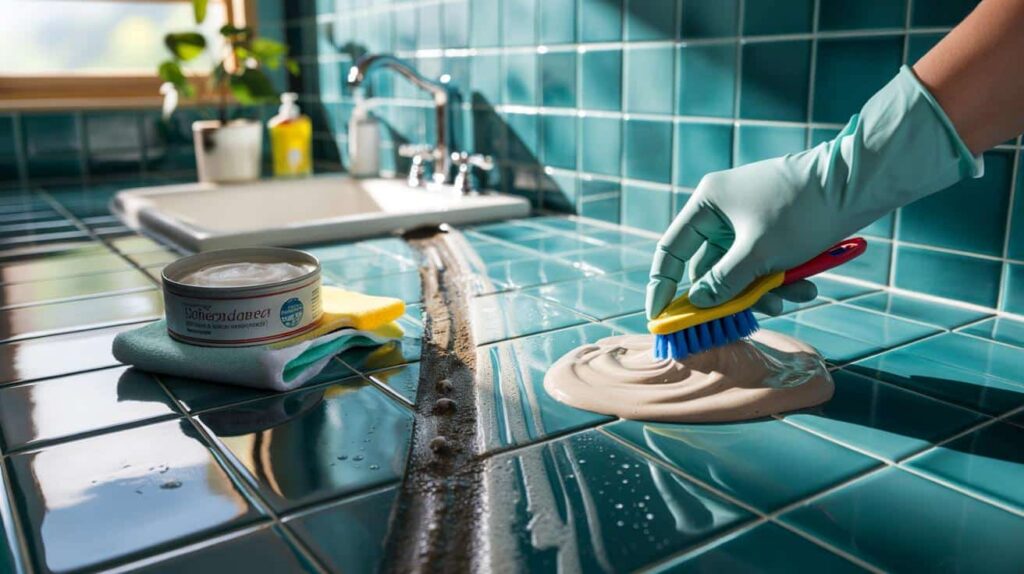
There’s a gentle way back to crisp, bright tiles.
Humidity, soap film and daily traffic gang up on grout faster than most of us can mop. A clay-based cleaning paste, long used by pros, is breaking through the noise with quick wins and no suffocating fumes. Here’s how it works, why stains build up, and what to do next.
Why grout turns black
Grout is porous, so it drinks up moisture and minerals. Warm air keeps it damp, which feeds mildew and molds. Soap residue and body oils add a sticky layer that traps dust. Hard water leaves a fine crust that darkens over time. In kitchens, cooking aerosols drift down and bond with that film. In showers, daily steam keeps colonies alive.
Grout stains rarely come from “dirt” alone. They’re moisture, minerals and microscopic life fused into a stubborn film.
Skipping detailed cleaning for a few weeks compounds the problem. A mop skims the tile surface but pushes grime into lines. Vacuuming helps, yet silt remains in the joints. If ventilation is weak, the cycle accelerates. Black edges near tubs or sinks signal constant dampness.
The clay-based paste cleaning pros reach for
Instead of vinegar or chlorine bleach, many cleaners reach for a concentrated white cleaning stone—also known as a white clay paste. It lifts grime, polishes lightly and leaves a thin protective film. It targets the mix of soap scum, limescale and grease that makes grout look dirty even after mopping.
The paste is dense and economical. A little foam goes a long way. It stores well and does not evaporate. Families like it because formulas are typically non-toxic and free of phosphates or harsh acids.
What’s inside the “white stone”
- Micronized white clay for gentle abrasion and lift
- Soap flakes to emulsify oils and grime
- Glycerin to help wet and spread the foam
- Vegetable fats for cleaning glide
- Sodium-based salts to aid detergent action
- Lime or citrus notes for freshness
No vinegar. No bleach. Same bright result—without biting odors and without bleaching colored grout lines.
Because the clay is fine, it polishes tile metal trims and taps without gouging when used with a soft sponge. On grout, it unseats the biofilm instead of pushing it deeper.
How to clean grout in minutes
Quick method
- Ventilate the room and switch the fan on to pull moisture out.
- Vacuum or sweep to remove loose grit before you wet anything.
- Lightly dampen a sponge and rub it on the clay paste to build foam.
- Work a small section of grout, 50 to 80 cm, using short strokes along the line.
- Let the foam sit for 60 to 90 seconds on heavy staining.
- Agitate with a soft grout brush or an old soft-bristle toothbrush.
- Rinse well with clean water and wipe dry with a microfiber cloth.
- Repeat only on spots that still show shadowing.
Most light-to-moderate staining clears during the first pass. Kitchen joints with grease may need a second round. Bathroom corners often improve once airflow dries the area fully.
Pro tips
- Use gentle pressure; let the paste do the work, not force.
- Rinse the sponge often to avoid redepositing film.
- For colored grout, test an inconspicuous line first.
- Finish with a dry cloth to prevent new mineral spots.
- Keep windows open for 10 minutes to knock back humidity.
How it stacks up against common methods
| Method | Fumes | Risk to grout color | Rinse needed | Typical time | Eco profile |
|---|---|---|---|---|---|
| Vinegar (acid) | Sharp odor | Can etch cement-based grout | Yes | 10–20 min | Biobased, but acidic to cement |
| Chlorine bleach | Strong fumes | May fade colored grout | Yes | 10–15 min | Harsh, corrosive |
| Oxygen-based powder | Low odor | Gentler on color | Yes | 15–30 min soak | Breaks to oxygen + soda |
| Baking soda paste | None | Low risk | Yes | 15–25 min, more scrubbing | Mild, safe |
| White clay cleaning paste | Low odor | Low risk when tested | Yes | 5–15 min | Non-toxic formulas available |
Where this paste shines beyond grout
- Stainless sinks with limescale halos
- Faucets and shower heads with mineral crust
- Ceramic hobs and oven doors with baked-on grease
- Glass shower panels with soap film
- Outdoor furniture with weathered marks
- Metal cookware bottoms with oxidation
One tub often replaces a shelf of single‑purpose bottles, which saves space and routine costs.
Because the foam clings, vertical jobs feel easier. A single application often clears foggy glass and hard water rings without heavy scrubbing.
Prevention and care
Seal cement-based grout once or twice a year to slow absorption. A penetrating sealer keeps stains near the surface, which makes cleaning faster. Run an extractor fan for 10 to 15 minutes after hot showers. A quick squeegee pull on tile walls cuts the daily water load. In kitchens, use a lid and a splash guard when frying to limit aerosol grease.
Switch to a pH‑neutral floor cleaner for weekly maintenance. Harsh acids or strong alkalis roughen grout, which traps more soil later. Place mats at entries to stop grit that scours joints. Address leaks under sinks or around tub lips, because hidden moisture fuels the darkest staining.
Risks and cautions
White clay pastes clean with fine abrasives. Test a small area of glossy plastic or soft acrylic, as shine can dull. Avoid mixing with acids or chlorine products. Rinse surfaces thoroughly to remove residual film. Wear lightweight gloves if your skin dries easily. Colored grout varies by dye and binder, so always spot test before a full treatment.
When stains won’t budge
If joints remain shadowed after cleaning, you may be looking at deep dye transfer or set-in mildew roots. A grout recoloring pen can refresh tone uniformly in minutes. Heavily eroded or crumbling joints need regrouting. Pulling and replacing a few meters often costs less than repeated heavy cleaning. For natural-stone tile, confirm that any product is stone-safe before you start.
What to expect on cost and time
A tub of clay paste typically lasts months in a family home. You use a thin skim per session, so cost per clean stays low. A standard shower stall takes 10 to 20 minutes if stains are light, plus drying time. Large kitchens may run 30 minutes, split into sections to keep rinsing effective. Strong ventilation cuts total time because surfaces dry faster and look true to color sooner.


