
The shower screen was chalked white like frost, the tap base ringed with that gritty halo you feel with a fingernail. I’d tried a neon-blue gel that promised “Turbo Descale!”, watched it bead and slide away, and shrugged. Then I remembered my gran and her bottle under the sink. Warm white vinegar, a soft cloth, and time. The kitchen smelled like Friday fish and chips. The crusts sighed off as if embarrassed. On the grout, a light mist of the same stuff, and the shadow of mould began to fade as though someone had turned the contrast down. No drama. No foam. Just patience and a kettle click.
The quiet power of an old bottle
There’s a reason this trick stuck around through five decades and four kitchen refits. Distilled white vinegar cuts limescale and tames mould in a way that flashy sprays often don’t. It doesn’t shout. It soaks, softens and then lets you wipe. We’ve all had that moment when the shower screen seems to grow chalk overnight.
In a hard-water flat in South London, I wrapped a warm-vinegar cloth around a tap that had grown its own collar. After an hour, the ring lifted with a single swipe, and the chrome felt like chrome again. On the window frame, where winter left a stipple of grey, the same liquid sat for 60 minutes, then met a sprinkle of bicarbonate and a gentle brush. The grey turned to rinse water. No stinging eyes, no coughing.
Here’s why it works. Limescale is mostly calcium carbonate, and acetic acid in vinegar dissolves it, given contact and a little warmth to nudge the reaction. Mould is a living mat; acid disrupts its structure so it can’t cling or spread. Paper towel wraps keep the surface wet, so the acid doesn’t evaporate too soon. **Time does more of the heavy lifting than elbow grease.** That’s the genius your gran knew before we had aisles of things ending in “-zol”.
Exactly how to do it—step by step
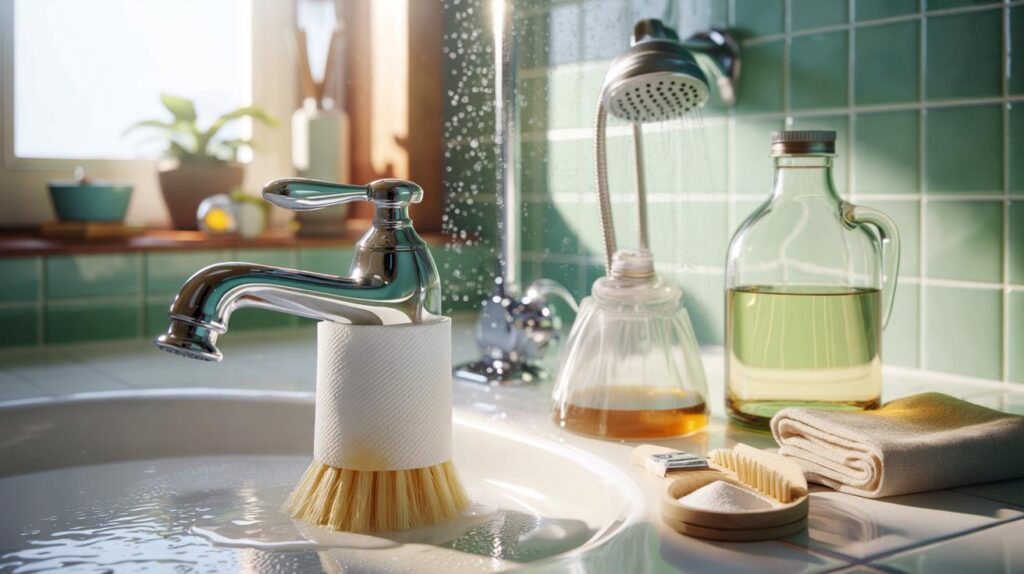
For limescale: heat a mug of distilled white vinegar until it’s hand-warm, not boiling. Soak a cloth or folded kitchen roll, wrap it snugly around the tap base, shower rose or the chalky strip on your screen. Leave it 30–60 minutes, then wipe and rinse. For a shower head, half-fill a small bag with warm vinegar, dunk the head, tie it on with a hair tie, remove after an hour and run water. Kettle crusts? Fill with one part vinegar to one part water, bring to the boil, let cool, rinse twice. **White vinegar, warmed and left to sit, is the hero.**
For mould: spray undiluted white vinegar onto dry mouldy spots on grout, silicone or uPVC. Let it sit for at least 60 minutes with the window open. Dust on a little bicarbonate of soda, then work it with a soft brush and rinse. Dry the area well. Keep it off natural stone and unsealed grout. Let’s be honest: nobody does this every day. *Smells like a seaside chippy for five minutes, then it’s gone.*
This is the only part everyone forgets: walk away and let it work.
“Warm it, leave it, walk away,” as my gran would say, folding a tea towel in that exact, efficient way you can’t fake.
- Use distilled white vinegar (5–8% acetic acid) for clear, no-stain results.
- Never use on marble, limestone, travertine, terrazzo or unsealed stone—acid etches them.
- Keep vinegar off rubber seals for long soaks; short contact is fine.
- Ventilate, wear gloves if your skin is sensitive, and rinse surfaces after.
What the “chemical-free” label doesn’t tell you
Vinegar isn’t magic. It’s just the right kind of acid for the job, and that’s why it beats many bottled blends that try to scrub instead of soften. The trick is contact time and warmth, not fury. On glass, on chrome, on plastic, the gentleness feels like a throwback to slower kitchens and windows that steamed while the kettle hummed.
You’ll still need some oomph for the worst cases. If the mould has crept under paint or marches in black sheets across a bedroom wall, that’s structural damp, not a bathroom hiccup. You need airflow, heat and sometimes a dehumidifier, plus a check for leaks. A small bottle won’t fix a cold wall in February, but it will keep your grout from turning into a garden.
If you’re tempted to mix, don’t. **Never mix vinegar with bleach.** It makes chlorine gas, which is dangerous, end of story. Use one approach, rinse, then another on a different day if you must. Think layers, not cocktails. The old ways were many things, but they weren’t reckless.
Where tradition meets your Tuesday evening
There’s a quiet pleasure in a trick that relies on heat, patience and a bent spoon wedged behind a tap to hold a vinegar wrap in place. It slows you down, and in that slowness the gunk gives up. The bathroom smells like chips for a moment, the window is open, and you’re not choking on foam. It’s small, domestic and real. Share it with a neighbour who rents, with a friend moving into a first flat, with anyone who thinks the answer must be in a louder bottle. Old bottles whisper. They get the job done.
| Key points | Details | Interest for reader |
|---|---|---|
| Warm white vinegar dissolves limescale | Wrap or soak for 30–60 minutes, then wipe and rinse | Cheap, quick wins on taps, screens, shower heads |
| Vinegar tames light mould | Spray undiluted, wait an hour, sprinkle bicarb, scrub lightly | Fewer fumes, satisfying results on grout and frames |
| Use with care and patience | No mixing with bleach, avoid natural stone, ventilate | Safer routine, fewer mistakes, longer-lasting clean |
FAQ :
- Can I use apple cider vinegar instead of white vinegar?It will work in a pinch, but it’s coloured and can leave faint stains or a sticky scent. Distilled white vinegar is clear and cleaner for surfaces. Citric acid (5–10% in warm water) is a good alternative if you dislike the odour.
- How long should I leave vinegar on limescale?Thirty to sixty minutes does the trick for most build-up. Re-wrap and repeat for stubborn rings. On delicate chrome, start at 20 minutes and check, then extend.
- Is vinegar safe on grout and silicone?On sealed grout and intact silicone, yes with short contact and a rinse. If the silicone is perished or stained deep black, vinegar won’t reverse it. That’s a replacement job.
- Doesn’t baking soda cancel out the vinegar?When you mix them, they fizz and largely neutralise. Use vinegar first for the dwell, then introduce bicarbonate as a gentle abrasive during the scrub phase. Two steps, not a volcano.
- What if mould keeps coming back?Ventilation is the fix—open windows post-shower, run the extractor for 20 minutes, and dry seals after use. Consider a dehumidifier in winter and check for leaks or cold bridges. If you see widespread black mould or symptoms at home, call a professional.



Tried this today on my shower screen—warm white vinegar wrap for an hour—and wow, the chalky haze just slid off. No coughing, no neon goo. Gran was defintely onto something.