
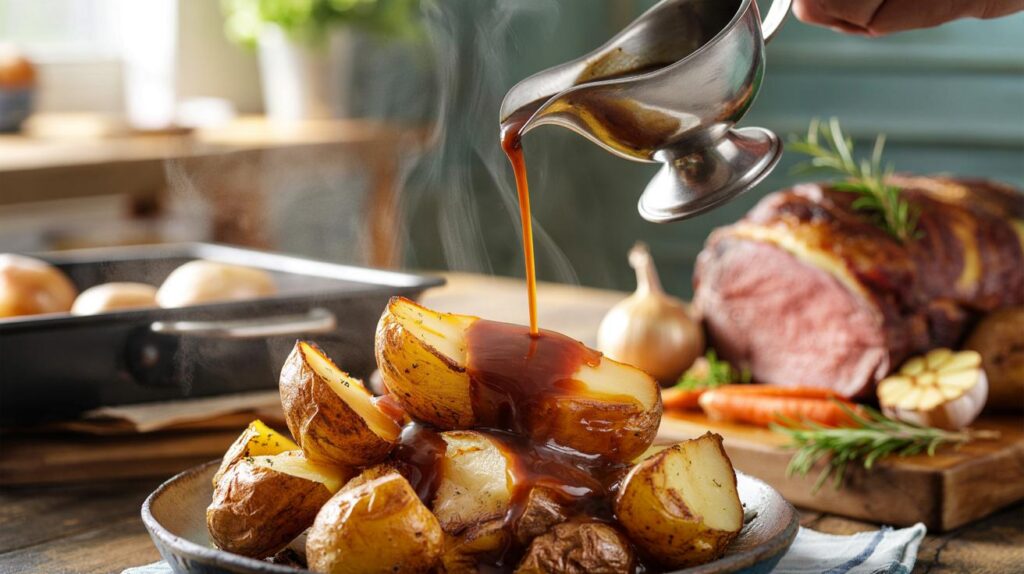
Every great British Sunday has a centre of gravity. A platter of roasties that shatter at the edge, a tide of glossy gravy that actually tastes of the roast, and a calm rush in the kitchen while the house leans into the smell. That’s the moment we chase every week.
The butcher’s paper crackles on the counter as I line up potatoes, still dusty from the sack, and crank the oven until it hums like a reliable old bus. A tray warms on the top shelf, a jug waits for pan juices, and the radio murmurs through cricket scores. Steam fogs the window when the lid lifts, and the tap water runs scalding over my hands.
The house already smells like Sunday even before the oven door opens. I can hear a fork tap the board in the next room, a reminder that crisp isn’t a style, it’s a sound. The trick is simple, but it demands a tiny bit of nerve. Just a little.
The roast that lives or dies by the crunch
Roast potatoes are never background noise. They either steal the plate or they sulk in the corner, pale and sleepy. The difference, every time, comes down to texture management and hot fat.
One winter service in a small coastal pub I watched a chef hold back a tray of roasties for three extra minutes, ignoring the pass calling his name. He turned them once more and sent them out, blistered like toffee. A regular at the bar applauded. Nobody remembered the greens. Everyone remembered the crunch.
Crispness is a science you can taste. Starch on the potato’s surface needs to burst and dry so it turns into a craggy shell; the inside then stays creamy because the water is trapped. Preheating the fat creates instant sizzle, and roughing the edges after parboiling lays down more surface area for browning. Alkalinity breaks edges, so a pinch of bicarb in the pot accelerates the magic.
Crispy potatoes and gravy, step by step
Use the right potato and treat it like you mean it. Maris Piper or King Edward, cut big, parboil in salted water with a pinch of bicarbonate of soda until the edges are fragile, then drain and shake so the steam blows off. Slide into a preheated tray with goose fat or beef dripping at 220°C, roast in space not crowds, turn once for even bronzing, and finish with flaky salt.
For gravy that actually carries the roast, start before you even carve. Roast onions, carrots, and a halved garlic bulb under the meat, then set the joint to rest and pour off excess fat. Deglaze like you mean it with a splash of wine or cider, scrape every sticky bit, add good stock, a teaspoon of Marmite or a slug of soy, reduce to gloss, thicken with a light roux or cornflour slurry, and strain silk-smooth.
We’ve all had that moment when the potatoes look right but go soft the second they hit the plate. That’s usually crowding, wet surfaces, or timid heat. Choose one fix, then breathe.
“Crisp is contrast, not hardness,” says the chef I trust most for Sunday lunch. “Your gravy should fall in love with the edges.”
- Hot fat first, potatoes second. Never the other way round.
- Steam-dry after draining; the hiss on contact should be audible.
- Roasties need gaps; use two trays rather than one packed tray.
- Gravy loves umami: Marmite, miso, anchovy, or soy make it sing.
- Finish gravy with a knob of butter for shine and a soft mouthfeel.
The ritual that keeps us coming back
There’s a rhythm to this meal that feels like music. Potatoes tumble in the tray, the meat breathes on the board, and the gravy finds its balance between roast and relief. Let’s be honest: nobody does that every day. Which is why the small details feel like ceremony, not chores.
Think about what your table remembers. A salty edge on the roasties that makes people reach for one more. A gravy with body and backbone, not brown water. The stories told while someone pretends not to guard the last golden shard.
My best Sundays start with quiet confidence and end with a tray of crumbs. I’d bet yours do, too. Share the method, tweak the timings, and pass the jug like a promise.
| Point clé | Détail | Intérêt pour le lecteur |
|---|---|---|
| Potato choice and prep | Maris Piper/King Edward, salted parboil with a pinch of bicarb, rough the edges, steam-dry | Predictably crisp outsides with creamy centres, every single time |
| Roasting conditions | Preheated tray with goose fat or dripping at 220°C, plenty of space, turn once | Deep colour, audible crunch, no soggy sides or patchy browning |
| Gravy depth and finish | Deglaze pan, add stock and umami boost, reduce to gloss, strain and mount with butter | Rich, savoury gravy that tastes of the roast and hugs the plate |
FAQ :
- What’s the best fat for roast potatoes?Goose fat gives luxurious flavour and a high smoke point; beef dripping brings savoury depth. A neutral oil works if you heat it until it shimmers. For plant-based crunch, use rapeseed oil and add a smashed garlic clove and rosemary sprig for perfume.
- Why aren’t my roasties staying crisp?They likely steamed in the tray. Dry them after draining, heat the fat first, and avoid crowding. Keep the oven hot, turn once, and serve on a warm platter so condensation doesn’t soften the crust before it reaches the table.
- Can I prep potatoes the day before?Yes. Parboil and rough them, then cool, spread on a tray, and chill uncovered to dry the surface. Roast from cold in preheated fat. A dusting of fine semolina just before roasting adds extra crunch.
- How do I make great gravy without pan juices?Roast a tray of onions, carrots, and celery with a spoon of tomato purée until caramelised, then deglaze with wine and add stock. Reduce, emulsify with butter, season, and strain. A teaspoon of Marmite or miso gives body and savour.
- Flour or cornflour for thickening?Flour gives classic body and a silky nap if cooked as a light roux. Cornflour yields a clearer, glossier finish and keeps gravy gluten-free. Add little by little to a simmer, whisking, and stop as soon as the gravy coats a spoon.



Brilliant write-up—crispness as contrast, not hardness, is such a great line. The bicarb trick finally explains why mine were hit-and-miss. Thanks!
Can’t get Maris Piper where I am. Are Russets or Yukon Gold a better swap? Also, is 220°C for a fan oven or conventional? My fan runs hot.