
That leaden, slow-breathing feeling after a big plate — the roast potatoes were worth it, except now your jeans have opinions. We reach for mints, we loosen a notch, we promise salad forever. Then we do it again next weekend. We’ve all had that moment when dessert is calling and your stomach is waving a small white flag.
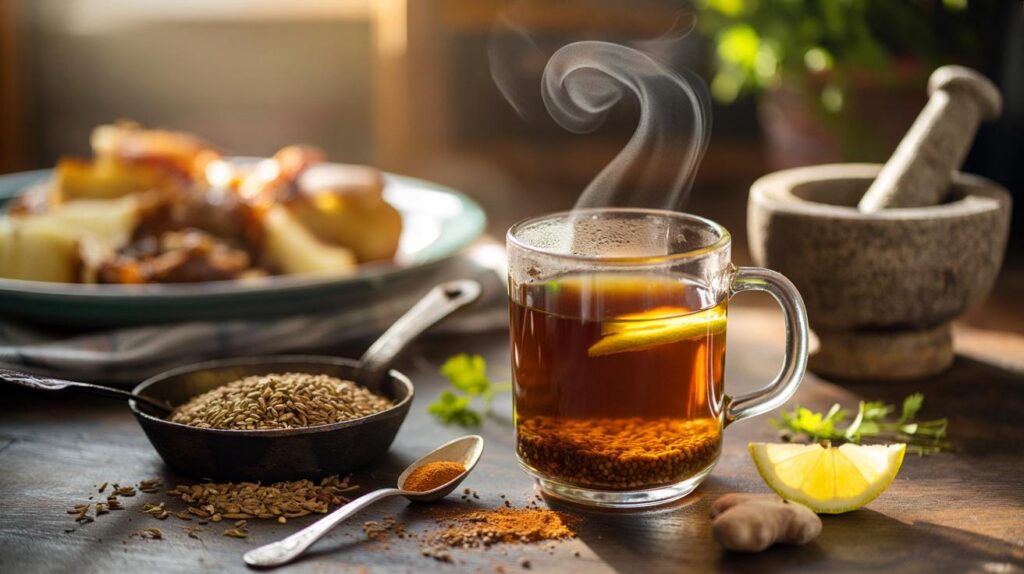
It was a Sunday table, loud and warm, the kind where the gravy boat does three full laps and aunties pass plates like rugby balls. I’d eaten bravely. Afterwards, the room thinned out and the clatter softened, and someone clinked two teaspoons into a small pan. Cumin seeds. Coriander seeds. A slosh of hot water. The kitchen filled with a nutty, lemony fog that made the heavy feel lighter before a sip touched my lips.
I watched the steam curl and thought: this is medicine that smells like dinner. One mug later, the ache eased, the bloat untied itself, and the night carried on. A tiny ritual, stolen from spice tins and long practice. A quiet fix hiding in plain sight. Something almost too simple.
The quiet science in your spice jar
Open a jar of cumin and it punches back — warm, earthy, a bit smoky. Coriander smells fresher, like someone zested a lemon and hid it in the hedgerow. That aroma isn’t just mood; it’s chemistry. Cumin is rich in compounds such as cuminaldehyde and a whisper of thymol that nudge the gut to make digestive enzymes and bile. Coriander brings linalool and a calming note that helps muscles in the gut stop clenching.
On paper it sounds niche, but try it after a late curry or a Christmas lunch and you feel it. In small trials, cumin extracts have eased IBS discomfort and cut bloating within a couple of weeks; coriander has a record with post-meal cramping and queasy, tight bellies. No miracle claims, no sci‑fi labs — just seeds people have roasted for centuries. One London chef told me his line cooks sip “jeera-dhania tea” between services, swearing it keeps a heavy staff meal from slowing their hands.
Here’s the basic logic. Spices classified as carminatives help gas move along rather than stage a sit-in. Cumin encourages pancreatic enzymes and bile, so fats and starches get handled efficiently instead of loitering. Coriander relaxes smooth muscle, which can soothe spasms and that ballooned feeling. Both are gentle on the microbiome when used as food, not pills. You’re not forcing anything dramatic; you’re steering traffic, clearing a lane, letting the gut do its job without drama.
Practical ways to use cumin and coriander after a big meal
Make a five-minute “rescue tea”. Lightly toast 1 teaspoon cumin seeds and 1 teaspoon coriander seeds in a dry pan until the kitchen smells nutty — about 60–90 seconds. Crush them briefly with the back of a spoon. Steep in 300 ml just-off-the-boil water for 8–10 minutes. Sip warm, not scalding. If you like, add a coin of fresh ginger or a squeeze of lemon. For a quicker fix, chew half a teaspoon of each seed and follow with warm water.
The spices have to be alive. Old, grey powder stuck at the back of the cupboard tastes like dust and works like it, too. Toasting should be shy — seeds go from fragrant to bitter fast if you multitask. Don’t boil them hard; you’ll drive off the bright oils you want. If you’re not into tea, stir ground cumin and coriander into natural yoghurt with a pinch of salt and mint for a quick, friendly spoonful. Soyons honnêtes : personne ne fait vraiment ça tous les jours.
Think tiny and regular rather than heroic and rare. Keep a small jar of pre-roasted, coarsely ground seeds by the kettle, and it becomes a habit as ordinary as making a cuppa. **Used as food, cumin and coriander are less about hacks and more about rhythm — a nudge, not a knockout.**
“My grandmother didn’t call it digestion. She called it ‘helping the meal find its place.’ A pinch of cumin, a pinch of coriander, then a walk.”
- Quick blend: 2 parts cumin, 2 parts coriander, 1 part dried ginger, pinch of black salt.
- Sprinkle a quarter-teaspoon over leftovers you reheat — soups, stews, scrambled eggs.
- Travelling? Pack a tiny vial of seeds; chew them discreetly after a late dinner.
Rethinking heavy meals without the guilt spiral
We eat with people, not just plates. A full table comes with stories and seconds, and sometimes you leave fuller than planned. **Cumin and coriander don’t lecture; they help you carry on.** Use them as a small act of care, not punishment. Pair the tea with a short walk around the block, a glass of warm water before bed, and a slower breakfast the next morning. Let your stomach catch up to your evening.
Some find cumin’s earthiness grounding; others love coriander’s citrus lift. You can lean one way depending on the meal — more cumin after fatty roasts, more coriander after spicy, acidic food. *One seed at a time, you’re building your own playbook.* Share the trick at the table, and someone will trade you another family remedy. Let’s be honest: nobody does every wellness thing, every day. A small, tasty, doable step tends to stick — and that’s where the power is.
| Key points | Details | Interest for reader |
|---|---|---|
| Carminative action | Cumin boosts enzymes and bile; coriander relaxes gut muscles and eases gas | Why the “rescue tea” feels like relief instead of wishful thinking |
| Easy post-meal ritual | Toast, crush, steep 8–10 minutes; or chew seeds and sip warm water | Simple method you can actually use after heavy lunches or late dinners |
| Real-world flexibility | Sprinkle on food, stir into yoghurt, pack for travel; small, regular use | Practical options beyond tea, meeting different tastes and routines |
FAQ :
- How fast do cumin and coriander work after a heavy meal?Many people feel lighter within 15–30 minutes of sipping the tea or chewing seeds. It’s a gentle shift, not a switch.
- Can I use ground spices instead of whole seeds?Yes, though whole seeds keep their oils better. If using ground, choose fresh, aromatic powder and don’t boil it hard.
- What’s a sensible amount?About 1 teaspoon of each seed per mug is a good start. You can halve that if you’re small or sensitive to spices.
- Any side effects or people who should skip this?Food-level amounts suit most people. If you’re pregnant, on gallbladder meds, or have severe reflux, talk to a clinician and start lightly.
- Do they actually reduce gas and bloating?They can. Cumin supports digestive secretions; coriander calms spasms. Small studies and plenty of kitchens say the combo helps post-meal discomfort.



Tried the rescue tea tonight after a very heavy pasta, and wow—bloat untied itself just like you said 🙂 Keeping a tiny vial of seeds in my bag now.
Sources for the ‘small trials’ you mention?