
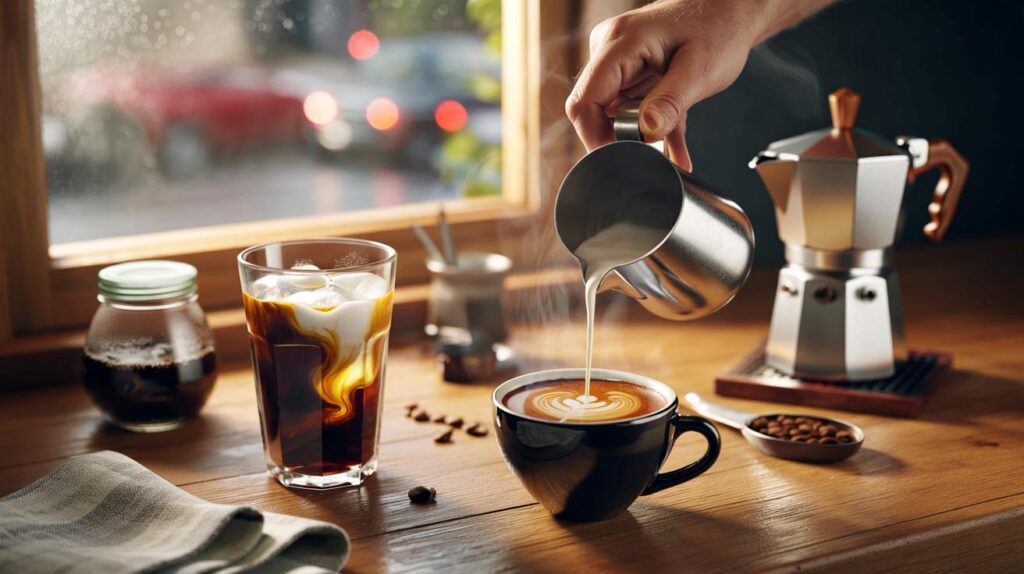
Prices rise, queues stretch, and yet that first sip still feels like a small ceremony. UK kitchens have quietly turned into micro-cafés, where milk thermometers sit next to spatulas and beans share space with tea. We’ve all had that moment when the coffee you make at home suddenly outshines the one you used to buy.
The street was wet and bright with brake lights when I first noticed the change. My neighbour’s window glowed at 7 a.m., steam curling above a little stainless jug, a soft thump of milk on the counter like a heartbeat. Inside, she was coaxing a latte into being, not rushing it, not showing off, just taking the few extra seconds that turn caffeine into comfort. I watched, then tried it myself the next day, fumbling with a cheap grinder and an old mug, feeling absurdly proud when the crema held for five seconds. And then the kettle clicked.
From queue to kitchen: why coffee culture came home
Barista rituals have escaped the café and landed on our worktops with a clatter of tampers and milk jugs. The reasons are ordinary and personal: time saved, money kept, flavours tuned to our quirks. It’s not about becoming a pro. It’s about having a repeatable little win, a pocket of craft you can fold into a rushed morning. **Fresh beans beat fancy machines.** The kit helps, sure, but the feeling is what sticks — the quiet pause while the bloom swells, the soft rise of milk, the first sip that slows your shoulders.
Look at the numbers and you see the story. Britons now brew more at home than at any point in the last decade, with sales of grinders and milk frothers jumping during the stay-at-home years and never really sinking. A London roaster told me their direct-to-door subscriptions doubled, then steadied, as people learned the rhythms of their grinders and found comfort in repeating them. A friend on a night shift started cold brew batches every Sunday, a one-litre jar tucked behind the butter, ready to dilute and pour over ice at 6 a.m. It turned dread into a small ritual.
There’s logic beneath the romance. Café coffee is a machine stitched to a routine: consistent dose, stable heat, trained hands. Recreating that at home isn’t magic; it’s a few controllable levers. Grind size acts like a tap for flavour and flow. Water temperature nudges sweetness or bitterness. Milk texture decides between silky and soapy. Dial each lever without chasing perfection and you’ll hit a sweet spot. The funny thing is, the “barista-quality” bit isn’t a badge; it’s the moment when your taste buds nod and say, yes, that.
Hands-on methods: latte craft and cold brew clarity
Start with the coffee. For lattes, aim for espresso or something that behaves like it. A compact machine is lovely, but you can get close with an AeroPress concentrate (17 g coffee, 70–90 ml water at 92–95°C, 30–40 seconds press) or a stovetop Moka topped up with hot water. Dose consistent: 18 g in, 36 g out in 25–30 seconds gives a sweet 1:2 ratio. Keep your grind just fine enough that the shot drips like warm honey, not gushes like tea. For cold brew, go coarse, 1:4 by weight for a concentrate (250 g coffee to 1 litre water), steep 14–16 hours in the fridge, then filter through paper for silk.
Milk makes the latte. Heat to 60–65°C for dairy, a touch lower for oat or almond to avoid splitting. If you’ve got a steam wand, keep the tip near the surface for two seconds to add air, then sink it and spin to polish, jug barely warm at the base of your palm before it reaches hot. No wand? A French press can froth brilliantly: heat milk, pour in, plunge halfway up and down for 20–30 seconds, then swirl to merge the foam. Pour low to blend, then lift the jug to draw a simple heart. Soyons honnêtes : personne ne fait vraiment ça tous les jours. Let’s be honest: nobody really does that every day.
Cold brew wants patience and clean lines. Use filtered water and a jar that seals, stir all the grounds so nothing floats dry, then park it on the lowest shelf. Strain through a fine sieve, then again through a paper filter to remove silt, which muddies flavour and shortens shelf life. Clarity tastes like more sweetness. A 1:1 dilution over ice gives café-strength, but you can go 1:2 if you like it gentle, then add a splash of milk.
“Consistency isn’t strictness,” said a barista in Manchester. “It’s just repeating the one or two things that make your cup sing.”
- Grind fresh within 10 minutes of brewing.
- Store beans in an airtight tin, cool and dark, never in the fridge.
- Rinse paper filters to ditch papery notes and warm your vessel.
- Wipe your steam wand before and after every use to keep flavours clean.
From recipe to ritual: making it yours
To fix bitter shots, grind a notch coarser and lower water temp to 92–93°C. To fix sour shots, go finer and push closer to 94–95°C. Keep a small notebook by the grinder: bean name, dose, time, taste. Two lines per cup is enough. For milk, listen more than you look — a gentle paper-tearing sound at the start becomes a whisper when the texture is right. Stop at 60–65°C; milk that climbs beyond 70°C loses its sweetness and turns flat. **Temperature is your compass; you don’t need a map.**
Common stumbles are normal. Oat milk splitting? Heat slower and swirl longer, and try a barista edition that stabilises better. Latte too thin? Increase the espresso yield to 40–42 g if your beans are light-roasted, which often bloom brighter at longer ratios. Cold brew tasting dusty? Your grind’s probably too fine or your filter too quick. Change one thing at a time. Talk to yourself kindly in the kitchen. Your hands will learn the shapes faster than your head writes the rules.
Gear isn’t the gatekeeper. A mid-range burr grinder beats a top-end machine paired with uneven grounds. If you’re on a budget, a hand grinder and a milk whisk can produce mugs with soul, and that counts more than a chrome badge.
“I thought I needed a machine with a touchscreen,” a reader messaged me, “but it turned out I needed a kettle I trusted and five extra minutes.”
- Entry espresso route: second-hand machine, fresh gasket, clean group head weekly.
- No-espresso route: AeroPress concentrate + well-textured milk = satisfying latte feel.
- Cold foam hack: mix 100 ml cold milk with 5 ml syrup, whisk 20 seconds, spoon over cold brew.
- Fast syrup: 1:1 sugar and boiling water, stir till clear, add a pinch of salt to round sweetness.
Home coffee is a small act that ripples outward. You start by chasing a café flavour, then your taste drifts into your own lane. Some mornings you’ll lean chocolatey and heavy, others you’ll chase a peachy filter or a bright iced latte with a dash of cardamom. The routine becomes a hinge in the day — five quiet minutes before emails, a cool glass at 4 p.m., a decaf after dinner that’s about comfort, not kick. **Your kitchen can become the most generous café you know.** Share a jar of cold brew with a neighbour, trade beans, swap tips, laugh at the latte art that looks like a potato. There’s community in the clatter.
| Point clé | Détail | Intérêt pour le lecteur |
|---|---|---|
| Grind and ratio | Espresso 1:2 in 25–30 s; cold brew 1:4 concentrate, 14–16 h | Clear rules to hit repeatable flavour |
| Milk texture | 60–65°C, gentle air then spin; French press froth works | Silky latte feel without fancy kit |
| Clean and clarity | Rinse filters, wipe wands, paper-filter cold brew | Brighter taste and longer shelf life |
FAQ :
- What beans work best for lattes?Medium to medium-dark roasts give chocolate and caramel notes that pair with milk. Look for blends with Brazil or Colombia as a base if you want classic café comfort.
- Can I make “espresso” without an espresso machine?You can mimic strength and balance with an AeroPress concentrate or a Moka pot topped with hot water. It won’t be identical, but it can be delicious and latte-friendly.
- How long does cold brew last in the fridge?Up to 7–10 days if filtered through paper and stored in a sealed bottle. Flavour is best in the first five days, so make batches you’ll actually finish.
- Why does my milk taste bland?It’s likely overheated. Stop at 60–65°C and swirl to keep texture glossy. With non-dairy, try barista editions designed to hold microfoam and sweetness.
- Do I really need a grinder?Pre-ground stales fast. A burr grinder, even a hand-crank one, is the single upgrade that transforms your cup. Fresh grounds lift aroma, crema, and clarity.



Loved the line “Fresh beans beat fancy machines.” I swapped my flashy machiene for a hand grinder + Moka pot and the 1:2 shot ratio finally clicked. Heating milk to about 62°C changed everything—no more flat, overhot foam. Thanks for making the steps feel doable.