
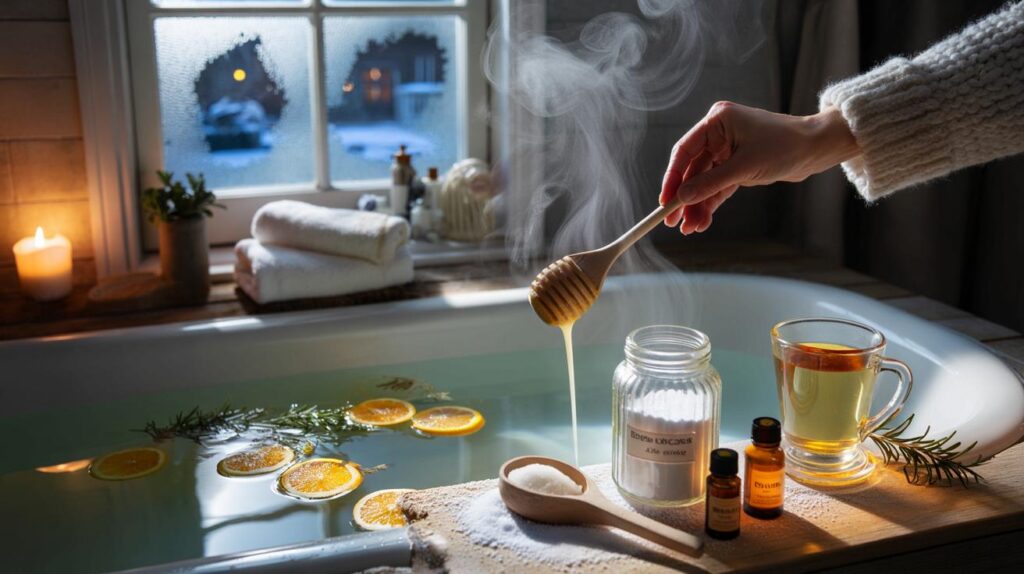
The window is fogged from the inside, the street is thin with frost, and the radiator ticks like a metronome with cold bones. You run the tap and the tub answers in a soft roar, steam lifting in curls and carrying the day away. A jar sits on the tiles: pale salts, a scoop of baking soda, a ribbon of orange peel, a thumb of ginger grated until the air tingles. You stir with a spoon, not because you have to, but because ritual slows the hands. The scent rises — citrus-bright, herbal, a whisper of woodland — as if someone opened a door to a warmer country. This is the kind of warmth that travels from bones to brain. We’ve all had that moment where the cold gets into your mood. The bath knows. The recipe isn’t what you expect.
Why a bath can change a winter night
There’s a difference between hot water and a bath that meets you halfway. A quick soak can thaw your toes, sure, but a made bath becomes a room within a room — one that asks less of you and gives more back. The trick isn’t fancy. It’s about combining a little heat, a little mineral, and a little scent so the body lets go without a fight. Think of it like a well-packed bag for a weekend: just what you need, nothing you don’t. The right bath can take the edge off a long evening and put some light back behind the eyes.
Story time. Amara in Newcastle swears by a scoop of Epsom salt, half a cup of baking soda, and a thumb of ginger grated straight into the water. She started in January when the windows wouldn’t stop crying in the mornings. The first night her smartwatch nudged her with a surprise: she fell asleep faster than usual and woke up less. A Texas research team found similar patterns across dozens of trials — warm baths taken an hour or two before bed help people nod off around ten minutes sooner. That’s not a miracle cure. It’s just enough to **winter-proof your evening**.
Here’s the logic that makes it land. Warm water draws blood to the skin; you step out, cool down a notch, and your core temperature slips into the lane that invites sleep. Epsom salt is magnesium sulphate — absorption through skin is debated — but the mineral-rich soak can soften water and muscle mood alike. Baking soda nudges the pH closer to soft rain, which feels kinder on skin in hard-water cities. Ginger is a lively one: it brings a pleasant tingle and a sense of inner heat without turning the bath into a furnace. Layer simple scents — lavender to quiet, eucalyptus to clear, a peel of orange for brightness — and your nervous system gets the message in stereo.
The recipe: simple, warming, quietly luxurious
Run your bath to cosy-warm — 37 to 40°C — the kind of heat you can sink into without flinching. Sprinkle in 2 cups (about 500 g) of Epsom salts and half a cup (about 100 g) of baking soda, stirring until the water goes a touch silky. Grate 1 to 2 tablespoons of fresh ginger or use a teaspoon of powdered ginger, and swirl it through. Dissolve a tablespoon of honey in a mug of hot water or chamomile tea and pour it in. Add 6 to 8 drops of essential oils total: lavender (4), sweet orange (2), eucalyptus (2). That’s it: **gentle heat, not a scald**. If you fancy, finish with half a cup of oat milk for clouded water and soft skin, and a sprig of rosemary for the nose.
Stay in for 15 to 20 minutes. Keep a glass of water nearby and the bathroom door cracked so the air doesn’t go heavy. If your skin is lively, test the ginger in a small basin first. Essential oils should be kept light and never dotted directly on skin; blend them into a spoon of carrier oil or the honey-water before they meet the bath. Skip eucalyptus if steam makes your chest tight. If you’re pregnant, have very sensitive skin, or live with certain conditions, talk to a clinician before adding oils or turning the heat up. Let’s be honest: nobody does this every day. It’s your bath, not boot camp.
There’s a reason this mix feels like home on a cold night. The scent lets your shoulders drop before your body has fully noticed, and the water’s heft says, “you’re held.”
“People don’t come here for a wash,” a spa attendant in Bath told me. “They come to change the temperature inside their day.”
- No Epsom salts? Use coarse sea salt and keep the baking soda. Different vibe, still kind.
- No ginger? A cinnamon stick or two slices of fresh turmeric bring a warm hum.
- No essential oils? A strip of citrus peel and crushed rosemary do the lifting.
- Hard week? Double the chamomile tea and skip the eucalyptus.
Why this small ritual lands big
The weather outside isn’t just on the other side of the glass. Cold collects in habits — the rushed dinner, the laptop glow, the extra scroll before bed that winds your mind up like string. A made bath cuts through that pattern without speeches or screens. It’s practical warmth that arrives through the skin and leaves by the mind. So you step out, towel-wrapped, a touch pink, and the room looks different in the mirror. You breathe slower. Tea tastes better. Texts can wait. Maybe that’s the quiet magic: a cheap, gentle way to put a comma in the night and carry on softer. On a map of small winter choices, this one has a big arrow. Because **ritual beats routine** when the evenings are long.
| Point clé | Détail | Intérêt pour le lecteur |
|---|---|---|
| Bath temperature | Keep it around 37–40°C; warm enough to relax, not so hot you feel woozy | Comfort without the post-bath slump or dizziness |
| Core mix & ratios | 2 cups Epsom salts, 1/2 cup baking soda, 1–2 tbsp fresh ginger, 6–8 drops oils | A repeatable recipe that’s easy to remember and adapt |
| Timing & length | Soak 15–20 minutes, ideally 1–2 hours before bed | Aligns with your body clock for faster, deeper rest |
FAQ :
- Can I use table salt if I don’t have Epsom salt?Yes, in a pinch. Table salt won’t deliver the same mineral feel, but it still softens water a touch. If you have coarse sea salt, that’s a nicer swap. Keep the baking soda in either case.
- What’s the best water temperature on a cold evening?Think warm and welcoming, not hot and heroic. Aim for 37–40°C — wrist-comfortable if you don’t have a thermometer. You should be able to settle without that sharp “too hot” inhale.
- Are essential oils safe in the bath?Use them lightly and diluted. Blend 6–8 drops into a spoon of carrier oil or your honey-water before adding. Skip if you’re pregnant, have very sensitive skin, or if certain scents give you headaches. No direct drops on skin.
- How long should I soak for the best effect?Fifteen to twenty minutes is the sweet spot. Long enough for heat, scent, and salts to do their quiet work. After that, step out, pat dry, and slide into loose layers.
- Can kids or pregnant women try this recipe?Keep it simpler. For children and during pregnancy, leave out essential oils and go with warm water, a small handful of oats in a muslin bag, and a short soak. If in doubt, speak with a midwife or GP first.



Tried this last night—Epsom + baking soda + a thumb of ginger—and I slept like a log. The honey-chamomile twist is chef’s kiss, and the bathroom smelled like a tiny spa in the woods. Thank you! 🙂
Fun piece, but quick question: transdermal magnesium from Epsom salts is still pretty contested, no? I’m here for the ritual, tho I’d love citations beyond the Texas sleep-timing paper. Got a link to the trials you mentioned?