
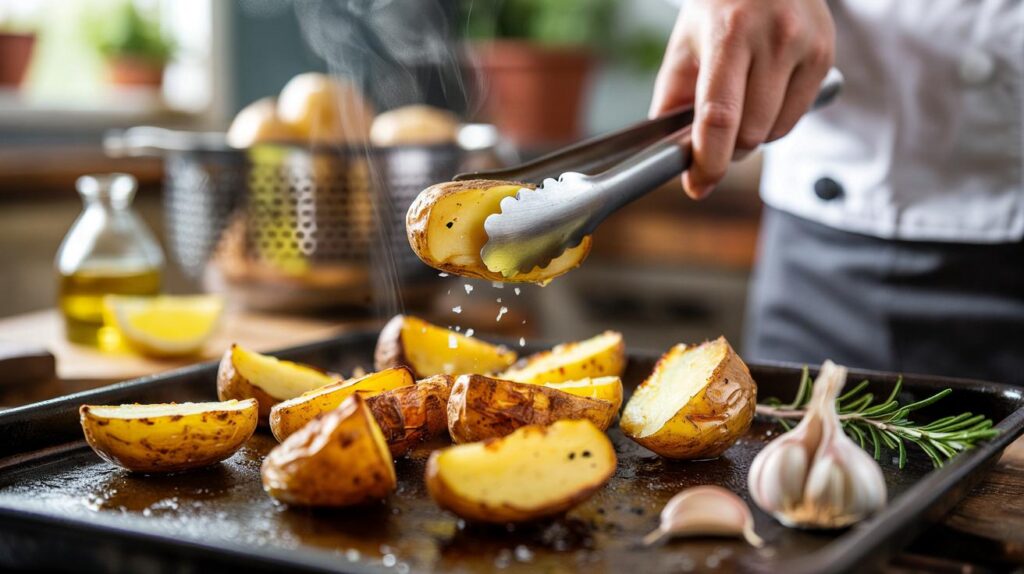
Sunday kitchens have a particular hush before the roast hits the table. A clatter of trays, a cloud of steam, someone peering into the oven like a fortune-teller. The meat gets all the fuss, yet it’s the potatoes that rule the room — either they shatter like glass and whisper butter, or they slump into chewiness and apology. I spent a morning with a Michelin-trained chef who treats roasties like a craft, not a side. On a drizzly London street, we talked starches, timing, and the sound a perfect edge makes when a knife touches it. The difference began long before the oven door shut. There was a small, decisive secret.
The moment crispness begins (and it’s not in the oven)
Real crispness doesn’t start with heat — it starts with choice. The chef reached into a crate and pulled up a Maris Piper, the sort you’d walk past on a hurried shop. “Floury, high dry matter, big cells,” she said, tapping the skin. Not King Edward? That works too. But waxy potatoes? Save them for salad. The right spud gives you a crumbly edge that fries itself. Get this wrong and you’re chasing a ghost for two hours.
We’ve all had that moment when a tray emerges golden yet bites like a memory foam pillow. At a pop-up in Hackney, the chef served roast potatoes beside slow-cooked lamb; conversation stopped after the first crunch. People looked down, not up. She’d parboiled in heavily salted water laced with a tiny shake of bicarbonate of soda, ten minutes until the edges turned cloudy. That single tweak roughened the surface like sandpaper. The first bite made a sound you could hear two tables over.
The logic is simple. Floury potatoes break down on the surface when heated; that starch rubs into a paste that becomes a shell. Bicarb nudges the pH, helping pectin loosen so the exterior scuffs more easily. Salt seasons from within, so flavour isn’t just sitting on top. Then you drain and let them *steam-dry* until the steam stops — less water means more crisp as oil can cling rather than sputter. The oven isn’t magic. It’s just stage two.
The Michelin-trained method, step by step
Here’s the practical bit the chef swears by. Cut potatoes into big, even chunks — think two-bite pieces, edges squared. Drop them into cold salted water with a pinch of bicarb, bring up to a lively simmer, then cook 8–10 minutes until a knife slips in with a small catch. Drain. Wait. Shake the colander to fluff the edges, then let them sit until the steam fades. Your tray should already be in a 220°C oven with a shallow pool of goose fat, beef dripping or high-heat rapeseed oil. The fat needs to be shimmering.
Tip the potatoes into the hot fat and listen for the hiss. Turn each piece once to coat, then leave them alone. Space matters, so give them room — crowding makes them stew. Roast for 30 minutes, turn, roast 20 more, baste with the fat, then finish with a 10-minute blast at 230°C. That final surge is your glassy crust moment. Sprinkle flaky salt immediately so it sticks. A cracked clove of garlic and a sprig of rosemary can ride along for scent. Let’s be honest: nobody actually does that every Sunday.
You’ll see mistakes everywhere. People use waxy spuds and wonder where the crunch went. They skip the drying, so steam softens the shell. They pour cold oil into a cold tray and hope. They flip every five minutes, rubbing off the forming crust. Or they add herbs too early and burn them into bitterness. The chef’s line stuck with me: “Crispness is a promise you make in the first twenty minutes.” That means heat ready, potatoes dry, and no fidgeting once they’re down.
“Crisp is contrast,” said the chef. “Outside like lacquer, inside like a cloud. The rest is noise.”
- Use floury potatoes like Maris Piper or King Edward.
- Preheat the fat at 220°C until shimmering before potatoes touch it.
- Parboil with salt and a pinch of bicarb for 8–10 minutes.
- Rough the edges, then air off until the steam stops.
- Finish hot and fast for a last 10-minute blast.
The little details that taste like Sunday
There’s a finish nobody talks about: acidity. A dab of malt vinegar, a squeeze of lemon, or a whisper of cider vinegar in the fat right at the end. The crunch pops brighter, the potato tastes somehow more potato. Restaurants do this instinctively because it lifts everything on the plate. You won’t taste “vinegar”; you’ll taste clarity. It’s a trick borrowed from fish and chips, disguising itself as nostalgia.
Seasoning can work in layers. Salt the water. Salt at the end. If you like, add a dust of garlic powder in the last five minutes so it blooms but doesn’t burn. Pepper? Add it after roasting; high heat can turn it a touch harsh. If you want rosemary, keep it whole and remove it before serving. Thyme behaves better, staying sweet in the background. Not every tray needs a herb garden. Some days it’s just hot fat, salt, potato, and silence.
Timing joins texture. Roast potatoes can hold on a rack for 15 minutes while the meat rests, and they’ll stay crisp if they’re up out of the fat. If they soften, slide them back in for five minutes at high heat; they forgive. Leftovers re-crisp nicely next day with a splash more fat in a frying pan. I’ve seen them served for breakfast with fried eggs and hot sauce, no complaints. A tray of roasties is a crowd leveller. Soyons honnêtes : personne ne fait vraiment ça tous les jours. But when you do, the room notices.
What you’ll carry into next Sunday
Think of the method less as a recipe and more as choreography. Potato choice, parboil, dry, hot fat, space, patience, finish. Each part buys you texture and flavour you can’t retrofit later. Once you’ve felt the tray handle go light as the crust forms, you’ll trust the process more than the timer. And you’ll start playing — a hint of vinegar here, a switch of fat there, a rosemary day, a salt-only day. The point isn’t perfection. It’s that warm pause around the table, the tiny hush before a crunch.
| Point clé | Détail | Intérêt pour le lecteur |
|---|---|---|
| Potatoes and prep | Maris Piper/King Edward, salted water + pinch of bicarb, rough the edges | Predictable crunch with tender centres every time |
| Heat and fat | Preheat tray and fat to 220°C, don’t crowd, minimal turning | Builds a shatter-crisp shell without sogginess |
| Finish and flavour | Final 230°C blast, layer salt, optional acid and herbs at the end | Restaurant-level flavour and texture with simple tweaks |
FAQ :
- Which oil or fat is best?Goose fat gives deep flavour and a glassy edge. Beef dripping is robust and classic. Neutral rapeseed oil works brilliantly if you want clean potato taste and high smoke point.
- Why add bicarbonate of soda to the water?It slightly raises pH, helping the potato surface break down so it roughs up more. More roughness equals more crunchy surface area once roasted.
- How long should I parboil?Usually 8–10 minutes from simmer for large chunks. You want the outer 3–4 mm to soften and turn cloudy, with the core still holding.
- Can I make them ahead?Yes. Parboil, rough, and cool completely. Refrigerate uncovered up to 24 hours, then roast straight onto hot fat from cold. They often crisp even better.
- Why do my roasties go soft after resting?Trapped steam and sitting in fat. Lift them onto a rack for the meat rest, then give a quick 5–10 minute reheat at 230°C to snap them back.


