
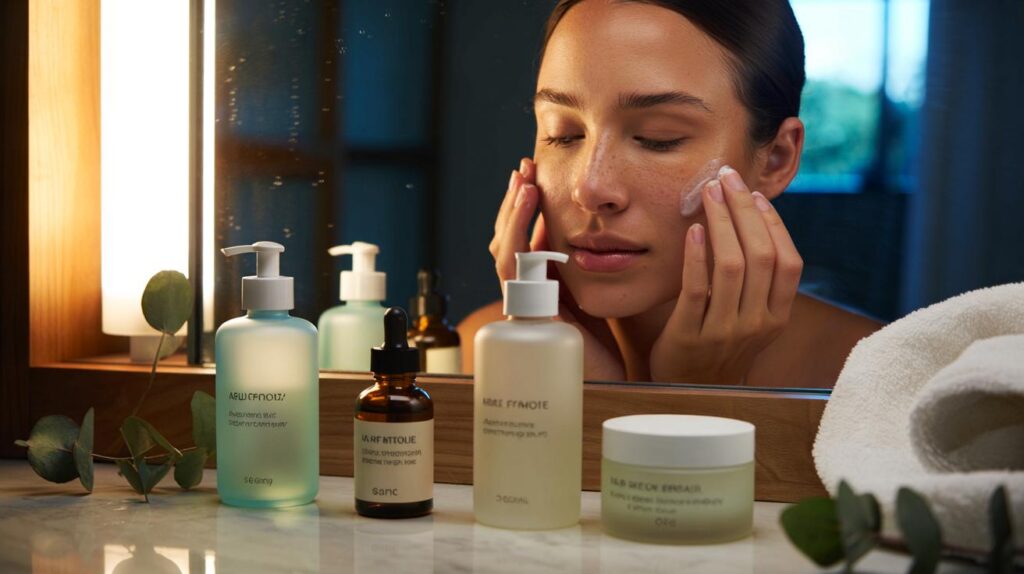
Your bathroom shelf is starting to look like a beauty counter. Acids, retinoids, oils, toners — all promising radiance, often delivering redness. Skin cycling is the quiet rebuttal: less, but smarter, so your face can breathe and still glow.
The night I finally clocked it, a friend sent a selfie at 11:47pm: eyes half-closed, cheeks shiny, five bottles open like tiny soldiers on the sink. She whispered that her face felt hot again, and asked if the new serum was “working” or simply loud. We’ve all had that moment when your skin feels over-dressed and under-happy. I rang a consultant dermatologist who said, gently, you can’t bully a barrier and expect it to behave. The advice was oddly simple: alternate the heavy hitters with nights of repair. What if the glow you want is hiding in the rest you don’t give your skin?
Why “skin cycling” is trending — and calming inflamed faces
Scroll any feed and you’ll see the same loop: retinoid courage, acid zing, then a flare-up that lasts all weekend. Skin cycling flips the script by building in recovery nights, so your barrier isn’t constantly on defence. The promise is clear: fewer reactions, better tolerance, and that elusive lit-from-within look.
Hannah, 29, from Manchester, told me she went from nightly stinging to steady glow in three weeks. She kept her active nights intact but moved them apart, and her cheeks stopped burning after showers. Search interest keeps rising, and not just on TikTok — GP waiting rooms and WhatsApp groups are talking about it too.
Here’s the logic. Powerful actives remodel skin, but that micro-remodelling creates micro-irritation. When you let the barrier rebuild — with bland, cushiony moisturisers — your skin holds onto water better and tolerates actives with far less fuss. In practice, that means steady progress without the backslide of peeling and patches.
The 4-night playbook dermatologists love
Think in four nights. Night 1: exfoliation, usually a leave-on chemical acid — lactic for newbies, salicylic for congestion, glycolic if you’re experienced. Night 2: retinoid — a pea-sized amount, face only, onto dry skin. Nights 3 and 4: recovery — no actives, just barrier-loving layers like ceramides, glycerine, squalane and hyaluronic acid.
Apply on bone-dry skin after cleansing; dampness can drag actives deeper and sting. Retinoid sandwiching (moisturiser, then retinoid, then moisturiser) can help sensitive types. Let’s be honest: nobody really does that every day. Still, this is one routine that rewards consistency more than enthusiasm.
Common trip-ups? Doubling exfoliants without realising — toner plus serum counts as two. Chasing a purge with more actives, not rest. Skipping moisturiser on oily skin and then wondering why you’re tight and shiny. Start lower and slower than your ego wants, because healthy skin beats heroic dosing.
“Think of skin cycling as interval training for your face — effort, then recovery, so the gains stick.”
- Night 1: Acid exfoliant, then moisturiser
- Night 2: Retinoid, then moisturiser
- Night 3: Recovery — hydrating serum, rich moisturiser
- Night 4: Recovery — repeat hydration and barrier support
- Repeat, or add extra recovery nights if you’re sensitive
The bigger picture: glow without the gamble
This isn’t about perfection; it’s about rhythm. By cycling, you reduce the guesswork and stop turning your face into a chemistry experiment every night. Your skin learns the beat and performs better because of it.
What happens next is subtle. Makeup sits smoother, redness chills out, and you stop needing clever tricks to fake dewiness. *It’s skincare with breathing room.*
The best routines feel almost boring once they start working. That’s the tell. You think about your skin less, and it behaves more. You may still tweak — a winter drop of richer cream, a summer swap to lactic acid — but the cycle holds. Share it with the friend who hoards serums like souvenirs. It might be the quiet fix they’ve been waiting for.
| Point clé | Détail | Intérêt pour le lecteur |
|---|---|---|
| Le rythme 4 nuits | N1 exfoliant, N2 rétinoïde, N3–N4 réparation | Un cadre clair, facile à mémoriser |
| Barrière d’abord | Céramides, glycérine, hyaluronique, squalane les nuits de repos | Moins d’irritations, plus d’hydratation durable |
| Personnalisation | Acides plus doux, rétinoïdes plus faibles, nuits de repos en plus | Adapté aux peaux sensibles, acnéiques ou débutantes |
FAQ :
- Can I skin cycle if I’m using prescription tretinoin?Yes. Many people keep Night 2 as tretinoin and still take two recovery nights. If you’re peeling, extend recovery to three or four nights.
- What should I use in the morning?Keep it gentle: cleanse if needed, vitamin C or a hydrating serum, then moisturiser and broad-spectrum SPF 30+. On recovery mornings, you can add a mist or light oil if you like.
- How long until I see results?Texture often softens within two weeks. Tone and fine lines tend to improve over 6–12 weeks as tolerance grows and water retention improves.
- Is “slugging” compatible with skin cycling?You can slug on recovery nights only, over moisturiser, if your skin is very dry. Skip it on exfoliant or retinoid nights to avoid trapping irritation.
- What if I have active acne?Skin cycling helps you use actives consistently without flaring. Consider salicylic for Night 1, a gentle retinoid for Night 2, and keep recovery nights simple. Spot-treat benzoyl peroxide on recovery nights if needed.



Tried the 4-night cycle and my redness calmed down in two weeks. Thanks for the barrier-first reminder—boring routine, happy skin!
Isn’t this just repackaging ‘use less’ as a trend? What makes cycling superior to simply lowering actives every night?