
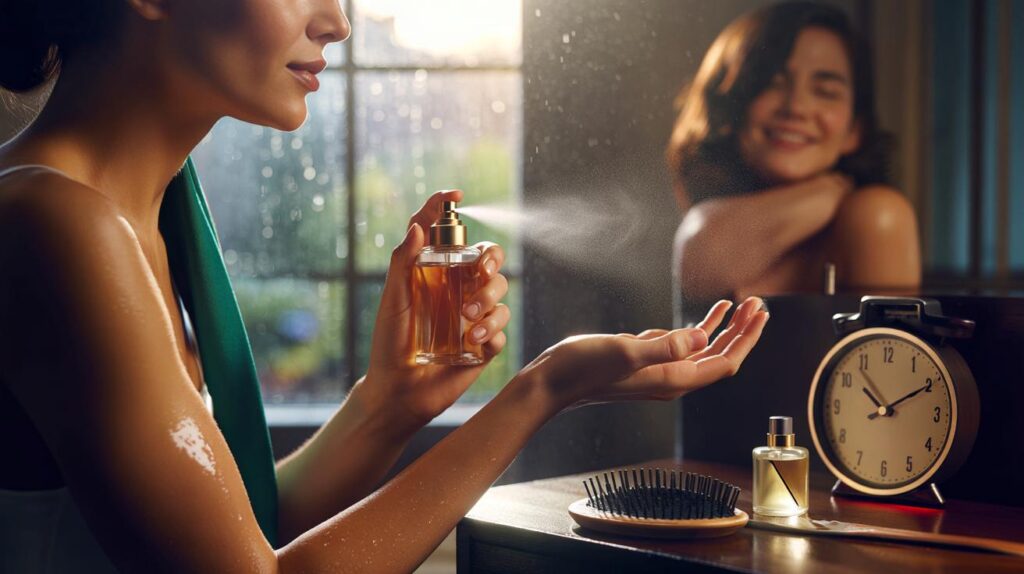
Your perfume smells glorious at 8 a.m., whisper-light by 10, and almost gone by lunch. You spray more, you blame the bottle, you wonder if it’s you. The truth is sneakier, and much more human: your brain is quietly turning the volume down on your fragrance long before anyone else stops smelling it. There’s a fix that takes under a minute—and it doesn’t involve drowning yourself in mist.
I clocked it on a rainy Tuesday on the Victoria line. A woman in a navy blazer spritzed her wrist, tapped it to her neck, and smiled at the cloud she’d made before the train doors closed. Hours later, she sat opposite me in the café, frowning into her phone, muttering that her scent had “disappeared again”. Her colleague walked in, hugged her, and said, “You smell divine.” She looked startled, almost suspicious. I knew that look. We’ve all had that moment where a fragrance vanishes on us yet somehow lingers for everyone else. Maybe it never left.
Why Your Perfume Seems to Vanish by Noon
The first culprit isn’t your perfume at all—it’s your brain. Smell is wired for survival; once your nose decides a scent is “safe” and constant, it fades it into the background so you can detect changes around you. Perfumers call it olfactory adaptation. It can set in within 20 minutes, even with strong formulas, which is why your own fragrance dulls while a stranger’s still rings clear across the carriage.
Take Jenna, who works in an open-plan office by Liverpool Street. She swears her favourite citrus only lasts “half an hour, tops”. Yet when she walks past reception, people ask what she’s wearing. She once left a jumper on a chair at the pub; her friend texted later to say the booth still smelled like her. The scent was there. Jenna’s brain had simply filed it away.
There’s also the quick chemistry of top notes. Citrus and airy florals are built to sparkle, then lift—like the pop of a champagne cork that becomes a murmur. Skin type plays a role too. Dry skin sips fragrance faster, and warm skin pushes molecules into the air sooner. Fabrics can hang onto perfume longer than bare skin, which is why scarves often hold a ghost of yesterday’s spritz. That “gone by lunch” feeling is usually a mix of your nose adapting and those brightest notes doing their job—then bowing out.
The One-Minute Trick That Makes It Last All Day
Here’s the simple shift: perfume clings to moisture. After your shower, pat dry, then smooth on an unscented moisturiser. Dab a whisper of petroleum jelly on two pulse points, no more. Spray your perfume over that from a forearm’s length, and let it settle for 30 seconds. Don’t rub. The soft occlusive layer acts like a magnet, keeping scent oils on your skin and slowing their escape into the air.
Mind the usual trip-ups. More sprays aren’t the same as staying power; it often just overloads you while others step back. Store your bottle away from heat and light, and go easy on silk or delicate knitwear if you spritz clothes. Layering with the matching body lotion works if you love the full embrace; if not, a neutral moisturiser is kinder. Let’s be honest: nobody really does that every day. Build a routine you’ll keep on a sleepy Thursday, not just on a Saturday night.
Two small add-ons make a quiet difference. Spritz a hairbrush—not your hair directly—and sweep it through the ends for a gentle trail. Slip a travel atomiser into your bag for one mid‑afternoon cloud, not a fog. Your nose might not register it, but someone two desks away will.
“Fragrance loves moisture, hates friction, and thrives on patience. Treat it like silk on skin, not like a gym towel.”
- Prime skin: unscented lotion, then a pin-head dab of petroleum jelly on pulse points.
- Spray from 10–15 cm and let it air-set. No wrist rubbing.
- Hit fabric lightly: cuffs, scarf, or blazer lining—avoid fine silk.
- Brush-through trick: one spritz on a hairbrush for a soft, lasting veil.
- Carry a mini for a single refresh at 3 p.m., not a full respray.
A Scent That Stays—and Says Something
Once you know your brain is the saboteur, the whole day shifts. You stop chasing the high of the first minute and start building a base that hums for hours. You notice the quiet glow at 5 p.m. when a door lifts a breeze and someone says, “What is that?” You realise the point isn’t to smell yourself constantly; it’s to let the perfume live with you as the day turns. Try the moisture trick for a week and watch how your scent becomes a soft narrative. You might find the part you love most isn’t the first fizz. It’s the echo.
| Point clé | Détail | Intérêt pour le lecteur |
|---|---|---|
| Olfactory adaptation | Your brain filters out familiar smells within minutes | Explains why you “lose” perfume while others still notice it |
| Moisture lock method | Unscented lotion + tiny petroleum jelly + spray without rubbing | One-minute routine that boosts longevity without overspraying |
| Smart placement | Pulse points, light fabric hits, hairbrush trick | Longer trail and better projection through the day |
FAQ :
- Why can’t I smell my perfume after an hour?Olfactory adaptation dulls familiar scents fast. Your perfume may still project to others even when you go “nose-blind”.
- Does rubbing wrists really ruin perfume?It can flatten top notes and heat up the skin, speeding evaporation. Let it settle instead.
- Where should I apply for best longevity?Moisturised pulse points, the back of the neck, under a collar, and a light touch on fabric. A hairbrush spritz adds a gentle halo.
- Will moisturiser change the smell?Unscented, plain moisturiser won’t. Scented lotions can layer or shift the profile, which is lovely if you want a fuller effect.
- Is more spray the answer?Not usually. One well‑placed, moisture‑locked application often outlasts five rushed blasts.



Mind = blown. I always thought my ‘weak’ perfumes were duds, but olfactory adaptation makes so much sense. Tried the unscented lotion + no rub this morning and my scarf still smells like sunshine at 4 p.m. Also love the hairbrush spritz—soft, not crunchy. Thanks for writing this so cleary!