
A toddler’s meltdown in aisle four, a parent’s flushed cheeks, a chorus of stares. We call it the “terrible twos” and move on, as if a birthday lights the fuse. What if that story is wrong — and the real cause is both simpler, and kinder?
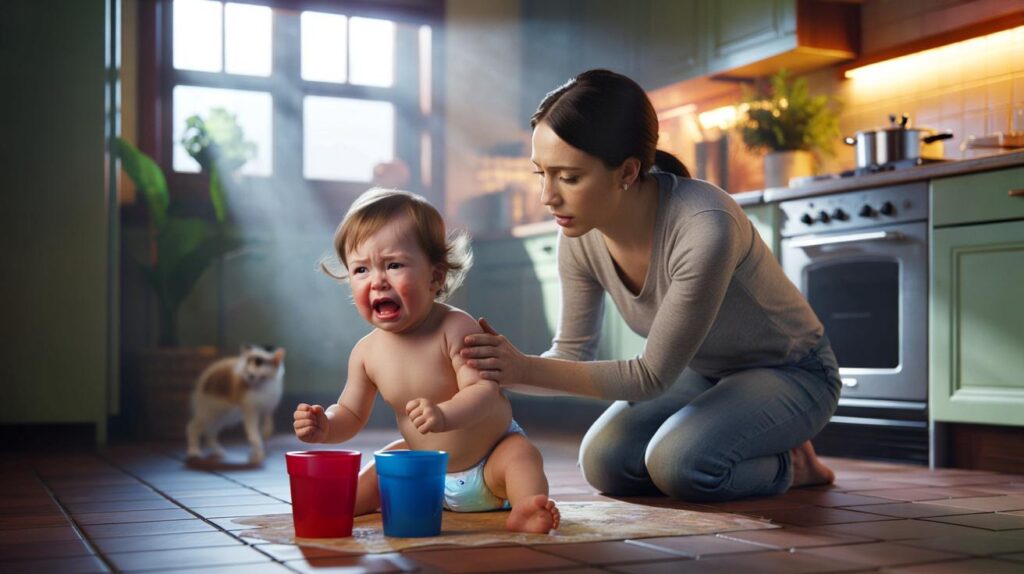
At 5:17pm in a small London kitchen, a two-year-old hits the floor because the blue cup is not the red cup. Her mum freezes. The pasta boils. The cat bolts. The wail rises from somewhere ancient, and it fills the room like steam.
She tries logic. She offers the red cup. She offers both cups. The child howls harder. Then, a knee on the tiles, a hand on a small back, a slow breath that anchors the air. The storm softens. Not instantly. But it softens.
We’ve all lived that moment when a tiny “no” turns into a tidal wave. What if the “terrible twos” are a myth, and tantrums are something else entirely? A clue hides in the brain.
Here’s the thing: brains grow unevenly. The parts that want autonomy sprint ahead; the parts that manage impulses, language and planning jog behind. That gap is where tantrums live.
And yes, there’s a way through it that doesn’t break either of you. Watch this space.
Beyond the “terrible twos”: what’s really going on
The phrase makes it sound like a cursed year. It isn’t. Tantrums begin as early as 12 months, often crest between 18 and 36 months, and ebb as self-control and language mature. **The “terrible twos” is a catchy label, not a scientific stage.** It sticks because it’s tidy. Life with a toddler is anything but tidy.
Real life runs on hunger, nap debt, noise, transitions and tiny disappointments. Large studies find most toddlers have weekly meltdowns, and around one in five explode daily. That’s not bad behaviour. That’s a nervous system blinking red. Think of it like this: when the prefrontal cortex is offline, raw emotion takes the wheel. Blue cup, red cup — the cup is never the cup.
Here’s where a child psychologist would point the camera: the body leads. Heart spikes, breathing shallows, muscles prime. Language shrinks to a thimble. *This is development, not defiance.* The drive for independence rubs against limited control. Add sensory overload — bright supermarkets, cold pavements, itchy jumpers — and the bucket overflows. **Tantrums are the tip of an iceberg: stress + needs + skills not yet built.**
What helps in the heat of it
Co-regulation beats confrontation. Go low. Speak little. Soften your face. If safe, stay nearby and keep your voice steady: “You’re upset. I’m here.” Offer a simple anchor — water, a cuddle, a calm corner. When breathing slows, you can name the feeling and the wish: “You wanted the red cup. That was hard.” Naming tames.
Practice the two-choice trick outside meltdown time. “Blue or red?” “Stairs or lift?” Choices feed autonomy without handing over the map. Build transitions into rituals: a silly song for shoes, a countdown for leaving the park, a “goodbye swing, see you tomorrow” wave. Small snacks and steady naps are boring, powerful medicine. Let’s be honest: nobody actually does this every day.
“A tantrum is not a test of your authority. It’s a nervous system asking for a steadier one to lean on,” says a child psychologist I spoke to after clinic.
- Say less in the storm; teach later, when calm.
- Move the body first — deep breaths, big hugs, stomp like elephants.
- Offer limits with empathy: “No biscuits before dinner. I know, it’s rough.”
- Plan for hotspots: snacks in the bag, exits by the door, five-minute warnings.
- Protect sleep like gold; tired brains tip faster.
Rethinking the story we tell about toddlers
We call it “terrible” because we’re tired, and public tantrums feel like a mirror we didn’t ask for. What else could we call it? Ferocious growth. A crash course in feelings. When the room gets small, widen the frame: you’re not training a problem; you’re scaffolding a brain. That sounds big because it is. And it’s made of tiny steps.
Here’s a quiet trick: after the storm, repair. A two-minute cuddle, a “that was tough for both of us,” a replay in simple words. Draw the red cup and the blue cup and give the story an end. Fear fades when stories end. **Calm is contagious.**
Common traps are human. Over-talking. Bargaining in a volcano. Shaming in public. Giving the biscuit just to stop the scream. You’ll do some of these. You’re not failing; you’re learning, too. Swap “Why are you doing this to me?” for “What does your body need?” Sometimes the answer is as ordinary as a banana. Sometimes it’s space. Sometimes it’s you, breathing slow.
What about boundaries? Keep them simple and steady. Safety lines don’t bend, and feelings still get heard inside them. “No running into the road. You can be mad in my arms.” The line is firm. The welcome is soft. That’s not permissive; that’s leadership, the kind toddlers actually trust.
Inside the home, set the stage. Fewer fragile things within reach. A “yes shelf” with safe choices. A visual routine stuck on the fridge — pictures of breakfast, shoes, park, lunch, nap. Toddlers read pictures better than promises. Small investments pay back at 5:17pm.
There’s also you. The day’s weight, the emails, the bills, the bus that didn’t come. Your nervous system sets the tone. Borrow regulation from anywhere you can: a glass of water, a shoulder drop, a playlist that resets your breath. It’s not selfish; it’s strategy. And if today was messy, tomorrow is still a door.
The bigger picture we rarely say out loud
What if ditching “terrible twos” changed the way we see children — and ourselves? The label turns a season of growth into a character flaw. When we lift it off, we spot patterns and needs instead of villains and victims. The same brain that melts down at the wrong cup also learns to narrate feelings, to ask for do-overs, to help stir the pasta. That shift happens faster when adults switch from “stop it” to “I’m with you.”
Tantrums are a phase, yes, but not a haunted age. They are the language of a brain building bridges: between impulse and intention, body and word, want and wait. The work is slow and made of tiny repairs. Your presence is the scaffold. Your steadiness is the bridge paint. Some days, the wind will still be brutal. On others, you will watch a small person take a breath and choose the red cup tomorrow. Share that story. Someone needs it tonight.
| Key points | Details | Interest for reader |
|---|---|---|
| The “terrible twos” is a myth | Tantrums vary 12–48 months; peak often 18–36; it’s development, not defiance | Reframes guilt and panic, lowers shame in public moments |
| Tantrums are body-first events | Stress response hijacks language; co-regulation calms faster than lectures | Gives a practical script for the next meltdown |
| Prevention lives in routines and choices | Snacks, sleep, two-choice options, visual cues, transition rituals | Small daily pivots that cut meltdowns and boost confidence |
FAQ :
- Is a daily tantrum normal at two?Often, yes. Many toddlers have daily meltdowns for a season. Look at patterns, not perfection.
- Should I ignore a tantrum?Ignore the behaviour that harms, not the child. Stay close, keep them safe, offer calm words once they can hear them.
- Do consequences help?Safety limits matter, but teaching works better after calm. Natural consequences beat punishments in the heat.
- What if my child hits me?Block gently: “I won’t let you hit.” Hold the boundary and model a safer outlet — “hands on the cushion.” Teach later.
- When should I worry?If tantrums last over 20–30 minutes regularly, include self-harm, or you feel stuck, talk to your GP or a child psychologist for guidance.



This reframes the whole ‘terrible twos’ for me. The body-first explanation and ‘co-regulation beats confrontation’ line are gold. I tried the two-choice trick this morning (blue or red socks) and the storm… didn’t come. Honestly, I felt less panicky too. Naming tames, indeed. I’ll definitly be protecting sleep like it’s gold and practicing fewer words in the heat. Appreciate the compassion here—for kids and parents.