
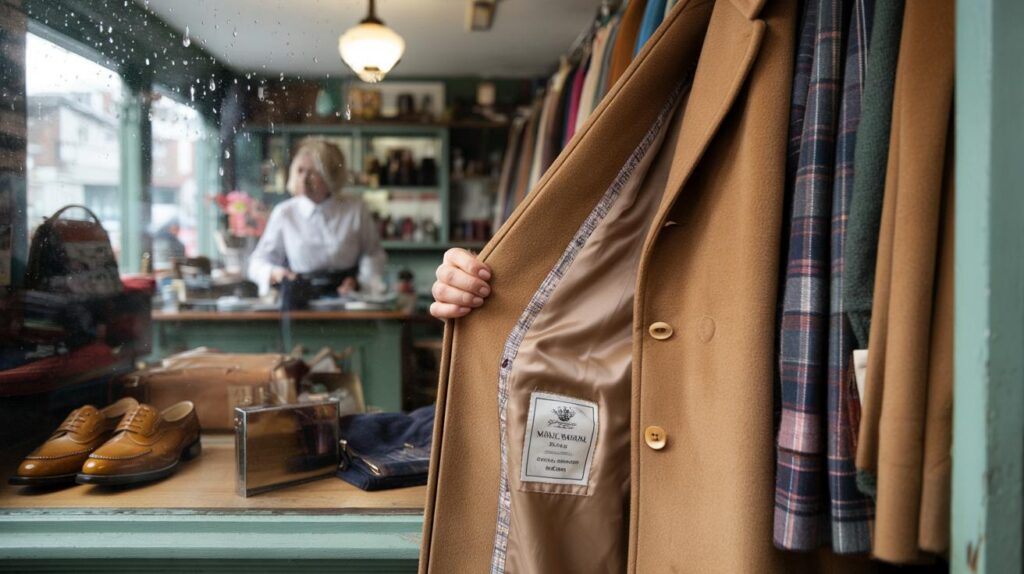
Charity shops aren’t chaotic by nature; they just hide order under plastic hangers and mismatched sizes. Walk in thinking it’s luck and you’ll leave with a mug. Walk in with a method and you’ll leave with a coat that would have cost your rent. The trick is seeing what most people miss, and touching what most people only glance at.
The bell clangs as I step into a high-street charity shop on a rainy Tuesday. The staffer smiles behind a counter of bric-a-brac, the rail squeaks like a tired violin, and there’s that soft paper smell of old books and clean cotton. We’ve all had that moment when you grab a hanger and your fingers jolt at the fabric — heavier, smoother, not pretending to be anything it’s not. Two minutes later, inside a run of anonymous macs, I spot a storm flap stitched just so, horn buttons cool under my thumb, and a lining that whispers rather than shouts. The tag reads £29.95. The label reads Italy. A stranger’s cast-off, my lucky day. Or maybe not just luck. Maybe timing and touch.
Reading the Rail: Why Designer Pieces Hide in Plain Sight
Designer finds don’t glow in the dark. They sit quietly between supermarket basics, waiting for the right hands. Charity shops move fast, and pricing volunteers can’t memorise every sub-label or diffusion line under the sun. Good pieces hide because they look normal until you touch them. That’s half the game. The other half is geography: affluent postcodes donate gold, but the gems travel. One shop’s overflow becomes another shop’s Tuesday rail.
On a wet afternoon in Bath, I found a Max Mara coat mislabelled as a “wool mix” for £35. It was pure cashmere. Two days later, a pair of Church’s brogues sat under the glass cabinet in Bristol, priced as “men’s smart shoes” at £22.50, someone’s office life now mine for a song. Donation spikes follow real life: spring clear-outs, post-holiday guilt, house moves at month’s end. Walk in after a weekend drop-off and the rails feel freshly breathed into.
Think of it like a supply chain with human quirks. Donations arrive in bin bags, get sorted by fabric and guesswork, and hit the shop floor in rolling waves. Staff rotate stock to keep the front looking new, so today’s no might be tomorrow’s yes. Price isn’t a proxy for value — it’s a quick decision made in a busy back room. Learn the cues that travel across brands: weight, drape, finishing, pattern alignment, proper linings, and hardware that feels like hardware.
Tactics of a Pro: From First Touch to Final Check
Start with a five-minute sweep. Hands first, eyes second. Run your fingers for weighty wool, crisp cotton poplin, dense silk, real leather, and that cool-hand feel of good linen. Then tilt hangers to check lining quality, pattern matching at seams, and zips marked YKK, Riri, or Lampo. Designer quality starts with touch. Tag check comes last, because labels lie, but stitching doesn’t.
Most thrifting mistakes happen in a rush. You fall for a name and ignore a moth bite, or you buy a dream size and never wear it. Try the two-finger seam test: tug seams lightly; if they gap or squeal, leave it. Ask to test zips. Smell for must — not a bit of storage, but that deep, dusty damp that clings. Let’s be honest: nobody does that every day. But doing it once a week changes your wardrobe and your luck.
Listen to people who live among the rails.
“We put new stock out all morning,” a manager in a Mary’s Living & Giving shop told me, “but the quiet hour after lunch is when the best stuff gets noticed, because you can actually hear yourself think.”
Use a tiny checklist when you’re tempted. It keeps your head clear when the find is screaming your name.
- Touch: heavy where it should be, soft where it matters.
- Tilt: look at seams, alignment, and lining sheen.
- Tag: fabric composition over brand hype.
- Tailoring: working cuffs, hand-finished hems, spare buttons.
- Tiny faults: fixable? great. Structural? walk on.
Go Where the Good Stuff Lives
Location is a strategy, not a postcode snobbery. Hit shops near office districts for suiting, student areas for trend pieces, and leafy suburbs for core designer. Midweek mornings are calm, Saturday opens are chaotic, and late afternoons can be strangely fruitful when staff refill before close. Pop your head into back rails, men’s for women’s oversized, kids for miniature designer knitwear, homeware corners for cashmere throws hiding as “blankets”. Clothes carry stories before you even wear them. Sometimes you’re buying a chapter someone didn’t need anymore.
Be kind to the people behind the till. Ask how often they rotate stock, whether there’s a boutique rail, or if they keep special pieces for a window change. Some shops can hold an item for an hour while you think; some can’t. Respect the policy and the pace. Fold as you browse. Put things back where you found them. Small courtesies win small tips like, “We’ve just put out a rail of winter coats at the back.” That’s how you win before you even look.
Know your care options before you buy. Many designer fabrics clean beautifully with a gentle hand wash or a professional dry-clean, yet some furs, suedes, and interlined coats are money sinks. Try on for movement, not just mirror. Lift your arms, sit, take a step. Your past self will thank you. Timing beats luck in charity shopping. Go when others don’t, and let the quiet work for you.
The thrill isn’t only the bargain. It’s the sense that your wardrobe got sharper without shouting, and your money did something useful on its way. Make a habit of short visits, not epic trawls. Fifteen minutes on a Tuesday beats a frantic Saturday marathon with half the city. Tell a friend when you score; share the route you walked, the corner you checked, the tiny sign you noticed. These are community tips, passed hand to hand like the garments themselves.
| Point clé | Détail | Intérêt pour le lecteur |
|---|---|---|
| Touch first | Weight, drape, and texture reveal quality before labels | Faster decisions, fewer regrets |
| Timing beats luck | Midweek mornings, post-donation days, quiet late afternoons | Higher odds of finding hidden gems |
| Construction cues | Pattern matching, quality zips, proper linings, hand finishes | Spot designer craft at a glance |
FAQ :
- What’s the best day to visit?Shops often process weekend donations on Monday and Tuesday, with fresh rails midweek. Late afternoons can surprise when staff reset for the next day.
- How do I spot a fake designer label?Check font spacing, care tags, stitching neatness, zip brands, and fabric composition. If the materials feel flimsy or the logo looks slightly “off”, trust your hands over the hype.
- Can I haggle in a charity shop?It’s not a market stall. Ask politely about flaws affecting price, or whether a mark can be cleaned, and accept the answer with a smile.
- How do I clean second-hand designer pieces?Read the care tag, spot test, and use a specialist for silk, cashmere, and tailoring. Steam is your friend for odours and creases. Small repairs go a long way.
- Should I chase every brand I recognise?No. Buy fabric and fit, then label. If it feels great, looks sharp, and moves with you, that’s value. The name inside is the bonus, not the reason.



Loved the ‘hands first, eyes second’ mantra—game changer. I checked for Riri zips today and actually found one on a trench; would’ve missed it before. The two-finger seam test saved me from a nearly invisible rip. Thanks for making this practical, not preachy 🙂