
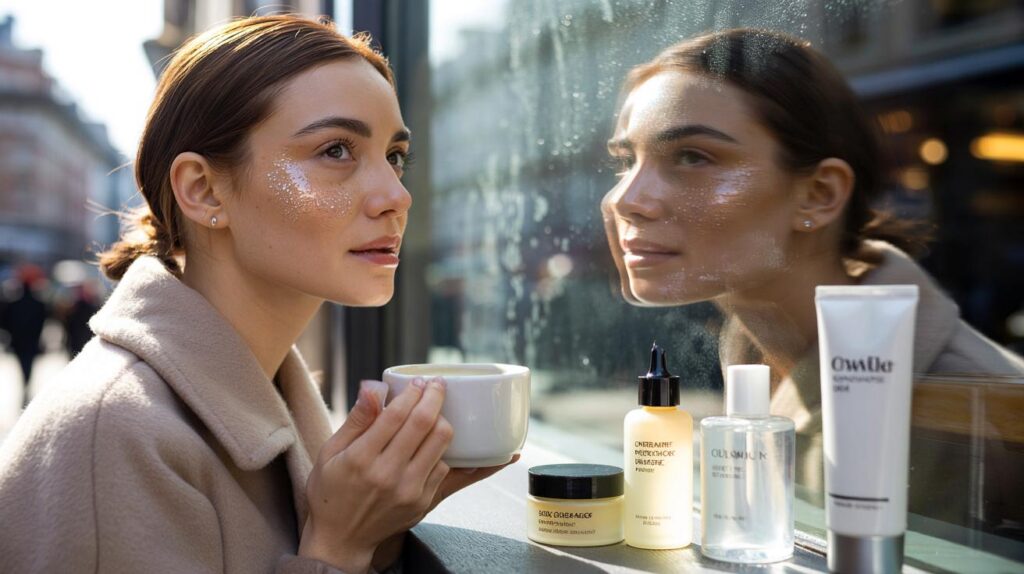
You’ve seen it in passing on the Tube or across a café table: skin so clear it seems to drink the light. The phrase “glass skin” floats around TikTok and clinics alike, promising a finish that’s glossy without grease, even without make-up. Yet real life brings heaters, office air, late nights, flaky cheeks and that one spot that always returns. The goal feels close. Then it slips.
It was 7:42 a.m. and the winter sun hit the bakery window just right. A woman in a wool coat leaned over her flat white, and her skin looked like fresh rain on stone—calm, reflective, alive. I caught my reflection in the same glass, clocked the tight patches by my nose, the tell-tale dullness from a night of emails and crisps. We’ve all had that moment when the mirror reflects more weather report than glow. That’s when you start asking what actually works. And what never gets skipped.
What ‘glass skin’ really means, beyond filters
Ask dermatologists and you’ll hear the same baseline: glass skin isn’t glass at all. It’s healthy barrier function so intact that light glides across the surface instead of scattering. Pores look tighter because the texture is uniform, not because they’ve vanished. A face that looks lit from within, without make-up. Think dew, not oil slick. Think bounce, not wax.
Take Jess, a 29-year-old studio manager who ditched gritty scrubs and started treating her skin like silk. She swapped in lactic acid twice a week, layered glycerin and hyaluronic acid on damp skin, then sealed with a ceramide-rich moisturiser. Four weeks in, the “frosted” patches on her cheeks softened, and her selfie camera stopped begging for portrait mode. Online, “glass skin” racks up millions of views, but it was the tiny wins—fewer flakes, foundation needing less—she swears by.
The science is oddly romantic. When the outer skin layers are hydrated and the lipid barrier is well-packed, light reflects more evenly. Water content plumps corneocytes, fine lines look softer, and translucency increases because there’s less micro-cracking. Barrier lipids—ceramides, cholesterol, fatty acids—act like mortar around bricks. Feed the mortar, and the wall looks smooth. Strip it, and you get dullness, tightness, and that crepe effect in harsh lighting.
Dermatologists’ non‑negotiables for a flawless glow
Start with a cleanse that respects your skin. At night, a gentle balm or oil to lift SPF and city grime, then a pH-balanced gel if you need a second round. Mornings, water rinse or a mild cleanser is enough for most faces. Follow with a hydrating layer—toner, essence, or mist—so your serums have a damp runway. Vitamin C in the daytime for brightness and defence, niacinamide to steady oil and strengthen the barrier, then a cushiony moisturiser. Finish with **SPF every single morning**. Cloudy London doesn’t cancel UV.
Exfoliation is spice, not the main course. One to three times a week with lactic acid or PHA keeps texture fine without fraying the barrier. Retinoids go at night, two to four evenings weekly, ramping slowly. Apply them after a buffer of moisturiser if you’re easily reactive. If you love “slugging,” keep it for icy nights or flights, not daily. Fragrance can be lovely, but for sensitive types it often equals red patches and regret. Let’s be honest: no one really does that every day.
Dermatologists repeat this on loop because skin is moody, the weather rude, and routine the only anchor that works. Apply hydrating products on damp skin, then lock them in. Layer actives on different nights, not all at once. And be boringly consistent with sunscreen. That’s the unglamorous path to glow that doesn’t wipe off at 4 p.m.
“Glass skin isn’t a 12‑step badge,” a London consultant dermatologist told me. “It’s three things done well most days: cleanse gently, hydrate deeply, and protect fiercely.”
- Hydration on damp skin: spritz or pat, then seal with a ceramide-rich cream.
- Go slow with acids and retinoids: alternate nights to avoid a wobbly barrier.
- Vitamin C by day, retinoid by night: they’re a power duo when staggered.
- SPF 50 daily: reapply if outdoors, on trains by bright windows, or working near glass.
- Reset weeks exist: dial back actives, feed the barrier, let the glow recover.
Make it yours: rhythm, patience, and the life around your skin
Your skin changes with seasons, hormones, stress, and the office thermostat wars. A summer routine with gel textures and light layers may need richer creams in February, when radiators meet windburn. If your cheeks sting, park the acids and run a barrier bootcamp—ceramides, squalane, oat, panthenol—until calm returns. Skipping a step on a bleary night won’t undo months of care. What you repeat most often shapes the finish you see.
Diet and sleep aren’t Instagrammable serums, yet they tilt the game. Think colourful plants, omega‑3s, mineral-rich water, and less late-night scrolling that chews up collagen by stealing rest. A cool bedroom helps. A humidifier near your bed keeps your moisturiser honest. Movement moves lymph, which softens morning puffiness so light can bounce. Small shifts create a skin mood that looks like equilibrium.
Making it last is about the little rituals that suit your life, not someone else’s shelfie. Two well-chosen serums can outperform a crowded line-up. A tinted mineral SPF on school runs. A retinoid night that lands on Sundays and Wednesdays. Ask your GP or derm when in doubt, especially if acne, eczema, or melasma sits in the mix. The goal isn’t perfection. It’s skin that says you’re rested even when you’re not. And that’s worth chasing.
Glass skin works best when it feels lived-in, not lab-perfect. The finish is born from ordinary habits stacked over time: cleansers that don’t squeak, serums that sip water from the air, moisturisers that hug rather than smother. Share the product that surprised you. Swap a trick with the friend who always glows in pub lighting. Some days you’ll hit high-beam; other days you’ll land on soft focus. Both tell a story. The light finds you differently each time.
| Point clé | Détail | Intérêt pour le lecteur |
|---|---|---|
| Daily UV defence | Broad‑spectrum SPF 50 every morning, reapply with sticks or mists | Locks in brightness, prevents spots, keeps texture even |
| Hydration stack | Humectants on damp skin, then ceramide‑rich moisturiser | Immediate bounce and long‑term barrier repair |
| Smart actives | Vitamin C by day; retinoid and gentle acids on alternate nights | Glow without irritation or backsliding |
FAQ :
- Can oily skin get “glass skin”?Yes. Focus on light textures—gel cleansers, niacinamide, and thin hydrating layers—then a matte or hybrid SPF. Oil control plus hydration gives shine control with clarity.
- Do I need ten steps?No. A tight four—cleanser, hydrating layer, moisturiser, SPF by day; add retinoid at night—delivers. Add extras only if a skin need appears.
- How long until I see results?Hydration glow can be immediate. Texture often improves in two to four weeks. Pigmentation and fine lines move over eight to twelve weeks with steady SPF and actives.
- Is it safe for sensitive or rosacea‑prone skin?Yes, with gentle choices. Skip strong acids, lean on PHAs and soothing ingredients like oat and panthenol, and introduce retinoids using a buffer cream.
- Can men follow the same steps?Absolutely. Beard areas may need extra hydration and post‑shave soothing. The non‑negotiables—cleanse, hydrate, protect—stay the same.



Thank you for making “glass skin” sound sane, not faddish. Hydrating on damp skin then sealing with a ceramide moisturiser has been a reallly underrated step for me—especially with radiators blasting. Humidifier + glycerin mist + cream = fewer tight patches. Cloudy days don’t cancel UV, noted.