
You want the glow. Not the peeling, not the prickling guilt of a sunbed. Just that healthy, even colour that makes every outfit look like it cost more. The problem isn’t desire, it’s the mess: streaks, stained sheets, wrists that give the game away. This guide cuts through the noise so you can wear a believable tan, minus the UV drama.
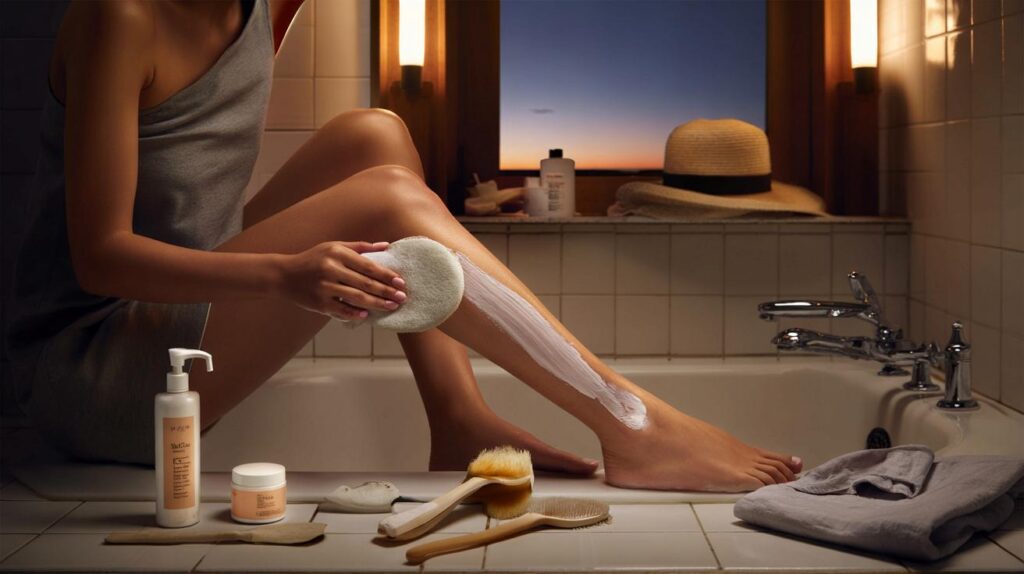
It’s a Sunday night, bathroom light humming, towel on the floor like a truce flag. You shake the bottle, heart doing a tiny drum solo, and draw the first sweep over your shin. It’s cool, then sticky, then quietly terrifying. You’ve got a work thing tomorrow and a dress that only sings when your legs aren’t winter. It smells faintly of biscuits and beach plans. You reach for the mitt again, trying not to think about your ankles, that treacherous wrist crease, the pale half-moons near your heels. The mirror offers confidence you don’t fully feel. One wrong move and it’s stripes. One right move and it’s effortless. What if it looks real?
Why a faux glow beats the sun, every single time
There’s a reason the pros call it a “faux glow”: it gives the vibe you want without paying for it later. UV doesn’t just tan; it chips away at your collagen, dulls the bounce, etches lines you’ll meet again in five years. Studies suggest up to 80% of visible facial ageing can be traced to sun exposure. A good self-tan cheats that fate. It paints confidence without borrowing from your future skin.
I think of a friend who loved sunbeds. She said it made bad days softer. Then a mole changed shape and the softness vanished. She’s fine now, but the lesson stuck. The International Agency for Research on Cancer classifies sunbeds as carcinogenic, and research shows first use before 35 can raise melanoma risk by around 59%. That’s not a beauty fee; that’s a bill. Safer glow wins by default.
So why do streaks happen if self-tan is “safe and easy”? Chemistry. Most formulas rely on DHA, a sugar that reacts with amino acids in your skin’s top layer. Where your skin is dry or thick, DHA grabs harder. Where you’ve got leftover oil, perfume, or soap film, it can slip and fade patchy. Uneven prep equals uneven reaction. Moisture balance and consistent application make the chemistry play nice.
From prep to pillowcase: the no‑streak game plan
Work backwards from the finish. Shave or wax 24 hours before so follicles settle. Exfoliate the night prior with a gentle scrub or a lactic acid lotion; rinse well and go to bed moisturised. On tan day, take a quick, cool shower, skip oils, and dry fully. Tap a light, plain moisturiser over wrists, elbows, knees, ankles, and around the nostrils. Pump mousse onto a velvet mitt and sweep in long, overlapping motions from ankles up, then wrists to shoulders. Circle a pea-sized amount over hands and feet last with a dry brush.
We’ve all had that moment when you bend to pick something up and carve a white line across your tummy. Move slowly, then stand still for a minute or two. Slip into loose, dark cotton and avoid sweating for the first couple of hours. Sleep on an old T-shirt over your pillow if you’re using an overnight formula. And if you’re eyeing your palms with dread, rub a make-up wipe over them, then a quick wash with micellar water. Let’s be honest: nobody actually does that every single day.
Shade and undertone matter more than brand hype. Fair skin with redness tends to love olive-leaning tans; deeper mediums often look best with golden or caramel tones. Transparent waters are less messy but harder to see; tinted mousses show where you’ve been but can stain sheets. Drops in moisturiser give feather-light control on the face. Self‑tan does not protect you from the sun. Patch test if you’re reactive, and go for formulas that mention “fast-dry” if you hate that sticky limbo.
“Blend the edges like a make-up artist, not a painter,” says celebrity tanning artist Mia Daniels. “Wrists, ankles, the jawline — the smallest buffer brush will save you nine times out of ten.”
- Kit checklist: exfoliating mitt or gentle acid lotion
- Plain moisturiser for dry spots (no oils)
- Velvet tanning mitt + small kabuki brush
- Back applicator or cling film over a wooden spoon
- Loose, dark cotton PJs and a pillowcase you don’t love
Shade, face vs body, maintenance, and quick fixes
Your face needs its own strategy. It’s oilier, exfoliates faster, and holds on differently. Mix 2–4 tanning drops into your night cream for a subtle lift, or mist a dedicated face tanner and press it in with clean palms. Dilute around hairline and brows, then take a cotton bud lightly over them to avoid build-up. If your chest is darker, add one more drop to face the next night to meet in the middle. SPF every day, even when it’s grey.
Maintenance is the quiet hero. Hydrate daily with a simple, oil-free lotion so the colour fades evenly. After day three, switch to a “gradual tan” moisturiser to top up without overdoing it. Shower lukewarm, pat dry, and avoid long soaks. Chlorine and retinoids speed up fade, so adjust expectations. If you over-applied, a warm bath with Epsom salts and a soft mitt will lift the edges, as will a paste of baking soda and gentle cleanser on stubborn spots. Less panic, more blending.
Timing helps it look like skin. Tan in daylight so you can see the transitions. Use a hairdryer on cool to set tricky zones like under-boob or inner elbows before you move on. Sleep in long sleeves if you’re a tosser-and-turner to keep wrists clean. Less product, more blending. If you need to go deeper, do a second coat the next day rather than stacking it in one go. The result looks like a holiday you actually took.
There’s a quiet thrill in waking up and not thinking about concealer on your shins. The glow is subtle, like good lighting that follows you onto the train and into the office kitchen. Your clothes sit better, your mood does too, and nobody can quite place why. Share the tricks, gatekeep the brand, or start a group chat where you trade before-and-afters. The real win isn’t the tan — it’s the control it gives you. You decide the weather on your skin. That’s the magic.
| Point clé | Détail | Intérêt pour le lecteur |
|---|---|---|
| Prep beats panic | Exfoliate the night before, moisturise dry zones, cool shower, dry fully | Avoids streaks and patchy ankles without extra faff |
| Match your undertone | Olive tones cancel redness; golden suits neutral; go gradual for very fair | Looks believable, not orange or muddy |
| Maintain and fix | Daily hydration, gentle top-ups, Epsom salt bath to soften mistakes | Longer-lasting glow and easy rescue when things go sideways |
FAQ :
- How do I stop my tan from going orange?Choose an undertone that balances your skin (olive for redness, golden for neutral). Apply thin layers and build. Avoid oil-heavy skincare right before application.
- Can self‑tan replace sunscreen?No. Self‑tan has zero UV protection. Wear broad‑spectrum SPF 30+ every day, even if you’ve tanned and even when it’s cloudy.
- What’s the best way to tan my face?Mix 2–4 drops into night cream or use a face mist, press in, and buff edges with a small brush. Go lighter around hairline, brows, and above the lip.
- How long does a self‑tan last and how do I remove it?Usually 4–7 days with good hydration. To remove, soak in a warm bath with Epsom salts, then use a soft exfoliating mitt. A baking soda and cleanser paste can spot‑treat.
- Is self‑tan safe for sensitive skin or during pregnancy?Topical DHA sits on the skin’s surface and is generally considered low‑risk, but patch test first. If you’re pregnant or have a skin condition, speak with your doctor or midwife.



Defintely bookmarking this. “Less product, more blending” is the mantra I needed. The kabuki brush tip saved my wrists on the first try. Any recs for fast‑dry mousses that don’t stain sheets or smell like biscuits?