
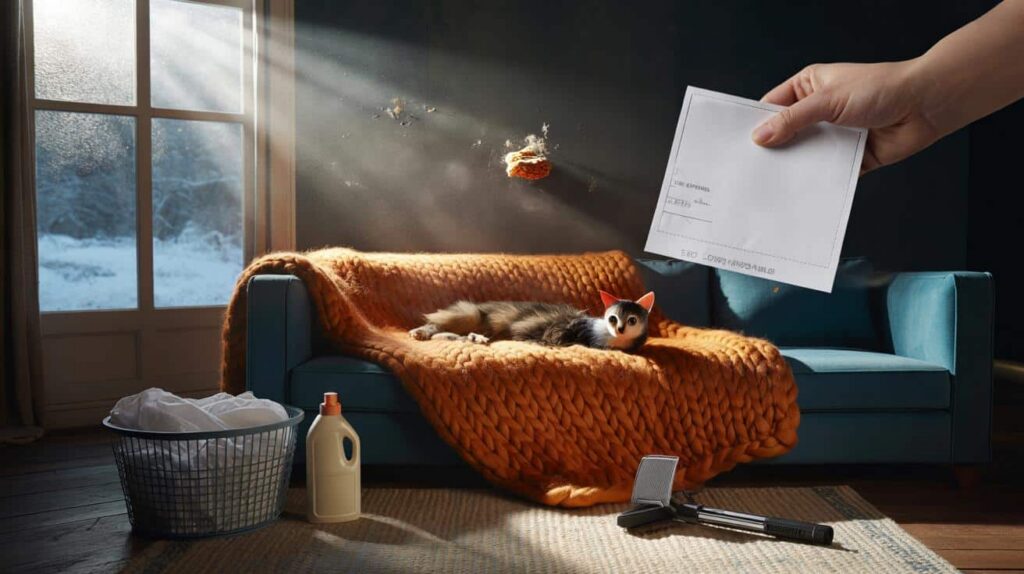
We air less, snuggle more, and let small hygiene tasks slip under the radar without noticing.
The result shows up in sneezes, itchy skin, and a couch that’s cozy but not exactly clean. Dermatologists and cleaning pros point to one unexpected culprit hiding in plain sight.
The accessory people forget to wash
It’s the throw blanket. And its cousins: couch blankets, bed throws, and those chunky knits draped on armchairs. We use them daily through cold months. They collect the same grime as clothing and sheets, just with fewer trips to the wash. That gap matters. Fabrics trap sweat, skin flakes, dust, pet dander, food crumbs, and the microscopic guests that feed on all that.
Expect roughly every-two-week washes for throws in winter, and weekly if pets lounge on them or if you snack on the couch.
What actually builds up on a throw
Body moisture and oils cling to fibers. An average adult produces liters of sweat across a year, and indoor heating dries air while people add humidity back with every breath and nap. That slightly damp microclimate welcomes bacteria and fungi. Dust mites thrive on shed skin. Pollens and outdoor particles hitch a ride on coats, then settle into loose-weave knits. Each layer stacks until your nose reacts or your skin protests.
Allergens don’t care that a blanket “looks” clean. They care about time, warmth, and food — and a throw gives them all three.
How often to wash in real life
There isn’t one perfect schedule. The right cadence depends on use, fabric, and who lives in your home. These rules of thumb keep things simple.
- Light use, no pets, no eating on the couch: every 2–3 weeks.
- Daily use or shared household: every 1–2 weeks.
- Pets allowed on furniture: weekly.
- Allergies or asthma: weekly, or even every 4–5 days during flare-ups.
- After illness: wash before returning it to common areas.
What the care label is trying to tell you
Care tags aren’t suggestions. They’re guardrails that stop felting, shrinking, dye bleeding, and stretched edges. Here’s a quick guide by fabric.
| Fabric | Best cycle | Water temp | Drying |
|---|---|---|---|
| Wool / cashmere | Wool or delicate, low agitation | Cold | Flat-dry on a towel; reshape |
| Cotton knit / waffle | Gentle or normal | Warm for hygiene, cold to protect colors | Tumble low or line-dry |
| Fleece / microfibre | Gentle, short cycle | Cold or warm | Tumble low; avoid high heat to prevent pilling |
| Acrylic / blends | Delicate | Cold | Lay flat or low heat |
| Weighted blanket (cover) | As above, based on fabric | Cold or warm per label | Low heat; avoid shrinkage |
| Weighted insert | Often spot-clean only | Follow manufacturer | Air-dry flat if washable |
How to wash a throw without wrecking it
Think of throws as clothing you sit on. They deserve the same steps you give a favorite sweater.
- Shake outside to release dust before washing. This reduces sludge in your machine.
- Pre-treat obvious spots with a mild enzyme spray. Blot, don’t rub.
- Choose a gentle detergent. Skip fabric softener on fleece and microfibre; it crushes loft.
- Avoid overloading the drum. Water must move freely through thick fibers.
- Use a mesh bag for loose weaves and tassels to prevent snags.
- Dry fully. Damp cores invite mildew. If thick, finish with air-dry on a rack after a low tumble.
Drying matters as much as washing. A throw that stays damp at the center will smell off within a day.
Between-wash refreshers that actually work
When laundry day’s still a week away, these quick moves cut buildup and odors.
- Vacuum with an upholstery tool to lift dust and dander.
- Run a handheld steamer slowly over both sides to reduce microbes and wrinkles.
- Air it in bright, dry daylight for an hour. Sunlight and airflow help neutralize smells.
- Tumble on no-heat with two clean tennis balls to re-fluff.
- Use a fabric shaver on pills so lint doesn’t trap more dirt.
If you live with pets or allergies
Households with cats or dogs should move throws into the weekly laundry group. Pet saliva and dander carry proteins that linger longer in textured fibers. For allergy-prone families, pick tighter weaves that release debris more easily in the wash. Fragrance-free detergents reduce skin irritation. A hot wash can help, but respect the label; warm water plus a longer cycle often does the job without harming fibers.
Make one throw the “pet blanket” and wash it more often. Your nicer knit will last longer, and couches stay cleaner.
What else to clean so the cycle breaks
Throws don’t get dirty in isolation. If the surrounding surfaces stay grimy, the throw reloads on contact. Quick wins:
- Vacuum couch cushions and arms weekly. Use short, overlapping passes.
- Spot-clean armrests where hands touch the fabric most.
- Wash cushion covers on the same day as throws if they’re removable.
- Empty and wipe the laundry hamper. Liners collect lint and skin flakes.
- Clear the dryer lint trap and the rubber gasket on the washer door.
A word on airflow and moisture
Throws feel cozier on breathable surfaces. A well-ventilated mattress or sofa base helps moisture move out instead of getting trapped. If your windows fog easily in winter, crack them for 10 minutes during the warmest hour of the day. That short purge reduces humidity where blankets live and dry.
Two practical add-ons you might appreciate
Energy and cost check: a cold or warm gentle cycle with a full but not stuffed drum is efficient. If your machine uses roughly 0.6 kWh per warm wash and 0.3–0.5 kWh for a low-heat dry, weekly throw care adds a small bump to your bill. Washing throws together every one to two weeks instead of scattered loads keeps efficiency high.
Off-season storage: once heating switches off, give throws a thorough wash and a complete dry. Fold with cedar blocks or a lavender sachet, then store in breathable cotton bags. Avoid sealed plastic bins unless the blanket is bone-dry; trapped moisture leads to musty smells and, in extreme cases, mildew. For wool, fold instead of hanging to prevent stretching at the shoulders and edges.
When warm weather arrives, a final wash-and-dry session means throws go into storage clean — and come out fresh next season.
Red flags that signal it’s time to replace
- Persistent odor after washing and full drying.
- Thinning spots or stretched edges that won’t spring back.
- Color transfer on light clothing or upholstery.
- Allergy symptoms that calm down when you use a different blanket.
Small changes stack up. Add throws to the same calendar that reminds you to launder sheets and towels. Set a two-week rhythm as a base, tighten it when pets or sniffles join the picture, and let the care label steer the settings. Comfort should feel clean, not just cozy.


