
By mid-November, the skin on your hands starts whispering before it screams. Cold air outside, dry radiators inside, endless washing and sanitiser between. The sting hits when you button a coat or tap a bank card. That tiny flash of pain is your skin barrier waving a white flag.
I stood next to a woman at the bus stop on a sleety Tuesday in Leeds. She held the pole with her sleeve pulled over her palm, like a child hiding a scraped knee. When her glove slipped, I saw it: those pale, paper-thin cracks around the knuckles, the ones that look harmless and hurt like mad.
Later, in the office kitchen, she pumped two blobs of the communal soap and winced. She dried her hands on her scarf. We’ve all had that moment when smart, capable hands suddenly feel like glass. There’s a tiny ritual that fixes it.
Why winter ruins your hands
Winter strips moisture faster than you can replace it. Backs of hands have fewer oil glands and thinner skin than your face, so they dehydrate first. Central heating pulls water from the skin, wind whips away what’s left, and hot taps dissolve your protective lipids.
Ask Lara, 34, a buyer from Manchester. By December her hands look fine at 9am and cracked by lunch, little red seams that catch on knitwear. Search data backs her up: UK queries for “cracked hands” surge across December and January, and pharmacists report more sales of urea creams the week the temperature drops.
Here’s the simple biology. Your skin barrier is a brick-and-mortar wall; the “mortar” is fat molecules that keep water in. Hot water and harsh surfactants melt that mortar. Cold, dry air speeds evaporation. Hydrate the wall, add oils to refill gaps, then seal it. That stack matters more than any single miracle cream.
The winter hand ritual every woman should know
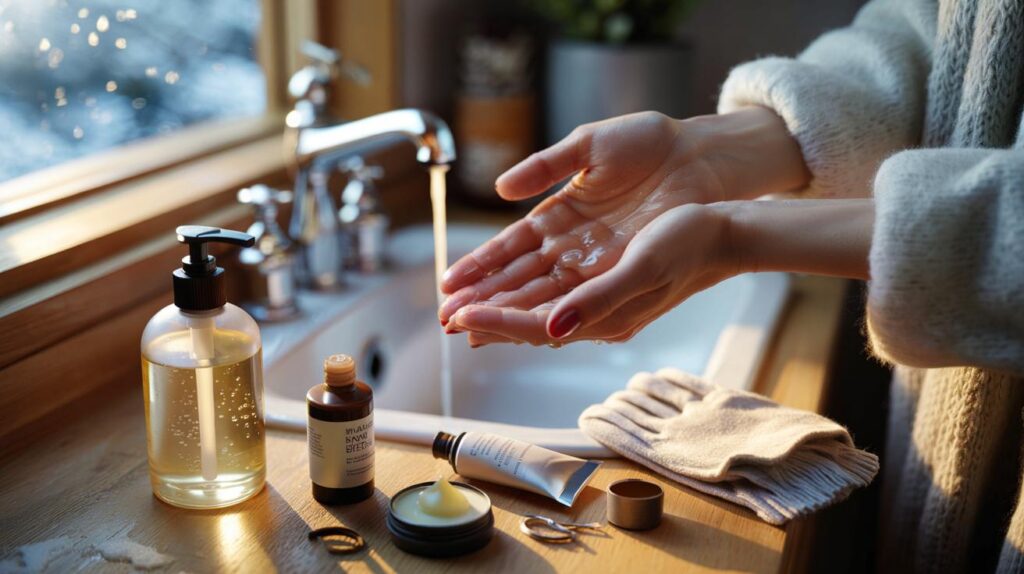
Think of it as “clean, feed, seal” — three tiny moves, three times a day. Wash with lukewarm water and a fragrance-free hand wash, then pat dry. Massage a few drops of light oil or a urea-based serum into the backs of hands for 30–60 seconds, then smooth on a ceramide-rich cream and finish with a pea of balm over knuckles and cuticles.
*Warm, not hot, water is the quiet hero.* Keep a pocket tube at your desk and a pot by the bed. In the evening, add a gentle exfoliation twice a week with a soft, sugar-free scrub or a PHA lotion to lift flakes so your moisturiser can sink in. Slip on thin cotton gloves for 20 minutes while you stream something — it supercharges the seal.
You’ll do it more if it fits your life. Leave a hand cream by the kettle, one in your coat, one in the car door. **Let’s be honest: no one actually does this every single day.** Stack it onto habits you already have: after washing up, post-hand-sanitiser, before you put your phone on charge.
“Hands have fewer oil glands and take a harder hit in winter — little and often beats any single heavy treatment,” says Dr Ria Harris, consultant dermatologist.
- Fragrance-free hand wash (pH 5–6)
- 5–10% urea or lactic acid hand cream for rough patches
- Light oil or cuticle serum (squalane, jojoba)
- Occlusive balm for cracks (petroleum jelly or lanolin)
- SPF 30 hand cream for daytime, even when it’s grey
- Thin cotton gloves for 20-minute boosts or overnight
Make it yours, so it sticks
Rituals fail when they feel like homework. Keep the steps, but bend the products to your skin. If you hate heavy textures, use a gel-cream and seal only the knuckles. If your cuticles tear, oil them after every wash and press, don’t pick. Small tweaks turn compliance into reflex.
Common trip-ups are sneaky. Scalding water in the loo at work. Grainy salt scrubs that scratch micro-tears. Sanitiser with strong fragrance, used five times in a row, with no moisture after. Wool against bare wrists that wicks away hydration. **Small, repeatable steps beat occasional heroic treatments.**
There’s a tiny bonus step that changes everything: sunscreen. UV passes through clouds and windscreens, and pigmentation on hands sticks around longer than on cheeks. Think of SPF as part of your seal during daylight. **Consistency, not perfection, is the trick.** When your hands stop snagging on your tights, you’ll know it’s working.
Night is when the magic compounds. Before bed, wash warm, pat almost dry, smooth on urea cream, then press a whisper of balm over your knuckles and cuticles. If you’re extra dry, pull on cotton gloves for half an hour while you scroll — heat lifts absorption, and you can take them off before sleep. That’s your repair window.
Swap sanitiser for gentle hand wash when you can at home. If you need sanitiser on the go, pick one with glycerin or aloe, and follow with a tiny pump of cream after it dries. Keep rings off when you moisturise at night so product reaches the skin under the bands. Wake up, and your hands feel like yours again.
Food plays a quiet supporting role. Omega-3s, enough water, not too much wine on those frosty Fridays. It won’t fix a broken barrier alone, but it helps the wall hold. If redness and splits keep returning, a pharmacist can point you to an ointment with more oomph. Then keep your ritual going to stay ahead.
This is not a beauty flex. It’s about comfort and control in a season that steals both. The ritual takes two minutes, no timer needed. Do it because typing hurts less, because cooking for friends feels better, because small care habits ripple into your week. You’ll end up doing it without thinking, in the lift, on the train, between emails.
We live with our hands on show. That’s why tiny changes feel bigger here. Swap hot water for warm. Switch fragrance for function. Process over products, rhythm over perfection. Your future self will thank you when she grips the buggy, slides into her gloves, taps a card on a frosty morning, and doesn’t flinch.
| Point clé | Détail | Intérêt pour le lecteur |
|---|---|---|
| Layer, then lock | Hydrate with serum or light oil, moisturise, then seal with balm | Stops moisture escaping, softens cracks faster |
| Warm, not hot | Lukewarm washes protect skin lipids and reduce tightness | Less damage from daily hygiene without extra effort |
| Habit anchors | Place products where you already pause: kettle, car, bedside | Makes the ritual automatic and sustainable |
FAQ :
- How often should I apply hand cream in winter?Little and often. After each wash is ideal, and a richer layer before bed. If that feels like too much, aim for morning, mid-afternoon, and night.
- Are petroleum jelly and lanolin safe for sealing cracks?Yes, they’re classic occlusives that trap water in. If you’re sensitive to lanolin, pick petroleum jelly instead and spot-apply over knuckles and splits.
- Is alcohol hand sanitiser ruining my hands?It dries skin, but it’s not the enemy. Choose formulas with glycerin, let them dry, then follow with a dab of cream. Wash with soap and water at home to give skin a break.
- Do I need SPF on my hands in winter?Yes, especially if you drive or walk outdoors daily. UV penetrates cloud and glass, and hands show sun spots early. A daytime hand cream with SPF 30 is the easiest fix.
- What if my hands are already cracked and sore?Switch to fragrance-free, add a urea or lactic acid cream once daily, and seal with balm. Wear cotton gloves for short boosts. If splits don’t heal in a week or two, speak to a pharmacist or GP.



Tried the clean, feed, seal stack tonight and WOW — the sting when I tap my card is gone. The cotton-glove trick during a show felt silly but sped up absorbtion. Any tips on not feeling greasy at the keyboard? Maybe spot‑sealing just knuckles is enough for day?
SPF 30 on hands in December — in the UK — isn’t that overkill? What’s the actual data on UV through clouds and windscreens? Happy to do it if it truly prevents spots, but I’m wary of sticky sunscreens on keyboards.