
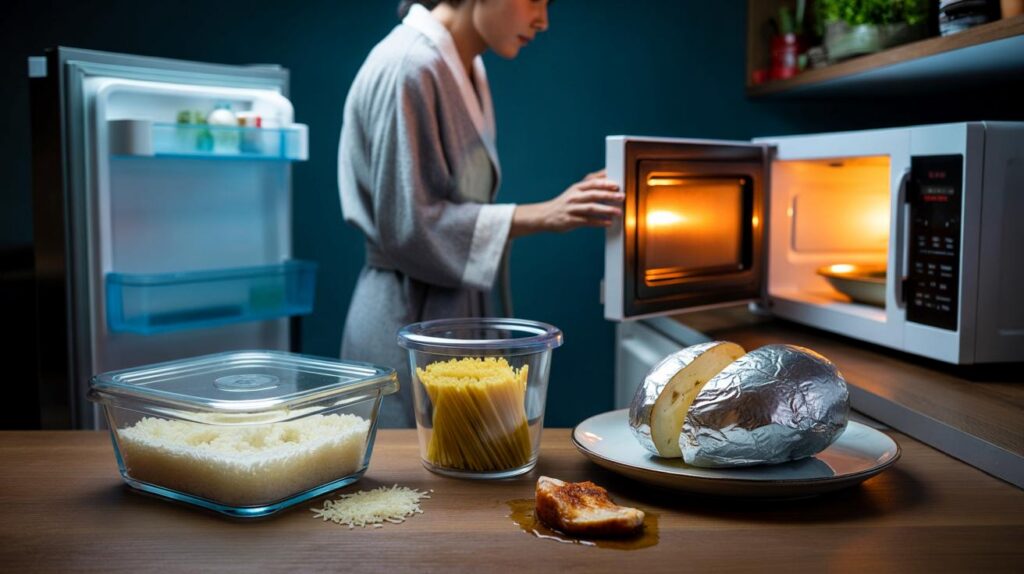
The leftovers question lurks in every busy kitchen: can you just reheat last night’s food and carry on? Some dishes love a second warm-up. Others hide risks that don’t show up on the plate. Experts say a few favourites turn tricky once cooled and reheated, with bacteria, toxins, and chemistry changes doing quiet work while we sleep.
I open the fridge at 11.43pm and squint into the cold blue light. There’s a container of rice from the takeaway, a hunk of roast chicken, and a pan of potatoes I forgot to put away. The microwave door squeaks like a cheap theatre prop, and I catch myself weighing convenience against a nagging voice that sounds suspiciously like a food safety trainer.
We’ve all had that moment when the fridge light feels like a stage spotlight. The story almost always ends with a plate turning on a humming carousel. I stare at the microwave and feel a small prickle of doubt. One more minute won’t fix the wrong kind of mistake.
The microwave hums, but the science hisses.
The hidden problems no one sees on a reheated plate
Not all leftovers behave the same once cooled. Rice is the poster child: cooked rice can harbour spores of Bacillus cereus, a tough customer that survives boiling, wakes up while rice sits warm, and can produce toxins that cling on through a reheat. Pasta sits in the same family story. Potatoes left warm under foil are a soft landing for bacteria that prefer low oxygen, and reheating later doesn’t magically rewind time. The danger doesn’t shout; it starts while food is cooling on the counter, not when it bounces back in the microwave.
There’s a stark line between folklore and evidence. The UK estimates around 2.4 million cases of food poisoning a year, much of it linked to domestic habits, not dramatic restaurant failures. One widely cited case report describes a 20-year-old who ate spaghetti that had sat at room temperature for days; he never made it to the next morning. Stories like that get retold because they’re shocking, yet the more ordinary truth is this: many people feel rough after a careless leftover reheat and never report it. A dodgy evening can be written off as “something I ate”, which is exactly what it is.
Heat doesn’t fix everything. Some toxins made by bacteria are heat-stable, so even a proper blast won’t neutralise them. Proteins can toughen, fats can oxidise, and certain greens like spinach or beetroot carry nitrates that can convert into nitrites if reheated repeatedly, a risk flagged for babies and pregnant people. Mushrooms and eggs change texture and flavour when hit again, with a side of sulphurous off-notes. Fish can carry histamine if it’s been mishandled warm; once formed, histamine laughs at the microwave. The headline isn’t fear, it’s sequence: cool fast, cold storage, one hot reheat. Get the order wrong and the risk rises.
Smart kitchen moves that sidestep the reheat trap
Start earlier than you think. Cool leftovers quickly by spreading them in a shallow dish, then into the fridge within an hour. Portion before chilling, so you only reheat what you’ll eat. For rice, think small, flat containers and the bottom shelf of the fridge. Reheat once, thoroughly, to at least 75°C in the centre, stirring halfway and resting a minute so heat evens out. Sauces and soups like a short boil on the hob, a rolling minute that tastes better than a weary zap. If a dish smells off, looks odd, or sat out longer than you’d brag about, bin it. Pride is cheaper than stomach cramps.
There’s a softer route too. Turn cold roast potatoes into a sharp salad with mustard and herbs rather than chasing heat into their middle. Eat yesterday’s spinach frittata chilled with lemon and pepper. Flake cold salmon into mayo and capers. Cold rice? If it stayed warm for hours, skip it. If it hit the fridge fast, use it cold in a crunchy salad with spring onions and sesame. Let’s be honest: nobody does that every day. Life is messy, lunch is late, trains run on their own time. The trick is to make the safe habit the easy habit, so you choose it without thinking.
People beat themselves up for microwave “mistakes” that are simply about time and temperature. One food microbiologist I spoke to put it plainly:
“The risk isn’t the reheat. It’s what happened before the reheat — how slowly the food cooled, how long it sat warm, and whether bacteria had time to make toxins heat can’t undo.”
Here’s a simple box to keep on your mental fridge door:
- Think twice about reheating: rice or pasta left warm for hours; foil-wrapped baked potatoes left out; spinach and beetroot baby purées; leftover mushrooms and eggs that smell sulphurous; fish handled warm.
- Reheat only once, and aim for food that’s piping hot all the way through.
- When in doubt, go cold or start fresh.
A kitchen culture worth sharing
Kitchen wisdom is less about rules and more about rhythm. Cooling fast becomes a small ritual, like rinsing a glass; portioning before bed becomes a kindness to your future self. It changes what we do with food we care about. Last night’s stew turns into today’s quick lunch, safe and rich. That pan of spinach stays a memory, not a repeat performance. Risks shrink when we make space for them on the mental worktop, not when we scour the internet for the perfect reheating time. There’s pride in leftovers that feel like a favour, not a gamble. If your fridge could talk, what habits would it cheer for, and which would it gently nudge out the door?
| Point clé | Détail | Intérêt pour le lecteur |
|---|---|---|
| Cooked rice and pasta | Cool quickly, chill within 1 hour, reheat once to 75°C; toxins from B. cereus can persist | Keeps the convenience without the midnight regret |
| Foil-wrapped baked potatoes | Remove foil to cool; low-oxygen pockets invite harmful bacteria while warm | Transforms a quiet risk into a safe side dish |
| Leafy greens and baby purées | Repeated reheating can shift nitrates to nitrites; serve fresh or chilled | Protects flavour and vulnerable guests at the table |
FAQ :
- Is it ever safe to reheat rice?Yes — if it was cooled fast in shallow containers, refrigerated within an hour, and reheated once until steaming throughout. If it sat warm on the counter, skip it.
- Why do potatoes get risky after baking?Foil traps warmth and lowers oxygen, which suits certain bacteria. Unwrap to cool, refrigerate promptly, and reheat thoroughly or enjoy cold.
- Can I reheat chicken without worries?Yes, if it was cooled and stored swiftly and you heat it evenly until hot in the middle. Don’t reheat it more than once, and avoid pieces that smell or look off.
- Are microwaves the problem?Not by themselves. The issue is uneven heating and what happened while the food cooled. Stir, cover, rest a minute, and hit a safe centre temperature.
- What about eggs, spinach, mushrooms, and fish?These can taste and behave poorly on a second heat. Eggs and mushrooms go rubbery and sulphurous; spinach and beetroot are best not reheated for babies; fish needs perfect chilling because histamine won’t cook out.



Merci, je ne savais pas pour le riz et Bacillus cereus. Je vais refroidir en barquettes plates dès ce soir.
Franchement, on réchauffe du riz depuis des générations et on est toujours là. Les chiffres me semblent gonflés. Une source précise pour les 2,4 millions ?