
As radiators wake and the air dries, a quiet shift in washing habits is unsettling bathrooms across Britain.
One month without daily showers sounds reckless. It also turns out to be revealing. When I halved my shower count and kept targeted washing, my skin, wallet and mornings changed in measurable ways — and the social fears didn’t materialise.
The autumn stress test for your skin
Central heating, chilly winds and long, hot showers pull moisture from the face and body. The stratum corneum — the skin’s outer shield — loses lipids, its pH creeps up, and transepidermal water loss accelerates. That trio drives tightness, flaking and itch. Cut the hot deluge, and the barrier gets a chance to repair.
Hot water strips lipids fast. Shorter, cooler washes lengthen the life of your skin’s natural shield.
Dermatology clinics often see autumn flare-ups of eczema and dermatitis. Over-washing is a common trigger. Reducing frequency can calm the cycle: less heat stress, less surfactant exposure, fewer fragrances, and a microbiome that can stabilise.
A 30‑day experiment: what actually changed
Week 1: nerves, not odour
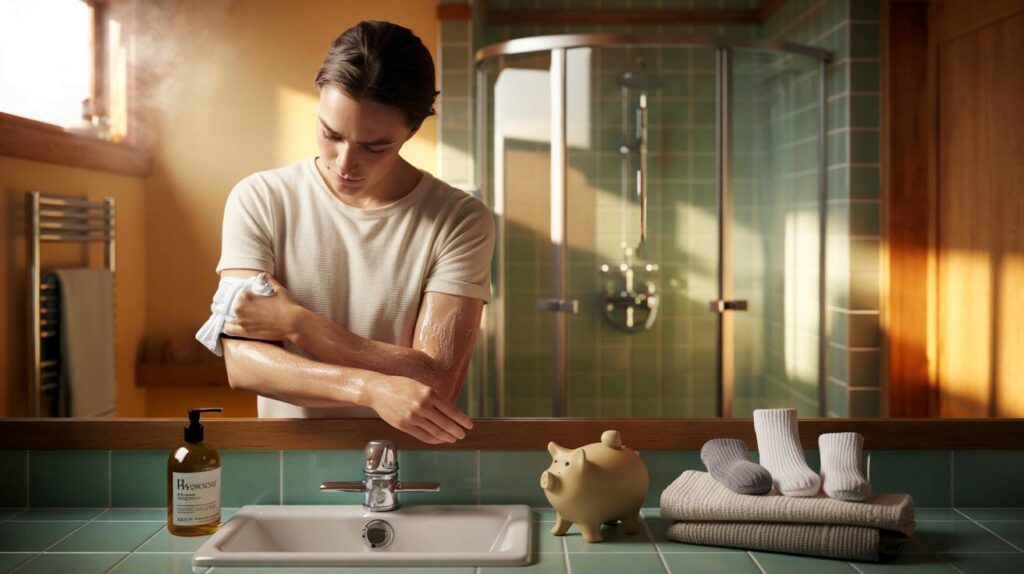
I swapped seven showers for three. Each non-shower day, I washed armpits, groin and feet with lukewarm water and a mild cleanser, then applied a light body oil on dry patches. I worried about smell; no one commented. Fabrics mattered more than frequency: breathable cotton kept me feeling fresh.
Week 2: barrier rebound
By day 10, the itch along my shins eased. Elbows looked less ashy. I stopped reaching for heavy body creams every night. The scalp, rinsed less, produced less midday grease — a common “rebound” once you stop over-stripping.
Week 3–4: gains that stuck
The biggest surprise was consistency. No afternoon tightness after office radiators. Makeup sat better on calmer cheek skin. Training days still demanded a proper rinse, but gentler and shorter did the job.
Most people don’t smell if they clean pits, bits and feet daily and change clothes. Fabrics tell on you faster than your skin does.
Why the microbiome loves fewer suds
Skin hosts a dense community of bacteria, yeasts and mites that help regulate inflammation, defend against pathogens and keep pH in check. High-foaming surfactants and frequent scrubbing thin that community. When I spaced out showers, I noticed fewer random red spots and less post-shower sting. That aligns with current research showing that gentler routines promote microbial diversity and a steadier, slightly acidic surface — conditions unfriendly to odour-causing overgrowths.
Smell: fear versus reality
Body odour builds where sweat mixes with bacteria in warm folds. The whole body doesn’t need a daily dousing to control it. Targeted washing does. Two other variables mattered more in my trial:
- Fabrics: synthetic gym wear trapped odour; cotton and merino breathed better.
- Laundry cadence: fresh tops daily beat any body spray.
Diet, stress and hormones also change odour. Rinsing more won’t fix a high-intensity spin class and yesterday’s polyester. Smart, focused washing will.
Hygiene without the daily drench
A practical checklist
- Clean daily: armpits, groin, feet; rinse face and hands as normal.
- Showers: after heavy sweat, messy work, or illness; otherwise 3–4 times a week.
- Water temp: aim for warm, not hot; about 37–38°C feels right for most.
- Products: pH‑balanced, low‑fragrance cleansers; avoid harsh scrubs.
- Post‑wash: light moisturiser or a few drops of body oil on damp skin.
- Textiles: rotate socks and tops daily; choose breathable fibres.
Clean smarter, not harsher: temperature, timing and textiles beat an extra 10 minutes under the spray.
Money, water and energy: the numbers behind the habit
A typical UK shower uses 8–12 litres a minute. Over 8 minutes, that’s roughly 64–96 litres. Heating that up by about 30°C costs energy as well as water. Cutting four showers a week saved me time — and this:
| What changes | Typical monthly saving |
|---|---|
| Water not used (4 showers/week, 8 min, 8–12 L/min) | 2,048–3,072 litres |
| Energy not used (1.7–3.4 kWh per shower) | 27–54 kWh |
| Bill impact (electric water heating ~£0.28/kWh) | £7.50–£15.00 |
| Bill impact (gas water heating ~£0.07/kWh) | £1.90–£3.80 |
Households with power showers, longer sessions or electric heating sit at the upper end. Add metered water and wastewater charges, and “up to £27” a month looks realistic for many homes.
Who should be careful?
Skin is personal. Some people need tweaks rather than big cuts.
- Acne or folliculitis: keep post‑workout showers; choose non‑comedogenic moisturisers.
- Eczema or psoriasis: lukewarm, short showers with ample emollients can still help; avoid fragranced gels.
- Manual or medical workers: maintain daily full showers for hygiene; switch to gentler cleansers.
- Infants and older adults: delicate skin benefits from brief, mild cleansing and frequent moisturising.
How to switch without social stress
A two‑week taper plan
- Days 1–3: alternate days; targeted wash on off days; note any itch or tightness.
- Days 4–7: short showers only (5–6 minutes); keep water warm, not hot.
- Days 8–14: settle on 3–4 showers a week; prioritise post‑exercise days.
- All days: fresh underwear and socks; air out shoes; rinse scalp sweat if needed.
What changed for my skin — and why that matters now
By week three, shin scaling stopped, cheek redness faded, and midday itch vanished. I slept better without night‑time scratching. Morning routines sped up because I moisturised less often. None of that required expensive serums; it came from reducing heat and surfactants, and letting lipids and microbes stabilise.
A calmer barrier looks better, feels better and costs less. You pay for water, heat and irritation; you don’t pay for restraint.
Extra context to guide your next steps
If you want to quantify your own gains, note your flow rate: time how long it takes to fill a 2‑litre jug in the shower. Multiply by your usual minutes. Use those numbers to estimate litres and kWh with your heater type. That quick kitchen test turns vague claims into household maths.
Consider adjacent tweaks: swap to a gentler shampoo twice a week; treat gym kit with a bicarbonate‑boosted wash to neutralise odour; keep a small mist bottle of fragrance‑free thermal water at your desk for cheek comfort. The theme is the same — reduce irritants, keep what works, and let your skin do more of the work itself.



So you skipped showers and no one noticed? Hard to believe in an open‑plan office.
My radiators + polyester gym kit = biohazard. Swapping to merino was the plot twist I didn’t expect 🙂