
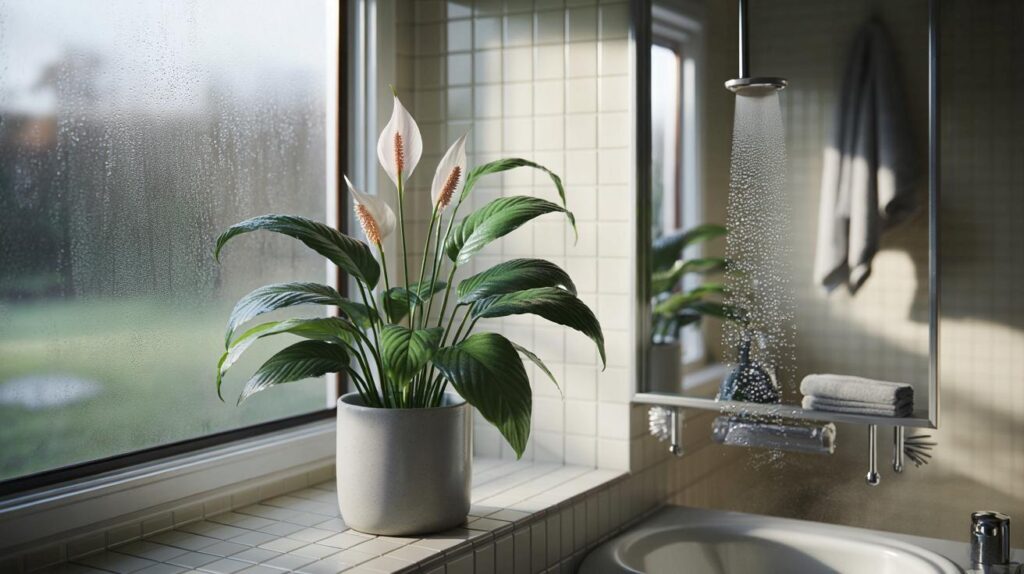
Misted mirrors, damp grout, black flecks in the corners—the winter bathroom spiral is real. A humble, leafy fix, often £13.99 on the high street, could tip the room back in your favour.
Steam rolled off the shower like a fog bank, and the window rattled in the cold. On the sill, a neat pot of glossy leaves stood where a precarious stack of bottles used to live, catching stray droplets with a kind of quiet purpose. The room smelled less tired that week, less like limescale and laundry, more like fresh air trying its luck. I wiped the tiles, cracked the window, and the plant just sat there, green and determined, as if it had a job to do. *It felt like letting the room breathe.* Something shifted.
The £13.99 plant that thrives where mould loves to start
Meet the **peace lily**. It’s the houseplant equivalent of a reliable friend: low light tolerant, happy with humidity, and unfussy about a tiny windowsill. In winter, that combination is golden in a bathroom. You’ll find small peace lilies around £13.99 across UK garden centres and supermarkets, and they don’t need a sunny conservatory to pull their weight. They quietly turn a splashy, chilly corner into a softer, more stable pocket of air.
I saw it first in a rented flat in Leeds, where the bathroom had no radiator, and towels never quite dried. A small lily moved in beside the mirror, and something subtle changed within a fortnight—the sour, musty edge faded, and the window stopped dripping for hours on end. We’ve all had that moment when you spot a new black bloom in the grout and feel the dread. Here, it didn’t happen as often.
What’s going on is simple, not magical. The plant and its soil act like a sponge-and-release buffer, soaking up extra moisture right after showers, then letting it go gradually as the room warms and air moves. Leaf canopies also intercept condensation before it settles on paint and grout, and the root zone can hold a surprising amount of damp that would otherwise hang in the air. Plants won’t replace ventilation, yet they can nudge the bathroom’s daily rhythm away from the damp peaks mould loves. It’s small, but it stacks.
How to put this plant to work (without babying it)
Place the pot in bright, indirect light—near a frosted window, away from direct spray. Use a breathable pot with drainage and a peat-free, moisture-retentive mix. Water when the top inch feels dry, not before, and let excess drain fully. Wipe leaves with a damp cloth every week or two so the plant can breathe and catch less dust. If space allows, cluster two small plants; a mini jungle buffers humidity better than a loner.
Overwatering is the classic tripwire. A constantly wet pot invites fungus gnats and that sour smell you’re trying to dodge. Let the plant drink, then rest. Keep it clear of icy draughts and radiators blasting full tilt. Give the extractor fan a fair chance—run it for ten minutes after showers—and squeegee the glass so the plant isn’t fighting a tidal wave on its own. Let’s be honest: no one actually does that every day. Aim for most days and you’ll notice the difference.
There’s a human side to this too. The little ritual—wipe, water, crack the window—makes a hard-to-love room feel looked after.
“A peace lily won’t cure mould on its own, but it can change the daily moisture curve—less spike, more glide—and that’s half the battle,” says Jess, a London renter who swears by hers.
Try these tiny wins alongside your plant:
- Open the window or fan for 10 minutes after hot showers.
- Squeegee screens and tiles to drop surface moisture fast.
- Lift bath mats to dry on a rail, not the floor.
- Wipe the lily’s leaves weekly for better airflow.
- Rotate the pot monthly so growth stays balanced.
The logic, the limits, and the lovely side-effect
An honest note on science: plants don’t “eat” mould. What they do is help stabilise humidity and catch droplets, while their leaf and soil surfaces provide places for moisture to land before it lingers on grout and silicone. Some studies suggest leafy houseplants can influence airborne particles and volatile compounds, which can take the edge off a stale bathroom. The outcome you feel—less musty, fewer surprise spots—comes from a set of small shifts working together.
If your extractor is broken or your ceiling paint is already flaking, a plant won’t be a miracle. Sort the basics, then let green do the gentle, everyday work. A peace lily partners well with a small dehumidifier for deep winter, or with a cracked window on milder days. If you fancy experimenting, a **spider plant** or **English ivy** can join the team, especially on high shelves where steam gathers. Different leaves, same mission: softer peaks, drier mornings.
There’s also the mood factor. A bathroom with a living thing in it feels less like a cupboard and more like a room. It mutes that chilly, rental-flat vibe. A tired Tuesday shower becomes a moment, not just a task. You’re not fighting the space so much as tending it. And yes, a £13.99 plant is a small gesture. That’s exactly why it works. You’ll water it, wipe the mirror, open the window—habits that mould can’t stand.
Winter always asks the same question: can your bathroom recover between showers? A peace lily helps you answer yes a little more often, by turning sharp spikes of moisture into softer, shorter bumps. It’s not a silver bullet, and it won’t rewrite dodgy ventilation or cracked grout, though it makes those flaws less punishing. Think of it as a kind ally that makes good habits stick. Add light, a working fan, and ten minutes of dry-down, and you’ve got a nudge that keeps on nudging. That small green corner might be the quiet hero your home needed.
| Key points | Details | Interest for reader |
|---|---|---|
| Peace lily thrives in bathroom conditions | Handles low light and high humidity; widely available around £13.99 | Affordable, low-effort upgrade with visible impact |
| Humidity buffering beats mould’s favourite spikes | Leaves and soil absorb and release moisture gradually; intercept condensation | Softer moisture peaks mean fewer mould-friendly hours |
| Stack small habits for big winter gains | Fan-on, squeegee, leaf wipe, and smart placement | Simple routine that’s easy to keep and feels good |
FAQ :
- Which £13.99 plant are we talking about?The peace lily (Spathiphyllum). Small sizes typically sit under £15 in UK shops and cope well with bathrooms.
- Will a peace lily actually stop mould?It won’t cure an active outbreak, yet it helps by moderating moisture and catching droplets. Pair it with ventilation, cleaning, and dry-down for best results.
- Where should I place it in the bathroom?Near a window or under a skylight for bright, indirect light. Keep it away from direct spray and icy draughts. A shelf near steam’s path works well.
- How often should I water in winter?Touch the soil. Water when the top inch feels dry, then let excess drain. In winter, that might be every 7–10 days in a typical UK bathroom.
- Is it safe around pets?Peace lilies are mildly toxic if chewed by cats or dogs. If that’s a worry, choose alternatives like a spider plant and place any plant out of reach.



I tried a peace lily last winter and it actually made our tiny flat’s bathroom feel less swampy. Not a miracle, but the mirror stopped misting for hours and the musty whiff eased. For £13.99 that’s a low-risk experiment. I did overwater once (gnats, eww), so the tip to let it dry a bit is spot on. Definately adding a second plant.
Will this still help in a windowless bathoom with a feeble extractor fan, or is a dehumidifier the only real fix?