
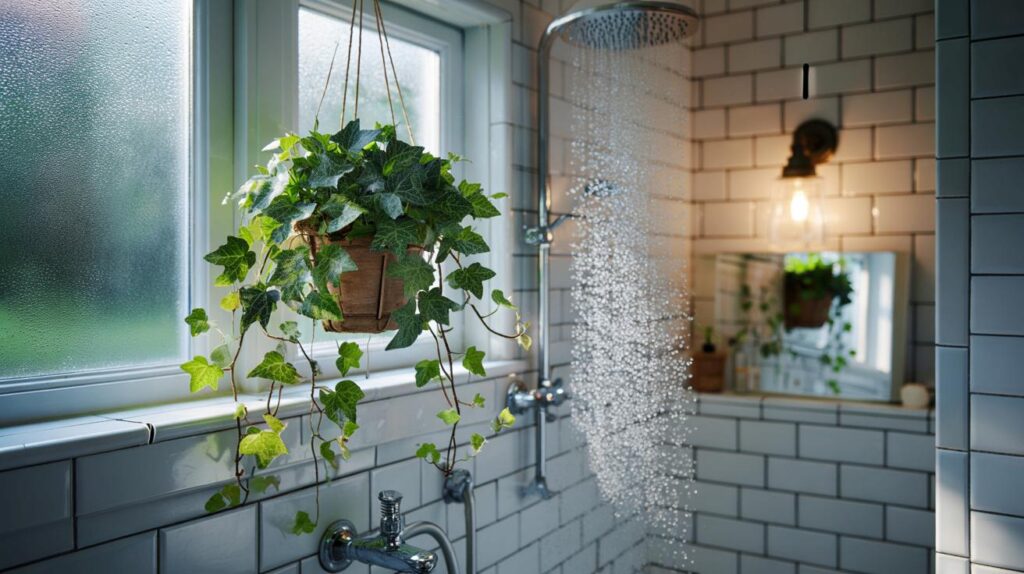
Black dots on grout. A sour, cold smell that lingers long after the shower’s done. Winter squeezes shut our bathroom windows, and mould sneaks in through the quiet. The fix everyone puts off is ventilation, but there’s a gentler ally you can bring in today — one that costs less than a takeaway and quietly gets to work while you’re out.
It was a Sunday I remember for its silence, the kind that settles on a London flat when the radiators click and the light goes watery. Steam stitched itself across the mirror. The extractor fan wheezed, then gave up. In the corner, a new hanging pot — a neat tumble of green — caught the drip-drip rhythm of the tap.
I’d bought it on a whim, £13.99 from a supermarket end cap, the kind of impulsive purchase you expect to regret. By the next week, the peppery smell of damp towels had faded. The corners didn’t look so sullen. The grout stayed clean just a bit longer.
The little plant was working.
Meet the £13.99 plant pulling its weight in steamy rooms
The unsung hero is English ivy (Hedera helix), typically £13.99 in a hanging pot at UK supermarkets and garden centres. It loves humidity, tolerates low winter light, and doesn’t mind a chilly bathroom as long as it’s not icy. **The surprise: it can knock back airborne mould spores** in a space that never quite dries.
In controlled tests, English ivy reduced levels of airborne mould in small chambers, which mirrors what people notice at home. A reader in Bristol hung two pots near her shower rail and tracked readings with a £10 hygrometer. Post-shower humidity still spiked, but the fog cleared faster, and the usual musty note dulled within days.
Here’s the logic. Mould needs moisture, food and spores to seed a colony. You handle moisture with heat, airflow and quick wipe-downs. Ivy helps at the other end — its leaves act like a passive filter, catching fine particles (including spores) that would otherwise settle on grout and silicone. **Plants are helpers, not fixers**, yet in a small room, that gentler pressure can tip the balance.
How to place it, care for it, and actually see a difference
Hang your ivy high, ideally above the shower line but away from direct splash. The trick is to catch the steam plume as it rises, so those ruffled leaves can intercept what the fan misses. Keep it in bright, indirect light if you have it; north light is fine. Water when the top 2–3 cm of compost feels dry, then let the pot drain fully.
Wipe the leaves every week or two so dust doesn’t clog that natural “filter”. Don’t sit the pot in a saucer of water or you’ll grow a bog. We’ve all had that moment when the bathroom window won’t open, the fan sounds like a broken hairdryer, and the mirror looks like a pond — the plant isn’t magic, but it shines in those in-between minutes. Let’s be honest: nobody really does that every day.
This is the rhythm that works for most small UK bathrooms. Two minutes of post-shower airflow, a quick squeegee swipe, and the ivy deployed where steam hangs heavy. Yes, a £13.99 trailing ivy can be a tiny bathroom hero.
“A plant won’t replace ventilation, but it can soften the problem — capture a bit, calm a bit, buy you time.”
- Best spot: high, humid, out of splash, near the fan’s airflow path
- Watering: light but regular; let excess drain, avoid soggy compost
- Clean leaves: quick wipe so they keep catching fine particles
- Backup habits: fan on 10–20 minutes, window cracked when you can, squeegee glass
- Pet note: English ivy is toxic if chewed — keep well out of paws’ reach
What this plant can do — and where it can’t go alone
There’s a reason mould feels worse in January. We seal the heat in, breathe and bathe in the same tight air, and the room cools fast after every shower. A cheap ivy takes the edge off that reality, particularly if your extractor is older or noisy. Pair it with one small shift — running the fan after you leave, or drying the tiles — and you’ll notice grout that stays pale longer and a mirror that clears sooner. **Mould hates dry, moving air.**
Ivy won’t fix a leak, cure a cold bridge, or rewrite the laws of physics in a north-facing flat. What it does is tilt the odds. You’ll get fewer spores landing where they can root, and you’ll see a calmer microclimate when the door stays shut. It’s not glamorous, but neither is scrubbing silicone in February with frozen fingers.
Some people buy three: one in the bathroom, one resting near a bright window to recover, and a third as a spare. Rotate monthly if your bathroom is very low light. If your space gets no natural light at all, keep the ivy, but add a small LED grow bulb on a timer for a few hours in the early evening. The plant rewards consistency with clean, responsive growth — and you get a bathroom that feels fresher on dark mornings.
| Key points | Details | Interest for reader |
|---|---|---|
| English ivy at £13.99 | Readily found in UK supermarkets and garden centres | Affordable, quick win you can try today |
| Cuts airborne mould load | Leaves passively trap spores and fine particles | Less settling on grout and silicone, fresher feel |
| Works with simple habits | Fan on, brief window crack, quick squeegee, leaf wipe | Small, doable changes that outlast winter |
FAQ :
- Is English ivy really safe in a bathroom?Yes, it thrives in humidity and cooler air. Keep it out of direct splash and away from pets and kids, as the leaves are toxic if chewed.
- Will a plant actually stop mould?It won’t stop mould by itself. It can reduce airborne spores and nudge the room toward fresher air, which helps alongside ventilation and drying.
- How many plants do I need in a small bathroom?Start with one hanging pot in a typical UK bathroom. Try a second if the room stays very steamy or the fan is weak.
- Do I need special lights for it to work?If you have a window, no. In a windowless bathroom, use a small LED grow bulb on a timer for a few hours daily so the plant stays healthy.
- What’s the fastest routine to beat mould after a shower?Run the fan for 10–20 minutes, crack the door or window briefly, squeegee glass, and let the ivy sit in the steam path. It’s a two-minute habit that pays off.



Bought one today—if this keeps my grout from going grey, I’m in! 🙂
Passive filter or placebo? Without a dehumidifier or proper ventillation, I doubt a £13.99 ivy makes a dent tbh.