
Winter hits, the bathroom steams, and tiny black freckles creep back along the grout like they pay rent. You’ve scrubbed, sprayed, opened the window till your teeth chattered. There’s a quieter fix people keep whispering about: a plant that costs £13.99 and loves damp air more than mould does.
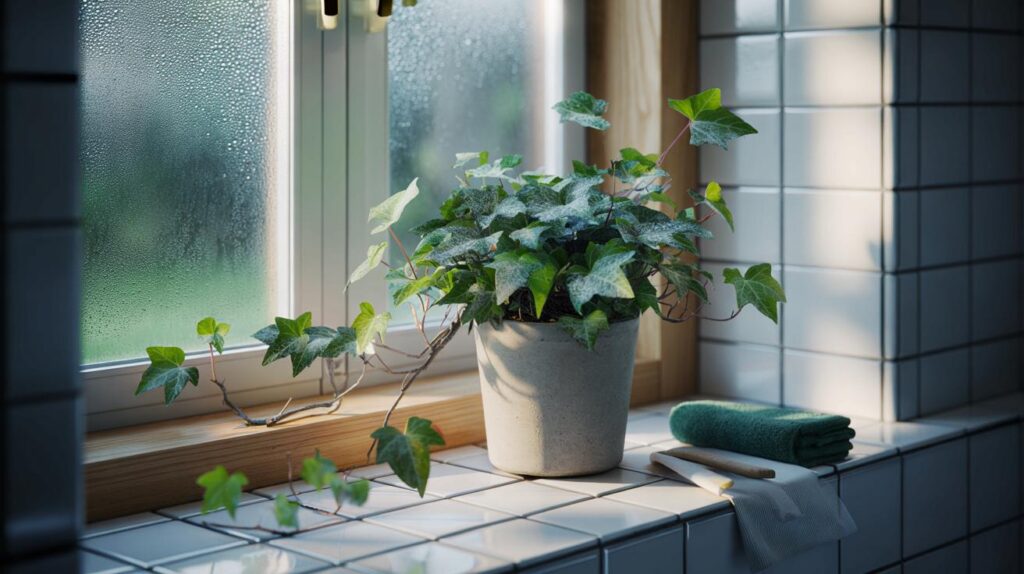
I noticed it on a Monday dark as 4 pm. The mirror was fogged to a blur and the windowsill felt cold enough to keep milk. In a small ceramic pot, a curtain of English ivy was quietly throwing new leaves by the week, the stems nudging towards the light like curious fingers.
A week later, the air didn’t feel as heavy. The musty smell after showers eased off, like someone had cracked a window before me. I hadn’t changed my routine, just shifted the plant closer to the sill and wiped the leaves once.
*It started with a £13.99 gamble.*
This humble climber that thrives where mould sulks
English ivy (Hedera helix) is one of those plants that seems born for British bathrooms. It adores humidity and forgives the odd shady morning, which is half the battle in winter. New leaves unfurl like little sails, catching light where they can.
This humble climber loves steam and hates mould.
It’s a low-stakes addition with a high upside. For £13.99, you get a green net that tangles lightly through the season, drinking from the air as much as from the soil.
We’ve all been there—that moment when the shower stops and you spot the first black dot in the corner, like a warning. A Manchester renter I spoke to slid a small ivy onto a wire shelf above the loo, near the window trickle vent. Three weeks on, the sour, damp note that used to linger was noticeably softer, and the grout lines stayed cleaner between scrubs.
Not a miracle. Just less of the stuff that makes bathrooms feel tired. Lab tests over the years, from NASA’s famous clean air work to university trials, suggest ivy can help draw down airborne spores and everyday volatiles in small spaces. The bathroom is, frankly, a small space.
Here’s the logic in simple terms. Leaves “breathe”, pulling in moisture and releasing it on their own cycle, smoothing out peaks after hot showers. The foliage traps dust and stray spores, and the potting mix hosts microbes that digest bits you don’t want floating around. Plants don’t replace ventilation, but they change the room’s rhythm.
You still need air to move and surfaces to dry. Think of ivy as a daily nudge in the right direction, not a silver bullet. It works best as part of a simple, repeatable routine you can actually live with through January.
How to put a £13.99 ivy to work in your bathroom
Pick a small pot with drainage and a saucer. Place the ivy where it gets bright, indirect light—near the window or on a shelf that catches daytime brightness. Water when the top inch of soil feels dry to the touch, not on a strict calendar.
Give it a weekly leaf wipe with a damp cloth, quick as you’d wipe the mirror. Pinch back long strands so the plant fills out and doesn’t crowd the corner. If your window is permanently arctic, add a cheap clip-on light for mornings.
Common slip-ups? Overwatering, first and always. Ivy likes evenly moist, not soggy, and wet feet invite fungus gnats and sulky leaves. Don’t stick it above a radiator blast or under a shower stream—it’ll crisp or rot.
Light matters, even in a bathroom. A north-facing cave will slow it to a crawl, so angle for the brightest nook you’ve got. Let’s be honest: nobody does that every day.
That’s why small, forgiving actions win.
Think of this as a set-and-nudge system. Pair the ivy with tiny habits: crack the window for ten minutes after a shower, squeegee glass, leave the door ajar while you dress. The plant smooths the highs while you handle the lows. If your bathroom is windowless, the combo is ivy plus a quiet fan and a little grow light. It’s the trio that keeps winter under control.
“English ivy won’t fix a leak, but it will change the way your bathroom breathes. In winter, that’s half the fight.”
- Placement: bright, indirect light; away from splashes and radiators.
- Watering: when the top inch is dry; empty saucer after 10 minutes.
- Pairing: fan on during showers, window cracked 10 minutes after.
- Maintenance: wipe leaves weekly; prune to thicken; rotate the pot monthly.
- Alternatives: Peace lily or Boston fern if ivy isn’t your style.
What this tiny green move really buys you
Mould rides on routine. So does sanity. A £13.99 ivy won’t stop winter, but it shifts your bathroom from “always catching up” to “quietly holding steady.” That relief you feel when you open the door and it smells like, well, nothing? That’s the payoff.
If you already run a fan and wipe after showers, the ivy becomes your passive co-pilot. If you don’t, it gives you permission to start small and still see a difference. Share shelf space, coax a few trailing stems around a hook, enjoy the leaf-by-leaf progress. One plant can change the whole mood of a room you visit every day.
Try it for a month. Post a photo of your first new tendril. Tell a friend who’s resigned to bleach smells and closed windows. The smallest fixes sometimes stick the longest.
| Key points | Details | Interest for reader |
|---|---|---|
| English ivy suits humid bathrooms | Thrives in steam, bright-indirect light, gentle pruning | A plant that actually fits the space you have |
| Helps nudge moisture and spores down | Leaf transpiration, microbe-rich soil, foliage traps dust | Fewer musty mornings, cleaner grout between scrubs |
| Works best in a simple routine | Fan on, quick window crack, wipe leaves weekly | Low-effort habit stack that survives winter |
FAQ :
- What’s the £13.99 plant everyone’s talking about?English ivy (Hedera helix). It’s cheap, loves humidity, and plays nicely on shelves or as a hanger.
- Where should I place it in the bathroom?Near the brightest spot you’ve got—by the window or under a small clip-on light. Keep it out of direct splash zones and off hot radiators.
- How many plants do I need for a small bathroom?Start with one. If the room still feels swampy, try a second or add a Peace lily for extra leaf area.
- Is English ivy safe around pets?Ivy is toxic if chewed by cats or dogs. Keep it out of reach or choose a pet-safer option like a spider plant.
- Will ivy replace my dehumidifier or fan?No. Think of ivy as a daily assistant, not a machine. Use it with good airflow and you’ll notice steadier, fresher air.



Just ordered an English ivy for £13.99—let’s see if my grout survives January! 😀
Do you have any sources beyond NASA’s old clean-air tests showing Hedera helix lowers mould spore counts in lived-in bathrooms? Curious about real-world data vs lab jars.