
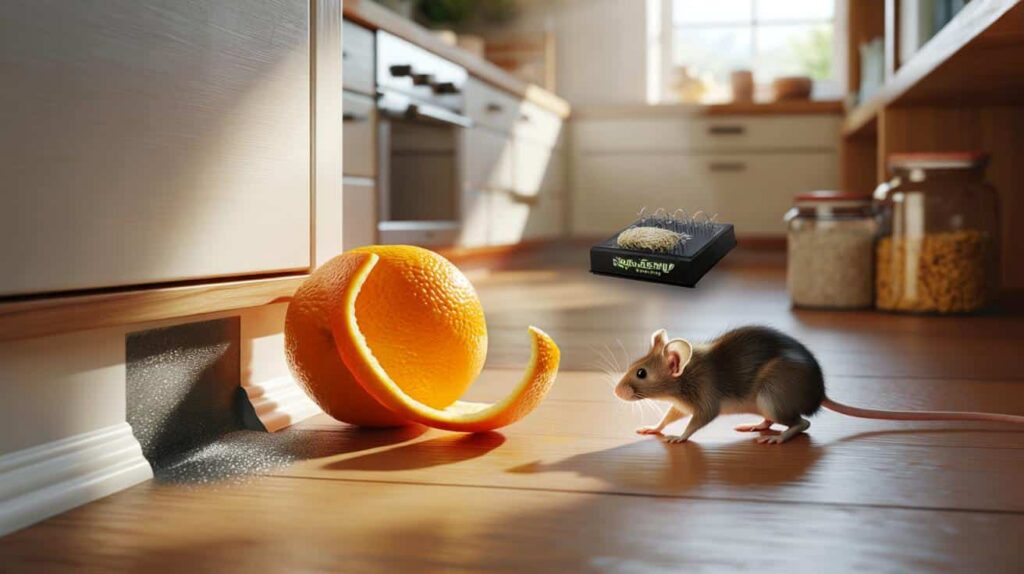
As temperatures rise and food smells drift, mice push into pantries, attics, and under-sink gaps. A simple citrus trick is gaining fans online. Here’s how it works, where it fits into a real plan, and what to do so the problem stays gone.
Why mice really hate citrus
Mice navigate by scent. Strong, sharp odors can signal risk, spoiled food, or predator areas. Citrus peels—especially orange—release limonene, a volatile compound with a punchy fragrance. Many rodents shy away from it, avoiding areas where that scent hangs in the air.
That aversion doesn’t replace proper exclusion, but it can nudge roaming mice to turn around. It also helps steer them away from entry points while you seal them. Fresh peel gives off the most aroma; rubbing or lightly scoring the skin boosts the release.
Orange peel contains limonene, a powerful scent that rodents tend to avoid. It works best as part of a broader prevention plan.
A mouse can squeeze through a hole the width of a pencil. If light or air flows through, a mouse can probably try it.
How to use orange peels step by step
- Wash and dry the orange. Peel it in thick strips to maximize surface area.
- Lightly crush or rub the shiny side to wake up the oils.
- Place fresh pieces where activity concentrates: along baseboards, behind appliances, under sinks, and next to suspected entry gaps.
- Refresh every 48–72 hours. Replace when the peel dries out or loses smell.
- Collect used peels in a sealed bag and compost or bin them the same day.
Where placement matters most
Target tight runways where mice brush against walls. Common hotspots include the back of the pantry, gaps around the stove line, under the dishwasher, the garage-to-kitchen door threshold, the attic hatch, and utility penetrations for pipes, cables, or radiators.
Consistency wins: weak or stale peel won’t move the needle. Keep the scent fresh, and pair it with sealing work.
Seal first, scent second
Scent only repels; it doesn’t lock doors. To stop repeat visits, close gaps. Aim for a layered barrier that mice can’t chew through.
- Stuff gaps with steel wool, then cap with a hard-setting sealant or mortar so it can’t be pulled out.
- Cover larger holes with 1/4-inch hardware cloth or thin sheet metal, screwed in place.
- Add door sweeps; if you see daylight under an exterior door, so can a mouse.
- Replace cracked weatherstripping and fix torn screens, especially around basements and attics.
- Box in utility chases. In multi-story buildings, vertical shafts and elevator bays act like highways.
Common entry points checklist
- Under the sink and behind kickboards
- Where gas lines or water pipes pass through walls
- Garage corners and the door-to-floor line
- Attic and crawlspace vents
- Basement windows and slab cracks
Smart, low-risk tools to pair with citrus
Combine orange peel with basic, low-toxicity moves to shrink the food, water, and shelter that draw mice inside.
- Food control: store grains, pet food, and snacks in sealed glass or metal containers.
- Crumb discipline: vacuum edges, wipe grease films, and empty trash nightly.
- Dry zones: fix leaks; a damp cabinet attracts pests quickly.
- Targeted trapping: place snap traps inside secure boxes along walls, baited with a smear of peanut butter or chocolate spread.
- Scent supports: peppermint oil shows mixed results; if used, keep it away from pets and refresh often.
| Method | Cost | Effort | When it helps | Key caveat |
|---|---|---|---|---|
| Orange peels | Low | Low, but frequent refresh | Early signs or while sealing | Scent fades fast; not a standalone fix |
| Sealing gaps | Low to moderate | Moderate, one-time | Prevents reentry for months or years | Requires methodical inspection |
| Snap traps in boxes | Low | Moderate, needs checks | Active indoor presence | Place safely; reset as needed |
| Ultrasonic gadgets | Low to moderate | Low | Short-term deterrence | Inconsistent results across rooms |
Safety notes you shouldn’t skip
- Pets and oils: concentrated citrus oils can irritate cats and small dogs. Use peel pieces rather than strong oil near pets.
- Mold risk: wet peel in a dark corner can mold. Dry the peel surface and replace often.
- Children: keep peels out of reach. The bitter pith tastes awful but curiosity wins.
- Cleaning chemistry: never mix citrus cleaners with bleach. That combo creates hazardous fumes.
- Trap ethics: avoid glue boards; they cause prolonged suffering and can injure non-target animals.
When to escalate
If you see daytime activity, hear gnawing in walls, or spot droppings in several rooms, treat it as a larger issue. Step up trapping density, expand sealing work to exterior walls, and consider professional help. Electric wiring damage, attic insulation tunnels, or repeated sightings in a new-build home suggest hidden access routes that need expert tracing.
A quick weekend plan
- Friday: shop for door sweeps, steel wool, sealant, traps, and oranges.
- Saturday morning: inspect and seal three rooms thoroughly; place fresh peel in hot zones.
- Saturday night: set two to four boxed snap traps along walls in the kitchen and utility areas.
- Sunday: reset traps, replace peel, and label a container for pet food. Note any new droppings or rub marks.
- Next week: extend sealing to garage and attic; keep the peel rotation going for two weeks.
Why orange beats many “quick fixes”
Harsh baits can bring risks for pets, songbirds, or kids, and poisoned mice may die in ducts. Orange peel sidesteps that while you shore up the building shell. It also smells clean and costs pennies. The trade-off is discipline: you need to refresh pieces and combine them with real exclusion.
A practical add-on: a gentle orange peel sachet
For longer scent life, dry peel strips on low heat in the oven, then crush them lightly and tuck into small paper envelopes. Pin the sachets near door frames or behind the fridge grill. They last longer than fresh peel and shed less moisture.
What the science says about limonene
Limonene is a terpene common in citrus. It evaporates easily, which mice pick up quickly. Studies on rodent behavior show strong scents can interrupt foraging, especially in narrow corridors. That doesn’t equal eradication, but it can reduce traffic through targeted areas, giving your seals and traps time to do the heavy lifting.
Think of citrus as a steering wheel, not a brake. It redirects mice while your repairs and traps stop them.
Useful extras that widen your margin
Rotate scents to prevent habituation. Swap a few orange placements with lemon or a clove-studded orange for a week, then return to peel alone. Keep bait tiny on traps—a pea-sized smear—so mice work for it and trigger the bar. If you share walls with neighbors, coordinate sealing the shared utility lines; one open chase can defeat both apartments’ efforts.
If you want a spray, simmer peel in water for 15 minutes, cool, strain, and add a drop of unscented dish soap. Lightly mist baseboards and exterior thresholds. Test a hidden patch first; citrus can dull some finishes. Reapply every couple of days while activity persists.


