
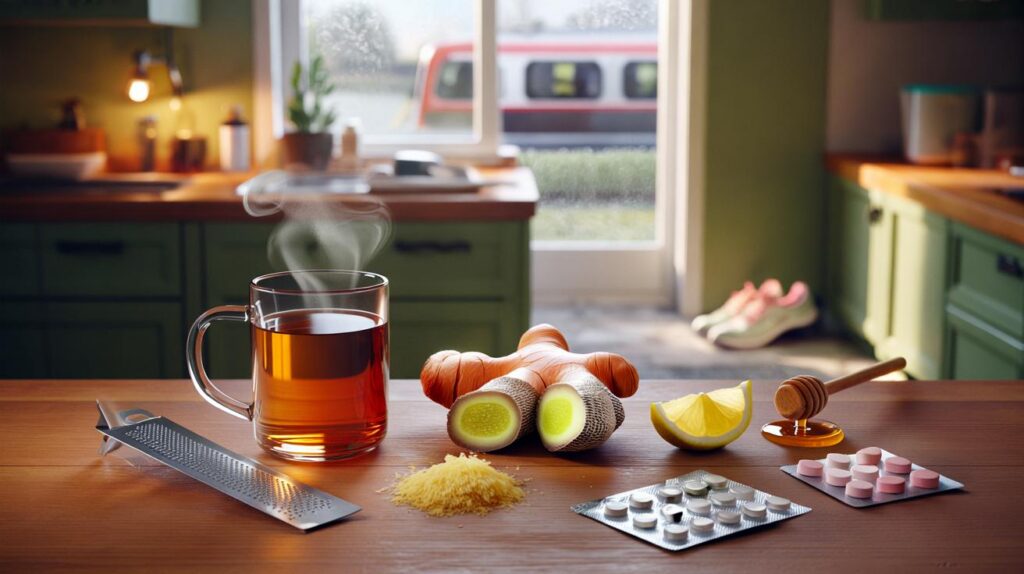
The bathroom cabinet is crammed with half-used blister packs. A pink antacid here, a lone painkiller there, a crumpled travel-sickness strip hiding at the back. Then you glance at the kitchen shelf and wonder if one humble spice could shoulder the same jobs with less fuss and fewer side effects. It sounds like a tall story. It also starts to make sense when you try it.
It was a damp London morning when I watched a neighbour grate fresh ginger straight into her mug, clouds of steam curling in the soft kitchen light. She’d been up late with heartburn from a rushed takeaway, her knee was grumbling after a run, and she was due on a train she knew would sway. She didn’t reach for pills. She reached for a knuckle of ginger, the kind that looks like a small, stubborn root from another world. She let it steep, squeezed in lemon, and took a slow sip that sounded like relief. A tiny act, oddly confident. One crooked root.
The spice that quietly covers three jobs
Most of us grab three things without thinking: a tablet for aches, a chewable for reflux, a strip for nausea. Ginger has a way of nudging all three off centre stage for the everyday stuff. Not in a shouting, miracle-cure way. In a modest, repeated, kitchen-table way that starts to feel dependable. You taste that peppery heat and there’s a little switch in your body language, a softening at the shoulders, like your insides got the memo. That alone is worth something.
There’s data behind the quiet confidence. Trials show 1 g of ginger daily can ease pregnancy nausea for many, with effects kicking in within an hour. A meta-analysis found ginger modestly improves osteoarthritis pain and function when taken around 2 g a day over weeks, which matters when stairs and sleep are involved. Small studies also suggest ginger speeds up gastric emptying and reduces indigestion discomfort compared with placebo. For common, mild problems, it often does just enough to help you get on with your day. That’s the bar most of us need to clear, and it’s lower than the billboard promises.
Under the hood, ginger is slyly sophisticated. Gingerols and shogaols seem to dampen inflammatory pathways the way a well-placed hand can calm a barking dog, nudging COX and LOX enzymes rather than smashing them. For queasiness, compounds in ginger appear to interact with serotonin receptors in the gut and brain, which helps explain travel and morning sickness wins. And for that after-curry burn, ginger’s pro-motility effect can move things along while its warmth coaxes digestion into calmer rhythms. *It’s not magic, it’s chemistry meeting daily life.* It won’t replace your GP. It might replace a rummage in the cabinet.
How to use it without making life complicated
Keep it simple. Fresh ginger tea is the Swiss Army knife: grate a thumb of peeled root into a mug, cover with freshly boiled water, steep 5–7 minutes, then add lemon or honey. For travel queasiness, 1 g total on the day—split into two or three small doses—taken 30–60 minutes before you set off often works well. For knee or back grumbles, think longer game: around 2 g of ginger daily, with meals, for several weeks. Powder is reliable for dosing; fresh is brilliant for daily cooking. Ginger chews can help in a pinch. Capsules are tidy for routines.
The most common missteps are tiny and fixable. People boil ginger to death and end up with bitterness rather than warmth. Many trust a sweet, pale ginger ale to behave like real ginger, then wonder why nothing happens. And when reflux hits, folks sip huge amounts too fast instead of small, slow, soothing mouthfuls. We’ve all been there, trying to shortcut comfort. Let’s be honest: nobody does that every single day. So pick the moments that pay off most—before a long commute, after a heavy lunch, on days your joints mutter—and stack those small wins.
There’s a human layer here too: swapping three pills for one kitchen ritual changes the tone of a day. You feel more involved, less at the mercy of symptoms. It’s not an anti-medicine crusade. It’s a pro-agency tweak with a good safety track record. Talk to your clinician if you’re on blood thinners, have gallstones, or are pregnant—ginger is gentle, not trivial.
“Ginger won’t knock out severe pain or a raging reflux flare, but for everyday queasiness, mild joint aches, and post-meal discomfort, it’s a practical first step,” notes a London GP I spoke to. “Start small, be consistent, and judge it by how your days feel, not by perfection.”
- Quick use-cases: pre-journey nausea, post-meal indigestion, mild muscular or joint aches.
- Easy formats: fresh tea, powdered in porridge or soups, soft chews, standardised capsules.
- Smart timing: 30–60 minutes before travel; with meals for reflux; daily with food for joint support.
A small root with bigger ripple effects
What changes when you reach for ginger before the medicine drawer? Not everything. Enough to notice. The quiet relief of a steadier stomach on the day you’ve got to present at 9am. The less-achey walk home when the weather turns and your knee usually complains. The simple pleasure of a warm mug that tastes like intention rather than obligation. These are small, cumulative, human wins. They add up in households and commutes and offices.
Friends start swapping recipes. Someone brings gingery lentil soup to work and suddenly lunch breaks feel less flat. A travel buddy keeps ginger chews in their pocket and the train chat gets brighter. Maybe you rely a bit less on three different packets. Maybe you still keep them around, because life is uneven and pain can be real and sharp. Ginger’s gift is not dominance, it’s margin—room to breathe between you and the usual symptoms. Share what works, compare notes, keep it kind. That’s how habits stick.
| Point clé | Détail | Intérêt pour le lecteur |
|---|---|---|
| Anti-nausea standby | About 1 g total ginger, split doses, 30–60 minutes before travel or when queasy | Fewer wobbly journeys, a calmer morning routine |
| Joint and muscle support | Roughly 2 g daily with meals for several weeks; fresh or powdered both work | Modest, meaningful relief without defaulting to pills |
| Post-meal comfort | Fresh ginger infusion after heavy or spicy meals; slow sips | Smoother digestion, less late-night burn |
FAQ :
- Can ginger really replace painkillers?For mild, everyday aches, it can help and sometimes reduce how often you need tablets. For sharp or severe pain, medical treatment still leads.
- How much ginger is safe per day?Most people do well at 1–3 g a day. Up to 4 g is a common upper range short term. Start low and see how you feel.
- Fresh, powdered, or capsules—what’s best?Fresh is great for teas and cooking. Powder is easy for consistent dosing. Standardised capsules suit routines and travel.
- Who should be cautious?Anyone on blood thinners, with gallstones, bleeding disorders, or in late pregnancy should speak to a clinician first.
- How fast does it work?Nausea relief can show within an hour. Joint support needs patience—several weeks of daily use.



Je buvais déjà du thé au gingembre, mais là, les doses et le timing changent tout. Testé avant un trajet de bus: moins de nausées, vraie diff! Merci pour les repères simples 🙂
Remplacer trois médocs avec une seule épice… ça sent un peu l’effet placebo, non? Des liens vers les méta-analyses citées seraient top.