
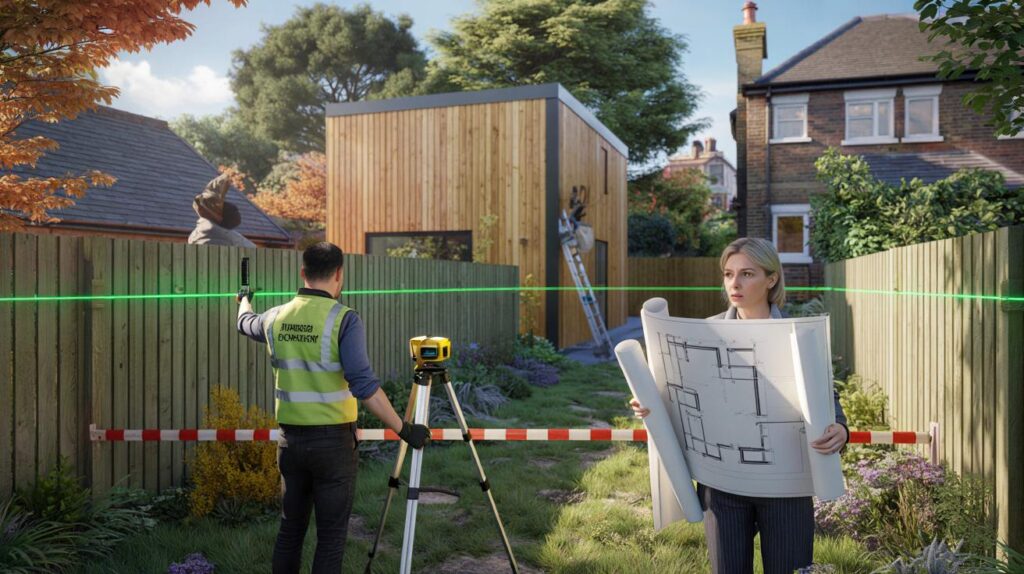
As summer fades, garden upgrades face a reality check. Measurements, maps and paperwork could decide what stays and what goes.
Across the UK, councils are reminding homeowners that garden rooms and sheds built during the warmer months must meet strict rules. Most small outbuildings are allowed without planning permission, yet several common mistakes could lead to enforcement action, court dates and eye-watering penalties.
Why sheds are suddenly in the firing line
Prefabricated garden rooms and sheds usually fall under permitted development. Industry sources say about nine out of ten won’t need an application. The catch lies in exceptions many owners overlook: where the structure sits, how high it stands, and whether the property sits on protected land or holds listed status.
Ignore an enforcement notice and it becomes a criminal offence. A magistrates’ court can issue fines up to £20,000, while a Crown Court has no upper limit.
Local authorities often see a late-summer surge in complaints after neighbours notice new buildings overshadowing fences or peeking above hedges. That’s when case officers check measurements, boundary lines and whether a building strays into forbidden zones, like the land in front of a home’s principal elevation.
The key limits you must meet
To sit within permitted development for outbuildings at a typical house in England, the structure should be single-storey, modest in height, and tucked away from the front. The most misunderstood limits are height versus boundary distance.
How height rules actually work
| Scenario | Maximum height allowed |
|---|---|
| More than 2m from any boundary, dual-pitched (apex) roof | Up to 4.0m overall, with eaves no higher than 2.5m |
| More than 2m from any boundary, flat or pent roof | Up to 3.0m overall, with eaves no higher than 2.5m |
| Within 2m of a boundary (any roof type) | Up to 2.5m overall height |
- Only one storey is allowed under permitted development for outbuildings.
- Eaves height must not exceed 2.5m.
- No verandas, balconies or raised platforms attached to an outbuilding.
- Outbuildings must not cover more than 50% of the land around the “original house”. Extensions built since 1 July 1948 count towards that 50%.
- Nothing permitted in front of the wall forming the principal elevation (usually the front of the house with the main entrance).
The 2m boundary rule catches people out. If your roof peak sits higher than 2.5m within 2m of a fence, you’re likely in breach.
Where location changes everything
Planning permission is generally required on designated land such as national parks and conservation areas. Any outbuilding within the curtilage of a listed building also needs consent before work takes place. Putting a garden room in front of the home’s principal elevation falls outside permitted development entirely.
What triggers council enforcement
Enforcement usually starts with a complaint or a routine council check. Officers may issue a planning contravention notice to gather information, then an enforcement notice if they believe a breach has occurred. Owners can appeal a notice within strict time limits, but ignoring it risks prosecution.
Once an enforcement notice lands, delays won’t make it go away. Correct the breach, apply for consent or prepare for court.
Retrospective planning applications are possible, yet approval isn’t guaranteed. If refused, an owner may need to reduce the building height, move it further from the boundary or remove the structure entirely. Persistent non-compliance can escalate fines and legal costs.
A September checklist for homeowners
- Measure from the highest ground level next to the building, not from the interior floor or a raised deck.
- Check the distance to all boundaries. Within 2m, the overall height must not exceed 2.5m.
- Confirm if your home sits in a conservation area or national park, or is listed. Rules are tighter.
- Avoid placing any outbuilding forward of the principal elevation facing the road.
- Calculate garden coverage. Keep total outbuildings and later extensions within 50% of the original plot around the house.
- Apply for a lawful development certificate if you want written confirmation that no permission is required.
- Keep drawings, invoices and photos showing dimensions and the date of construction for future proof.
Do building regulations apply?
Many small domestic outbuildings are exempt from building regulations, but not all. As a rule of thumb, if the internal floor area is under 15m² and there’s no sleeping accommodation, it’s typically exempt. Between 15m² and 30m², exemption can still apply if there’s no sleeping space and it is either at least 1m from the boundary or constructed substantially of non-combustible materials. Larger or more complex buildings usually need approval. Electrical work in outbuildings must meet Part P requirements, and any plumbing or heating can trigger further rules.
How to fix a non-compliant shed
There are practical ways to bring a structure back within permitted development. Lower the base to reduce overall height. Swap a tall apex for a lower pent roof if it’s too close to a boundary. Move the building so it sits more than 2m from fences and stays under the higher height limits. Remove any raised platforms or verandas. If the location itself is the problem—such as the principal elevation—relocation may be the only answer.
A quick example
Imagine a pent-roof garden room built 1.5m from the boundary at 2.9m high. That would likely breach the 2.5m cap for structures within 2m of a boundary. To comply, the owner could either lower the building to 2.5m or shift it beyond 2m from the boundary, where a 3.0m pent roof might be acceptable. Material changes and labour can cost a few hundred pounds for minor adjustments or several thousand if relocation or re-roofing is needed.
Common pitfalls to avoid
- Measuring from a raised deck and not natural ground level next to the shed.
- Assuming eaves and ridge are the same. Eaves height has its own cap at 2.5m.
- Overlooking that a summerhouse in front gardens typically needs full permission.
- Forgetting that older extensions reduce the 50% garden coverage available for outbuildings.
- Starting work on listed buildings’ land without prior consent.
What about different parts of the UK?
Planning rules vary across the UK. The figures quoted here are widely used in England, and guidance differs in Wales, Scotland and Northern Ireland. Always check your local authority’s requirements and national guidance before ordering a prefabricated unit or pouring foundations.
If you’re planning a garden office next
Sketch a layout with exact dimensions and boundary distances. Choose a roof profile that works with your placement: a lower pent roof near fences, or an apex roof set back beyond 2m. Confirm whether your site sits in a protected area. Specify non-combustible materials if you need the flexibility to build closer to a boundary without triggering building regulations on larger footprints. Budget for certified electrical work and consider ventilation, insulation and safe heating to make the room usable year-round.
Get it right on paper, and your shed or studio can be installed in days. Get it wrong, and you could pay for it twice.



Is this a bit of scaremongering? If 90% are fine, the headline feels a tad exagerated. Where are the numbers from, exactly?