
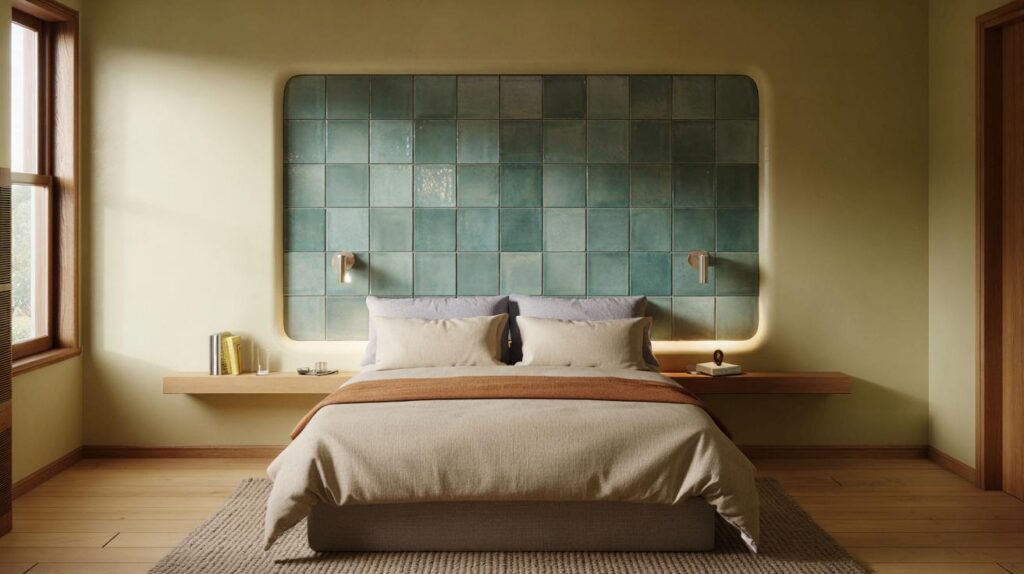
As bedroom trends shift, homeowners are rethinking comfort, cleanliness and cost in surprising ways, with tilework entering the conversation today.
Design forecasters are tipping a bold pivot for 2026: swapping padded headboards for tiled panels and feature walls behind the bed. It’s a look born in kitchens and bathrooms, now heading for the quietest room at home. The appeal mixes hygiene, geometry and custom colour, while keeping floorspace free and maintenance low.
Why tiles are edging out padded headboards
Upholstered headboards collect dust, fade in sunlight and date fast. Tiles flip that script. Glazed ceramic and porcelain wipe clean, resist sun bleaching and keep their finish for years. For allergy-prone sleepers, fewer fibres near the pillow can mean calmer nights. For renters and small rooms, a tiled panel gives the bed a strong anchor without thick furniture.
Tiles behind the bed deliver a crisp backdrop, low upkeep and a chance to draw the eye without stealing room depth.
There’s also a style shift. Curved arches, checkerboards and tonal mosaics can frame pillows like artwork. Terracotta warms a white room. Zellige brings shimmer. Stone-effect porcelain gives the look of marble at a fraction of the price and without sealing headaches.
What you can tile: from simple panels to statement arches
Three layout ideas that work in British bedrooms
- The panel: a rectangle the width of the bed plus 20–30 cm on each side, rising 100–130 cm above the mattress.
- The arch: a half-circle or soft arch over a straight course, echoing period curves without a full alcove build.
- The ledge wall: a tiled half-height wall with a bullnose capping or timber shelf for lights, books and a glass of water.
Keep grout lines tight for a calmer look, or go grid-bold with contrasting grout for a graphic edge. If you love pattern but fear overwhelm, run a feature field behind the head and drop to a plain tile beyond shoulder height.
Costs in pounds: what a tiled headboard really sets you back
Pricing varies by region and finish, but typical retail and trade figures in the UK as of 2025 look like this for a 2 m² feature:
| Item | Typical range | Notes |
|---|---|---|
| Ceramic tiles | £10–£25 per m² | Lightweight, easy to cut, huge colour range |
| Porcelain tiles | £20–£45 per m² | Hard-wearing, stone looks, slightly heavier |
| Mosaic sheets | £25–£60 per m² | Curves and arches made easier |
| Adhesive and grout | £8–£15 per m² | Low-VOC options available |
| Trims and edging | £5–£12 per metre | Protects edges near pillows |
| Labour (tiler) | £45–£70 per m² | Region and complexity affect rate |
A straightforward 2 m² panel in mid-priced ceramic often lands between £180 and £320 in materials, plus £90–£140 labour if you’re not DIYing.
How to install safely: walls, weight and edges
Most bedroom panels go on plasterboard or plaster. UK tiling guidance typically allows roughly 20–32 kg per m² including adhesive and grout, depending on the substrate. Lightweight ceramic and many porcelains stay within that. Large-format stone is rarely suitable. Prime the surface, use a quality powder adhesive, and check weight ratings before you buy.
Soften every edge near your pillows with rounded trims, bullnose tiles or a silicone bead to protect scalp and linen.
Fix electrics first if you’re planning integrated reading lights or a backlit ledge. Part P rules apply, so bring in a qualified electrician for wiring. For external walls prone to chill, consider a thermal backer board to limit cold bridging and condensation behind the bed.
Sound, warmth and comfort: balancing hard surfaces in a sleep space
Tiles reflect sound and light. Balance them with textiles: a wool rug underfoot, heavy curtains, a quilted throw and a couple of linen cushions. If you like leaning up to read, mount a narrow upholstered bolster on French cleats against the tiled field. Low-profile cork underlay behind tiles can add a touch of damping where acoustics are tricky.
Ideas for renters and low-commitment makeovers
Removable or reversible approaches
- Tile a plywood or cement-board panel, seal the back, and hang it on battens fixed into studs. Take it with you when you move.
- Use high-quality vinyl tile for a test run of pattern and colour, then upgrade to ceramic when you own.
- Create a “tile frame”: timber rails and trims that hold mosaic sheets without adhesives touching the wall.
A freestanding tiled panel delivers the look and wipes clean like the wall, while sparing your deposit.
Design notes the pros keep using
Tiles that flatter British light
- Zellige-style gloss tiles bounce scarce winter light and add movement to small rooms.
- Matt terracotta teams beautifully with limewashed walls for warmth in north-facing spaces.
- Stone-effect porcelain in soft vein patterns gives width to narrow rooms when laid horizontally.
Grout colour changes everything: tone-on-tone softens; charcoal grids sharpen. A 2–3 mm joint keeps things refined. Seal terracotta and cement tiles properly if you place side tables against the panel to avoid ring marks.
Maintenance and longevity: grout, sealers and cleaning
Bedroom tile care stays simple. Dust weekly with a soft microfibre, then wipe with warm water and a pH-neutral cleaner as needed. Choose stain-resistant grout or an easy-clean epoxy in high-contact areas near switches. Avoid silicone polishes that smear gloss glazes. If you run a humidifier in winter, ventilate to keep grout lines dry.
A quick plan you can follow this weekend
Day 1 morning: measure the bed width and sketch a panel 20–30 cm wider each side. Buy 15–20 percent extra tiles for cuts. Afternoon: prep the surface, mark a true centreline and fix a temporary ledger for the first course. Evening: dry-lay a few rows on the floor to finalise grout and pattern.
Day 2 morning: set tiles from the centre outwards, using spacers for consistent joints. Afternoon: remove the ledger, tile the bottom course, fit trims, then grout once the adhesive has cured. Finish with a soft silicone bead at exposed edges and around any fixtures.
Risks to consider before you commit
- Impact near pillows: use rounded edges and a light cushion if you tend to read in bed.
- Cold external walls: add a thin insulated backer to prevent chilly surfaces behind the head.
- Weight on plaster skim: check substrate limits and avoid heavy stone on weak surfaces.
- Resale: keep patterns contained to the bed width so future layout changes still work.
Where this trend goes next
Expect to see tiled ledges replace bedside tables in tight rooms, with dimmable strips washing the wall for a hotel feel. Mixed materials are coming too: timber caps on tiled half-walls, fabric bolsters hung on brass rails in front of mosaics, and smart switches hidden in neat cut-outs. The goal is practical glamour that’s easy to live with and easy to clean.
If you want to test the look first, tape out the shape and paint a sample area in a tile-like colour block. Live with it for a week. If it still makes you smile in morning light, order the boxes. For many households, a dozen affordable tiles could be all it takes to retire the dusty headboard and wake the room up for 2026.



I love this idea; upholstered headboards always turned into dust traps for me. A crisp tiled panel behind the bed is easier to wipe and looks sharper. For reading, I’d add a slim bolster on cleats so you still get a comfy lean without bulk.
Doesn’t a tiled wall feel cold behind your head on winter mornings? Thermal backer helps, but is it noticeable IRL? Any1 tried cork underlay or a thin foam layer to tame echo without messing up adhesion?