
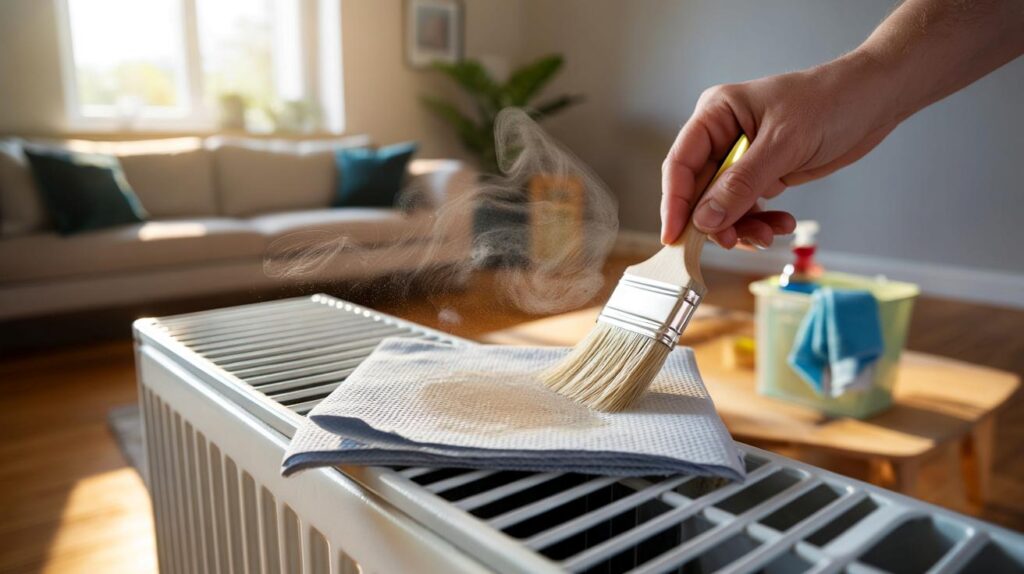
Heating season returns. Your living room looks spotless. Then the radiators wake up, and a fine, itchy fog swirls the moment you dust.
Across the country, households are firing up radiators and fighting puffing clouds of lint and pet hair. The right method stops that messy plume, protects air quality, and even helps your heating run more cleanly.
Why radiators gather dust
Radiators act like silent fans. Warm air rises, pulls room air through fins and grilles, and drags fibres, skin flakes and fluff into tight corners. That mix clings to metal, dries out, and lifts off at the slightest swipe. Pets, carpets, and open windows feed the cycle.
It is more than a cosmetic nuisance. Dust traps odours, carries allergens, and increases irritation for asthma and hay fever sufferers. It also insulates metal surfaces. That thin film nudges surface temperatures up before the room reaches set-point, which means the boiler or element works harder.
Clean metal transfers heat better. Less dust means fewer irritants in the air and a quicker warm-up from the same thermostat setting.
The £1 damp paper towel method
A simple barrier stops the plume at source. You lay a lightly damp paper towel across the top of the radiator, then brush dust down so it lands on the towel and stays there. No drift. No grey haze on your shelves.
Step-by-step in five minutes
- Turn the radiator off and let it cool fully. Unplug electric heaters.
- Fold one or two sheets of thick paper towel. Run them under a tap. Wring well until just damp.
- Lay the towel flat along the top cover or grille. If the radiator is long, overlap sheets with a slight lip.
- Use a clean, soft paintbrush or a narrow radiator brush. Work from the back towards the front, top to bottom.
- Flick dust gently so it falls onto the damp towel. Avoid fast strokes that stir the air.
- Lift the towel by the corners. Bin it. Wipe the top and sides with a barely damp microfibre cloth.
- Leave vents dry. Restore power only when every surface is dry to the touch.
This damp-capture trick stops particles mid-flight, keeps surrounding surfaces clean, and takes less time than vacuuming.
Why it works
Moist fibres grab particles. Water increases adhesion and weight, so dust drops and sticks instead of floating. The brush dislodges build-up from fins and seams, while the towel acts like a landing pad. You avoid blasts of air from vacuums or blowers that carry debris across the room.
How often to do it
During autumn start-up, clean every two to four weeks. In peak winter, check high-traffic rooms weekly. Bedrooms and nurseries need extra care if occupants have allergies. A quick look into the fins tells you when to act.
Match the routine to your home. Homes with pets, open fires, or thick carpets accumulate faster. Flats near busy roads draw in fine soot; expect more frequent touch-ups.
Common mistakes to avoid
- Blowing dust out with a hairdryer or compressed air. You only re-suspend particles and spread them onto furniture.
- Vacuuming at full power. Strong suction disturbs fluff and scuffs paint. If you must vacuum, use a soft brush and low power with a HEPA filter.
- Using metal brushes or scouring pads. These scratch paint, invite rust, and create snag points for future dust.
- Spraying harsh cleaners. Solvents degrade coatings and attract grime over time.
- Cleaning while hot. Heat dries the towel too fast and can warp plastic trims.
What type of radiator do you have?
| Type | Tell-tale features | Best approach | Warnings |
|---|---|---|---|
| Panel radiator with fins | Flat front, slots at top, metal fins behind | Damp towel on top, soft brush through slots, microfibre wipe | Do not force brushes between tight fins |
| Convector heater (electric) | Top grille, fan-like airflow | Power off, cool, towel only on external top, brush gently | Keep moisture away from electrics; avoid dripping |
| Oil-filled radiator (electric) | Ribbed columns, on wheels | Wipe ribs with damp microfibre; towel beneath to catch debris | Never drape damp materials while powered |
| Towel radiator | Ladder rails in bathrooms | Damp cloth along rails; towel under to catch dust | Dry fully to prevent corrosion in humid rooms |
| Cast iron column | Chunky sections, period homes | Soft bottle brush between sections, damp towel under run | Avoid abrasives that strip old paint |
Air quality and energy gains you can feel
Cleaner fins mean smoother convection. Many households report faster warmth at the same thermostat setting after a thorough dust-out. A modest build-up acts like a blanket. Clear that layer and the system hits target temperature sooner.
For cost, the numbers are small but real. Keeping radiators free of fluff can shave a few per cent from seasonal heating use in dusty homes. That means pounds saved and less time with the boiler running. It also cuts that faint burnt-dust smell when the heating first kicks in.
Spend pennies on paper towel, save minutes on cleaning, and spare your lungs from a grey indoor haze.
Make a low-mess kit and routine
Build a small caddy: soft 38–50 mm paintbrush, narrow radiator brush, roll of thick paper towel, spray bottle with plain water, microfibre cloths, and a rubbish bag. Add a torch to see inside fins. Keep the kit near where you store spare towels or bedding, and you will use it more often.
Set a reminder on the first cold Saturday of each month. Do the living room and bedrooms. Take two extra minutes to check thermostatic radiator valves. Make sure curtains and furniture are not blocking grilles; a 10–20 cm gap helps airflow and reduces dust traps.
If you have allergies or a respiratory condition
Wear a basic mask while brushing fins. Open a window a crack for 10 minutes once you finish. Use a vacuum with a HEPA filter for final floor clean-up only, and keep suction low. If you use scented sprays on nearby surfaces, apply them after the radiator is dry to avoid sticky residues that catch more dust.
When to call a professional
If paint is peeling, rust shows, or you spot leaks, book an engineer. For hydronic systems, annual bleeding and balancing helps even out heat, which reduces convection hotspots that trap dust. In older homes, a system flush can remove sludge that warms panels unevenly and encourages local build-up.
Extra tips that pay off
- Place a washable cotton sheet on the floor under the radiator before you start. It catches stray bits and speeds the tidy-up.
- Swap feather dusters for microfibre tools. Feathers scatter. Microfibre grabs.
- Keep indoor humidity between 40–50%. Very dry air lifts dust more easily. Very damp air risks condensation and rust.
- During deep cleans, pop the top grille off a panel radiator if it is designed to lift out. Brush in one direction with light strokes.
A quick winter check
Run a fingertip along the top slot. If you pick up grey fluff, you are due a clean. If the front panel feels hotter than usual while the room still feels cool, dust may be insulating the fins. The damp paper towel method takes less time than making a cup of tea, and the room stays tidy while you do it.



I just did the five-minute routine on a panel radiator and wow—the grey fluff that came out was grim. The damp towel caught almost everything, no dust plume, no burnt smell when I turned it back on. Took less time than dragging the vac out. Keeping this in my winter kit.
Where does the “92%” figure come from? Lab test, particle counter, or a rough estimate? Also, do damp paper towels risk shedding fibers into the fins, or inviting rust if the unit isn’t fully dry? Curious before I try this on my older convector.