
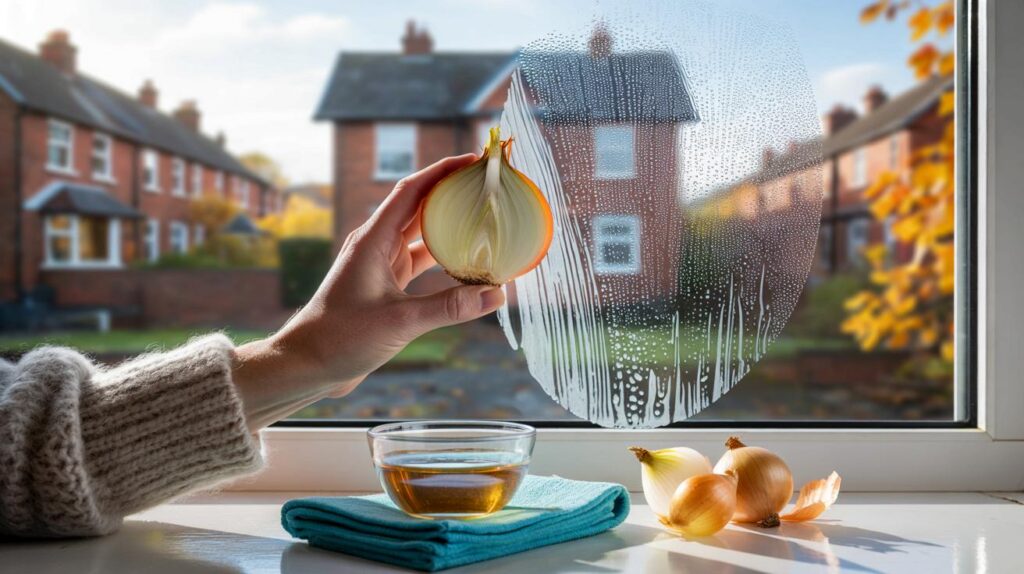
That low autumn sun makes every smear on your windows look worse than ever, just as you crave cosier rooms.
The season’s slanted light exposes greasy halos and dusty lines that sprays rarely fix for long. Families spend time and cash chasing a clear view, only to find fresh streaks at the next sunrise. A cleaner, cheaper routine is circling social media and old-fashioned household notebooks alike, and it’s winning converts for one simple reason: it works.
Why your windows still streak after you’ve cleaned them
Streaks have many culprits. Hard water leaves mineral spots. Over-wet cloths drag dirty moisture across the pane. Paper towels shed lint. Strong sun dries product too quickly, setting marks in place. Kitchens add a mist of cooking fats that stick to glass. In autumn, condensation leaves a fine film that traps dust. All of this combines into that patchy, cloudy finish you notice as soon as daylight hits.
Most households respond by spraying more product and rubbing harder. That often makes it worse. What you need is a way to break down grease fast, lift residue, and leave nothing behind that can dry into a mark.
The half-onion method everyone is talking about
Hidden in plain sight, a halved raw onion can cut through window grime without harsh chemicals. When you rub the freshly cut side over glass, the juice acts on greasy residues and helps release stuck-on dirt. It is quick, cheap, and leaves a clear surface ready for a dry buff. For many homes, it replaces a bottle of glass cleaner entirely for routine maintenance cleans.
Rub half an onion over the pane, then buff with a dry microfibre: clear glass in about 3 minutes per window.
What you need
- 1 medium onion (yellow or white), halved
- 1 clean, dry microfibre cloth
- Warm water for a light rinse if desired
- Optional: a second dry cloth for a final buff
Step-by-step
Why an onion works on glass
Cut onions release sulphur compounds and mild acids that help disrupt greasy films. The juice reduces surface tension, so residues lift more easily. That is why you need less rubbing than with plain water. Because you follow with a dry microfibre, you remove both the loosened grime and any onion moisture before it dries into marks.
There’s a hygiene bonus. Fresh onion juice shows activity against some bacteria on non-porous surfaces. It is not a hospital-grade disinfectant, yet it contributes to a cleaner pane without dyes or synthetic fragrance.
Onion juice breaks down greasy films and reduces bacterial load on glass, leaving fewer residues that cause streaks.
When to clean for the best result
- Pick an overcast or cool time of day so the pane stays slightly damp as you work.
- Avoid direct sun and hot glass; product dries too fast and sets streaks.
- Work top to bottom to prevent drips spoiling finished sections.
- On very hard-water areas, finish with a quick warm-water rinse before the final buff.
Cost, time and odour compared
| Method | Approx. cost per clean | Average time per window | Streak risk | Odour | Waste |
|---|---|---|---|---|---|
| Half onion + microfibre | Under £0.20 (half an onion) | 3–4 minutes | Low with proper buff | Mild onion, fades after buff | Peel only (compostable) |
| Commercial glass spray | ~£0.30–£0.60 | 4–5 minutes | Medium on sunny panes | Fragranced | Plastic bottle |
| Vinegar + water mix | Pennies | 4–6 minutes | Low–medium | Vinegar scent | Reusable bottle |
Households that usually buy a spray every month at £3–£4 could trim annual spend by several pounds by switching some cleans to the onion method, with less plastic left behind.
Smell and safety: what to know
- The odour fades quickly after the dry buff. If you mind it, finish with a warm-water wipe and a second dry buff.
- Keep onion pieces away from pets; onion is toxic to cats and dogs if ingested.
- Avoid contact with eyes and broken skin. Wash hands after handling.
- Test frames first. Don’t rub onion over unfinished timber or natural stone sills.
- If you have a sensitive nose, run the extractor fan or open a window while you work.
Tricky cases and smart tweaks
Heavy kitchen film
On panes near hobs, do one slow onion pass to loosen grease, then a light warm-water mist before the dry buff. A second buff with a fresh cloth edge helps if residue was thick.
Hard-water spotting
If limescale dots remain, hold a dampened corner of the onion on the spot for 10 seconds, then wipe. Finish with a warm-water rinse and buff.
Fingerprints and sticky labels
Use the onion first to lift the greasy layer. If label adhesive remains, cover it for a minute with a warm, soapy cloth, then buff dry.
Mirrors and shower screens
The method works on bathroom mirrors and clear shower glass. Avoid coated anti-fog mirrors unless the manufacturer allows gentle acids; test a small corner first.
Car windows
Do not use on windscreens with sensitive camera or sensor areas. For side glass and the rear window, work cool and out of direct sun, then buff thoroughly to avoid smears at night.
Why it helps your home beyond the shine
Clean glass admits more comfortable daylight and reduces the time you run electric lights on gloomy afternoons. Clear panes also make condensation easier to spot, so you can dry sills and crack a window before mould takes hold. For households avoiding strong fragrances due to allergies or asthma, this approach keeps the air calmer.
The method aligns with low-waste habits. The peel and leftover onion can go straight to the compost bin. If you prefer not to compost, slice off only what you need and reserve the untouched half for cooking the same day, stored separately from cleaning areas.
If the onion isn’t your thing, try these low-cost options
- Vinegar solution: mix 1 part white vinegar with 3 parts warm water, add a single drop of washing-up liquid, spray lightly, then buff dry.
- Plain warm water and a well-wrung microfibre: on lightly soiled panes, this is fast and scent-free.
- Newspaper buff: use only at the final stage for extra sheen; avoid on modern frames where ink can transfer.
Two-minute extras that improve results
Wash microfibre cloths without fabric softener; softener coats fibres and causes streaks. Label one cloth “glass” and store it dry so it stays fluff-free. Replace cloths when they lose their grab. Schedule window care for one room each week rather than a marathon session; shorter bursts deliver better, faster work.



Just tried this on two patio doors and my bathroom mirror. Honestly surprised—onion juice cut through the greasy halo faster than my usual spray, and the final buff with a dry microfibre left them crystal clear. Smell was there for a minute but faded quick after the buff. I did have to slice a fresh edge on the onion once when it got a bit dry. For under £1, this is defintely going into the weekend clean routine.