
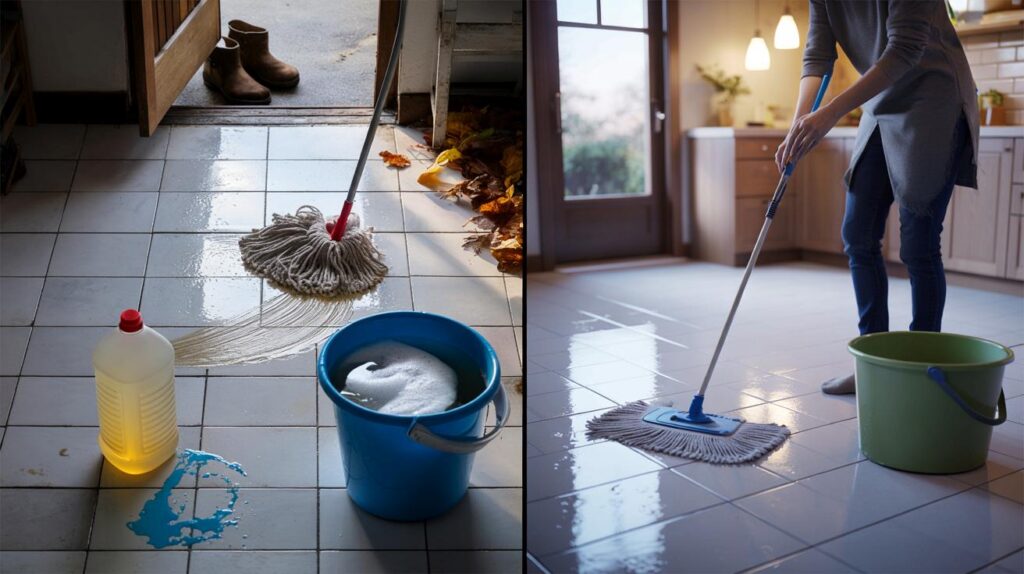
Autumn mud and wet boots return. You scrub harder. Yet the floor stays flat, streaky and oddly lifeless under the kitchen light.
Across the country, homes ramp up the cleaning routine as days get shorter and hallways busier. Marketing promises speed and sparkle. Many reach for extra product and a steaming bucket. The result often disappoints. A small, routine habit keeps tiles looking tired and nudges bills higher without anyone noticing.
The everyday habit that kills tile shine
That instinct to use a generous slug of detergent with very hot water seems logical. It feels thorough. It smells clean. It is also the main reason many floors look dull within hours.
Too much product plus hot water leaves an invisible film that grabs dirt, fakes a grey tint and flattens the sheen.
Each mop leaves a trace. Surfactants dry on the surface. As traffic adds grit and moisture, that residue binds fine soil like glue. The film builds, then traps more soil. Even fresh mopping can leave cloudy arcs because the film keeps smearing.
Why heat and heavy doses backfire
Very hot water evaporates fast. The liquid goes. The chemicals stay. High heat also speeds mineral deposits in hard-water areas. Calcium pairs with soap and forms a light haze. That haze masks colour and makes tiles feel tacky underfoot.
Big doses do not rinse clean. A cotton or microfibre mop can only lift so much. The rest clings to glaze and grout. Joints take a hit first. They darken, then turn crumbly if you keep scrubbing with aggressive fluids.
In busy homes, this routine can add up to roughly £9 a month once you count wasted product, extra rewashes and hot water.
How the costs creep in
The energy for hot buckets, the overuse of cleaner and repeat mops all add up. Here is a simple, conservative example for a family that mops three times a week.
- Overdose: +40 ml per mop versus the label. At £4 per litre, that is about £1.90 a month.
- Hot water: 10 litres heated by 40°C ≈ 0.46 kWh per mop. Over 12 mops ≈ 5.5 kWh. At 24 p/kWh, about £1.30.
- Redoing one botched, streaky mop a week: four extra mops a month. Cleaner and water together, roughly £3.50 to £4.
Total: near £7 to £9, without counting wear on mop heads and the time you lose.
Quick fixes that restore a real clean
You do not need stronger chemicals. You need the right dose, the right temperature and a rinse that leaves nothing behind.
Measure the product, keep water tepid, and separate the wash from the rinse. The shine returns because residue vanishes.
Set up a simple two-bucket routine
- Use a pH-neutral floor cleaner, measured to the cap. Follow the label dose for a 5-litre bucket.
- Mix with tepid water. Aim for hand-warm, not hot.
- Keep a second bucket with clean, cool water for rinsing your mop after each pass.
- Wring well. Make light, overlapping strokes. Rinse the mop often.
- Replace either bucket when the water turns cloudy.
- Open a window or run extraction to cut drying time and streaks.
- Lay a washable doormat at the entrance to trap grit before it reaches the tiles.
A reset for filmed tiles
If residue has built up, run a gentle reset. Use a microfibre pad and one of these options.
- White vinegar at 100 ml per 5 litres of tepid water on ceramic or porcelain only. Mop a small area, then rinse with clear water. Do not use on marble, limestone or other acid-sensitive stone.
- A dedicated neutral floor cleaner, dosed correctly, worked in with a microfibre flat mop. Rinse once with clean water.
Common mistakes and what to do instead
| Mistake | What happens | Do this instead |
|---|---|---|
| Too much detergent | Film forms, streaks appear, colour looks grey | Follow cap dose per 5 litres, measure every time |
| Boiling hot water | Fast evaporation leaves residue, minerals set on surface | Use tepid water to slow drying and improve pickup |
| One-bucket mopping | Dirty rinse water re-deposits soil | Two buckets: one wash, one rinse |
| Old string mop | Holds grime, leaves lint trails | Switch to microfibre flat mop with a good wringer |
| No ventilation | Slow drying, water marks | Open a window or run a fan for 10 minutes |
Why this matters now
Autumn brings more grit, damp leaves and pet pawprints. The temptation to dose heavy grows with every muddy footprint. The fix lies in restraint and routine. Once film stops forming, colours pop again. Glaze reflects light. The floor feels crisp under shoes, not sticky.
Small checks that make a big difference
- Hard water? A light film returns faster. Keep doses precise and rinse well. Consider a final wipe with deionised water in problem areas.
- Grout care: seal cement-based grout once it is fully cured, then top up every 12 to 24 months in high-traffic zones.
- Steam mops: avoid on unsealed stone and cracked grout. High heat pushes moisture into joints.
- Entry control: one coarse outdoor mat plus one washable indoor mat can cut soil tracked in by more than half.
A quick test and a money-saving example
Try the white-towel test. After your next clean, rub a damp white cloth across a one-metre square patch. Grey marks mean residue remains. Switch to measured doses and a two-bucket method for a week. Repeat the test. The cloth should stay almost clean.
Here is a simple saving scenario for a family of four that mops three times a week:
- Cleaner use drops from 60 ml to 20 ml per 5 litres: about 480 ml saved per month. At £4 per litre, that is £1.90 saved.
- Water temperature falls from near-boiling to tepid: energy falls by roughly 5 kWh a month. At 24 p/kWh, you save about £1.20.
- Fewer redos: cut two failed re-mops a month and save £3 to £4 in product and energy, plus time.
Total cash saving lands between £6 and £8 a month, with cleaner grout and fewer streaks. In a busier home or a household using premium products, the figure can nudge past £9. The gain in time is larger than the money: one less re-mop a week frees more than an hour a month.
Going further
Match cleaner to material. Porcelain and glazed ceramic prefer neutral solutions. Natural stone needs stone-safe pH-balancing products. Matt finishes hide scuffs but show film faster. Glossy glaze magnifies smears under side light, so keep doses tight near patio doors.
If you want a simple maintenance rhythm, try this: daily dry sweep, midweek spot mop with tepid water only, and one measured wet mop at the weekend. Add a quarterly reset if you notice drag under the mop. That light structure preserves the look, trims bills and keeps grout healthy without harsh chemicals.



So tepid water + measured dose + two buckets. But what about vinyl plank floors—same rules?
£9 a month sounds a bit inflated. Can you show the calc for energy and detergent if tarifs vary by region? Feels assumptive.