
Hidden in plain sight, today’s Wikipedia front page serves film nostalgia, wartime grit, stark anniversaries and a quiet challenge aimed squarely at you.
At first glance it looks like a carousel of curios. Stay a moment and you’ll find a map of culture, conflict and civic action. Here is what stands out on 29 October, and why it matters to your day and your decisions.
What the front page highlights today
The film pick
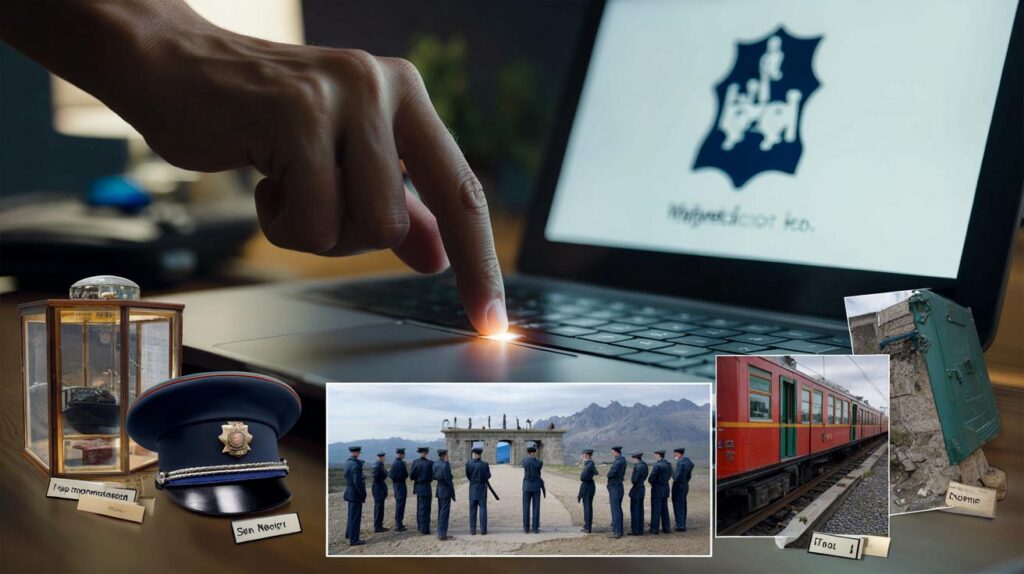
The featured article spotlights Le Gendarme à New York, a 1965 Franco–Italian comedy and the second instalment in the Saint-Tropez series. It follows the hapless brigadier Ludovic Cruchot as a French gendarmerie squad collides with New York chaos. A cap and NYPD insignia used by the character sit on display in the Louis de Funès Museum at the Château de Clermont, a tidy bridge between on-screen myth and physical memorabilia.
One mid-60s caper, one real police cap in a French château, and a reminder that pop culture leaves fingerprints you can touch.
The pick is more than a throwback. It nods to cross-Atlantic fascination and the way European cinema caricatured American bustle. It also demonstrates a core Wikipedia habit: placing a cultural artefact within verifiable context, from production details to surviving props.
The facts that made you blink
The “Did you know” panel throws up real jaw-twitchers. They read like pub quiz bait, yet they hold sharp edges.
- Nine French soldiers at the Pont-Saint-Louis outpost kept their post two days after the 1940 armistice cut their lines, facing Italian forces at a sealed frontier.
- A Paris suburban stop, Freinville–Sevran, traces its name to a railway brake manufacturer that set up shop nearby, giving a factory its place on the map.
- Philosopher Bernard Stiegler once labelled former US Federal Reserve chair Alan Greenspan a “proletarian”, a provocation about labour, knowledge and power.
Nine men, two extra days, a silent bridge, and orders cancelled by history. That’s a memory worth keeping alive.
On this day: five turning points
Anniversaries turn the timeline into a dashboard. Today’s list is unusually tight, spanning canals, fronts, capitals, invasions and the first pulse of the internet age.
| Year | Event | Why it matters now |
|---|---|---|
| 1888 | The Convention of Constantinople set rules for ships in the Suez Canal. | Trade routes live and die by chokepoints. Policy around Suez still moves prices and diplomacy. |
| 1914 | The battle of the Yser began, halting the “race to the sea”. | Static fronts, civilian towns under fire, and logistics stretched thin—familiar patterns in modern conflicts. |
| 1923 | The Republic of Turkey was proclaimed; the capital shifted to Ankara. | State-building, secular reforms and contested identities continue to ripple across the region. |
| 1956 | Israeli forces entered Gaza and Sinai during the Suez crisis. | Interventions leave long shadows. Borders, security doctrines and alliances trace back to this moment. |
| 1969 | ARPANET transmitted the first electronic message: “login”. | The internet began with five letters and a system crash. Every notification since owes it a debt. |
First message, five letters: “login”. Every tap you make today is its descendant.
Headlines in the spotlight
The current events bar reads like a risk register. It lists a midterm legislative win for President Javier Milei’s movement in Argentina, street anger in Serbia, a political standoff in France, the war in Gaza, the civil war in Sudan, and claims about control in parts of Syria. The list shifts quickly as cited sources change or get refined by volunteers.
Rather than chase scoops, the feed points you to summaries built from published reporting. It cross-references dates, names and places. You can follow threads without losing track of timelines or geographic scope.
Wikipedia’s live news panels don’t set the agenda; they mirror what reliable sources can support—and show their work.
Names you may be searching today
The obituaries panel for 26–29 October fills with a dozen or more entries across sport, arts and politics. Each name links a life to a web of citations. Some entries are sparse on day one and gain detail fast as newspapers, broadcasters and official notices arrive. That speed matters for people checking facts while grief, rumour and social media noise overlap.
What this asks of you
Front and centre sits the line that defines the project: “The free encyclopaedia you can improve.” Nearby you’ll find help pages, topic portals, founding principles and a prompt to ask a question. It is a clear invitation, backed by simple tools.
A 10-minute starter plan
- Pick a topic you know well. Scan for a small error: a typo, a date, a missing accent, an outdated figure.
- Find a reliable source that fixes it: a reputable newspaper, an academic book, a government publication.
- Make one edit. Add a citation with a page number or a timestamp if it’s an audio-visual source.
- Write in neutral language. State the fact once. Avoid flourishes.
- Leave a short edit summary so others see what changed and why.
- If someone reverts you, use the talk page. Ask a clear question and show your source.
One edit, backed by one reliable source, beats a thousand hot takes.
Common risks and how to avoid them
- Recent news: rely on multiple sources; avoid single-source scoops.
- Living people: cite carefully; remove contentious claims that lack strong sourcing.
- Conflict topics: stick to facts, not slogans; summarise significant viewpoints proportionally.
- Original research: don’t draw new conclusions from data; quote what sources say.
- Ownership: no one “owns” a page; discuss rather than edit-war.
Extra context you can use
Curious about the “five pillars” referenced on the help menu? They boil down to neutrality, free content, civility, verifiability and no original research. If a change respects those five, it usually sticks. If a change breaks one, it usually falls apart under scrutiny.
Want a quick mental drill before you click edit? Take the ARPANET “login” moment as a model. Break a big task into tiny, verifiable steps. Can you fix one date, add one page number, or clarify one ambiguous sentence without adding new claims? Time that action. Notice how quickly another volunteer checks it. You’ll learn the rhythm of review and how watchlists flag changes for subject-matter veterans.
History items often look distant until you pair them with a present-day risk. The 1888 Suez framework speaks to supply chains that still hinge on a narrow canal. The 1923 shift to Ankara explains maps, ministries and embassies you see today. The 1956 intervention frames arguments you hear every week. Use those anchors when you read headlines so numbers and names stop blurring together.
The front page doesn’t just entertain. It routes you to sources, timelines and debates that shape what you pay for, how you vote and which stories you share. If nine soldiers can hold a bridge two days past a peace treaty, one reader can spare ten minutes for a careful edit. The site is built for that kind of small, useful courage.



That “login” anecdote got me—five letters that crashed and still launched everything. Inspiring nudge to make my first tiny edit today 🙂
Cool read, but some of these “Did you know” bits feel like pub-quiz fluff. How do we enssure it’s not trivia-fication of history? Sources look solid, yet the framing seems a tad breathless.