
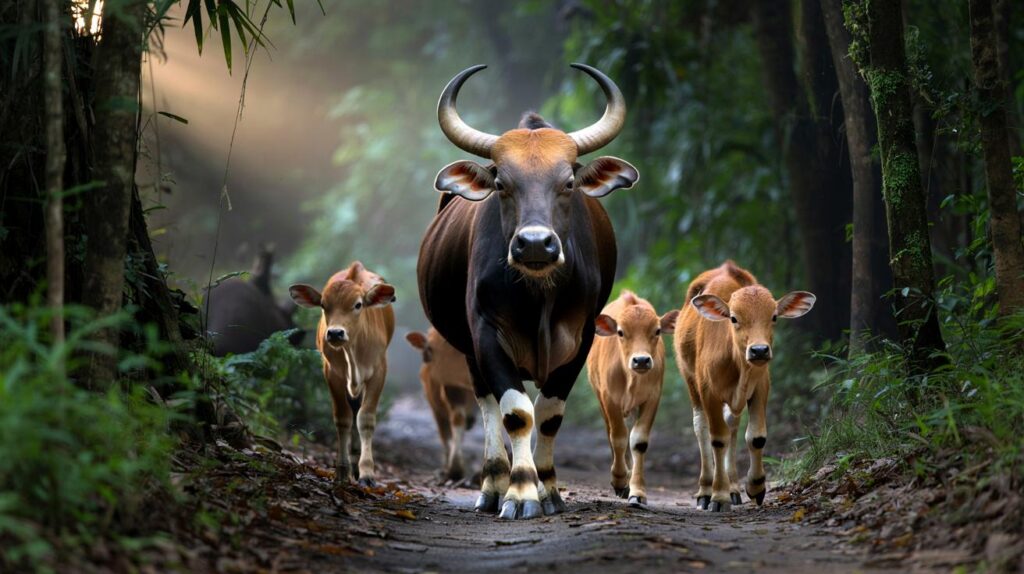
High in a Thai sanctuary, a silent lens captured a fleeting family moment that hints at patient work finally paying off.
The image came from a motion-triggered camera set deep in Huai Kha Khaeng Wildlife Sanctuary. It showed a female gaur stepping confidently along a shaded track with three calves in tow. For specialists who measure progress in years, not weeks, that quiet procession reads like a pulse check on a forest regaining its strength.
A quiet breakthrough on a busy forest path
Thailand’s Department of National Parks, Wildlife and Plant Conservation recently released footage from a trail camera tucked in thick understorey. The clip shows a cow gaur easing down a path as three young animals shadow her. No predators in frame. No panic. Just a calm crossing that speaks volumes.
One cow, three calves, and no sign of stress: an unusual cluster that points to safety, space and reliable food.
Gaur, the world’s largest wild bovine, once roamed widely across South and Southeast Asia. Over the past century, hunting and habitat loss pushed populations into scattered pockets. Many countries now hold small, fragmented herds. Thailand’s herds are rebounding in a landscape that faces pressure from farming, roads and rising temperatures. That makes this short clip more than a curiosity; it’s evidence that habitat protection, anti-poaching patrols and science-led management are lining up.
A refuge built over decades
Huai Kha Khaeng is a UNESCO World Heritage site spanning about 1.4 million acres of mixed forest. It forms one half of the Western Forest Complex, a mosaic that also shelters elephants, tigers, dholes, sambar and countless bird and reptile species. Rangers, researchers and local communities have kept these hills and river valleys relatively intact while development raced ahead elsewhere. The result is a rare stronghold where a sensitive, heavy-bodied grazer such as the gaur can breed successfully.
The gaur’s fortunes vary across its range. India still supports the largest numbers, aided by vast protected landscapes. Thailand, with less available land, has had to be more surgical: targeted patrols, seasonal closures, controlled burns and waterhole maintenance. The three-calves moment suggests the approach is holding.
Cameras that watch without disturbing
Trail cameras now sit at the heart of modern conservation. They record animal movements, timings and behaviours without sending people into fragile areas or tipping off wary wildlife. The technology is simple: a sensor detects heat and motion, triggers a shutter, stores images or clips, and sleeps again.
- Measure population trends: repeated sightings of calves, subadults and breeding females indicate growth.
- Track seasonal use: images show which paths animals prefer during dry or wet months.
- Spot threats: poachers, feral dogs or livestock incursions appear in the data.
- Guide patrols: rangers can shift routes to hotspots revealed by recent footage.
These methods have reshaped other species stories too. In Vietnam, similar kit confirmed the continued existence of the silver-backed chevrotain, or mouse deer, after decades without a verified record. For species that slip through field surveys and avoid people, a lens tied to a tree can rewrite maps.
Camera traps create a time-stamped ledger of life that humans rarely witness, and wildlife cannot feel.
Why this matters beyond one clip
Large grazers do more than feed. They shape plant communities, open trails, spread seeds and fertilise soils. Healthy herds help keep forests patchy and productive. That, in turn, stabilises slopes, protects headwaters and locks away carbon in both wood and ground. Human settlements downstream gain cleaner water, steadier soil and fewer costly floods.
The effect mirrors other repair jobs that touch daily life. When cities shelter pollinators, harvests improve. When coasts rebuild oyster reefs, water clears and fisheries recover. When Asia protects gaur, forests function better and communities stand on firmer ground.
Protect wildlife, and you protect taps, fields and homes—services that reach far beyond park boundaries.
Reading the signs in the footage
Three calves shadowing one adult may suggest a close-knit group that formed where predation risk is manageable and forage is abundant. It tells scientists that cover, water and grass stands are meeting seasonal needs. It also hints at a corridor effect: the path is safe enough that multiple young animals use it in daylight, probably after learning the route from adults.
The wider numbers behind a hopeful moment
| Species | Gaur (Bos gaurus) |
| Global status | Vulnerable on the IUCN Red List |
| Site | Huai Kha Khaeng Wildlife Sanctuary, Thailand |
| Protected area size | Approx. 1.4 million acres |
| Key observation | One adult female leading three calves on a forest path |
The IUCN listing reflects enduring pressures: shrinking habitat, disease transmission from livestock, and illegal hunting for meat or trophies. Even as protected areas perform, populations outside park borders face hazards that can undo local gains. That’s why corridors, buffer zones and community-led monitoring matter as much as ranger posts inside fences.
What it means for people right now
Clips like this can feel distant, but they tie directly to daily life. A resilient forest moderates heat, releases water slowly, and supports livelihoods that range from sustainable tourism to non-timber products. In tight budgets, camera traps return outsized value because they allow small teams to cover large territories with fewer disturbances.
- Support camera-trap programmes that publish non-sensitive data and protect exact locations.
- Choose produce and timber certified for low deforestation risk, reducing pressure on habitats.
- Visit protected areas with local guides who follow strict wildlife-viewing rules.
- Report online posts that share precise positions of rare animals, a known risk for poaching.
Risks and ethical guardrails
Technology can cut both ways. Sharing coordinates or distinctive backgrounds can lead bad actors straight to vulnerable animals. Many projects now blur sensitive features, delay releases and rotate camera sites to reduce risk. Data storage also needs care; file names and embedded metadata can reveal more than the image itself.
On the ground, rangers balance access with protection. Temporary closures during calving or drought allow herds to settle. Signage and fines deter off-road driving and illegal grazing. These small measures create the conditions that likely made the three-calves walk possible.
Small moments, large consequences
The shot of a gaur family will not fix every pressure across Asia’s forests. It does, though, offer a rare, unforced glimpse of recovery. For conservationists who often work against grim headlines, it is a measurable datapoint wrapped in a tender scene. For readers, it is a reminder that careful stewardship pays dividends you can taste in your water and feel in your weather.
If you want to see change close to home, start small: watch for pollinators in your street, support local habitat projects, and ask councils to plan green corridors through urban sprawl. The same principles that guide a Thai sanctuary—connectivity, patience, and good data—scale to gardens, towns and regions. The camera’s quiet testimony suggests the approach works, one calm crossing at a time.



What a heartening sight—three calves pacing calmly behind mum in Huai Kha Khaeng. Proof that long-term protection and patrols actually work. Big respect to the teams keeping those 1.4 million acres connected and safe 🙂