
Every so often, the deep green gives up a secret that changes how people measure progress in the wild.
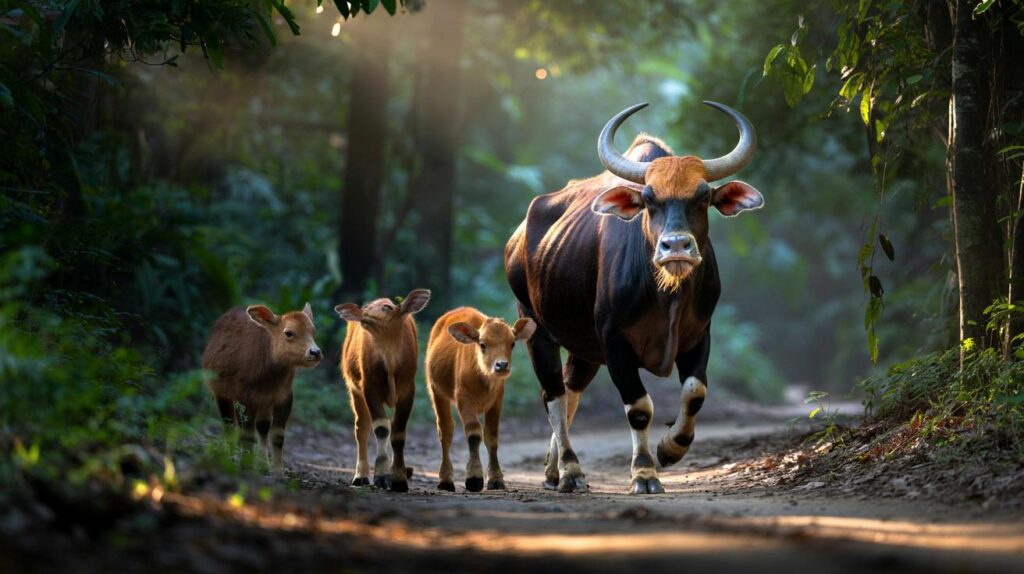
Deep inside Thailand’s Huai Kha Khaeng Wildlife Sanctuary, a silent camera recorded a female gaur guiding three calves along a shaded path. The clip has triggered cheers from conservation teams, who see evidence that years of patient protection are starting to pay off.
A quiet breakthrough in a world heritage forest
The scene comes from a UNESCO World Heritage stronghold that spans roughly 1.4 million acres. Rangers there have worked to keep poachers out and maintain habitat for rare animals, from tigers and elephants to shy forest ungulates. In the latest footage, a calm female gaur keeps a steady pace while three calves trail close behind, suggesting safety, food and space.
Gaur once roamed widely across South and Southeast Asia. Numbers fell as hunting pressure rose and forests shrank. Many countries now hold only scattered, fragile herds. Thailand’s sanctuary network bucks that trend by giving wildlife room to move and feed, and by limiting disturbance at critical times.
Three healthy calves walking with a relaxed adult signal more than a cute moment — they signal reproduction, survival and a forest that functions.
Why a trail camera matters
Trail cameras do not trample vegetation or frighten animals. They run day and night, in rain and heat, and build an honest ledger of what passes. For researchers, a single clip can confirm breeding, estimate juvenile survival and show whether habitats still meet basic needs.
- Breeding confirmed: a female with multiple calves points to recent, repeated reproduction.
- Juvenile survival: calves of different sizes suggest more than one birth cohort living through early risks.
- Habitat quality: relaxed behaviour implies cover, forage and reliable water nearby.
- Protection working: animals using trails in daylight often reflect lower poaching pressure.
These cameras have also underpinned other surprising findings across the region, including the return of species once feared lost. Each verified sighting builds evidence that targeted protection can repair damaged systems.
From fragile herds to living landscapes
Thailand’s Department of National Parks, Wildlife and Plant Conservation has invested time and staff in long-game recovery. That means training patrols, monitoring high-risk zones and sitting tight while forests heal. It also means allowing natural processes to resume, from seasonal grazing to predator–prey dynamics.
In Huai Kha Khaeng, those processes now sustain a roster of species that signals stability. Gaur need grasslands, forest edges and salt licks. Elephants shape clearings. Tigers keep herbivore numbers balanced. When all these pieces coexist, calves can grow, herd structures settle and genetic exchange improves.
| Key detail | What it shows |
|---|---|
| Location | Huai Kha Khaeng Wildlife Sanctuary, Thailand (UNESCO site) |
| Sanctuary size | About 1.4 million acres of connected forest |
| Species | Gaur (the world’s largest wild bovine), plus elephants, tigers and others |
| Evidence | Trail camera footage of one female leading three calves |
| Tool | Camera traps for non-intrusive, long-term monitoring |
| Wider pattern | Similar methods helped confirm rare species in other Asian forests |
| Public benefit | Healthier water, steadier soils and stronger food security |
The ripple effect for people
Healthy herds do more than delight scientists. By grazing and moving seed, large herbivores shape plant communities that hold soil together and store moisture. Forests that keep their animals tend to regulate water better, cutting flood peaks and smoothing out dry-season flow. Communities downstream gain from cleaner streams, safer slopes and steadier crops.
Wildlife recovery protects homes and harvests: better water, firmer ground and fewer costly shocks for families.
This logic mirrors success stories elsewhere. Protecting pollinators stabilises fruit and nut yields. Restoring oyster reefs filters murky estuaries and softens storm waves. In each case, bringing nature back pays public dividends that outlast any headline.
What this means for readers far from Thailand
You do not need to live near a world heritage forest to support results like these. Everyday choices and small contributions add up across borders and supply chains.
- Pick products that avoid deforestation risk, such as certified timber and palm-free alternatives.
- Back community-led conservation groups that patrol, plant and report illegal activity.
- Join citizen science where permitted, from local camera-trap schemes to urban wildlife counts.
- Travel with operators who respect distance rules, keep to trails and hire local guides.
- Support parks close to home by volunteering for habitat workdays or species surveys.
What to watch next
Researchers will look for repeat sightings over the next seasons. Growth rings in the story include calves reaching subadult size, the arrival of adult males, and mixed herds using wider ranges. A steady drumbeat of similar clips would suggest a population that is not just persisting but spreading into suitable corridors.
One clip begins the story; a chain of sightings proves recovery.
The species behind the moment
Gaur are powerful wild cattle built for dense forest edges and open glades. They browse and graze a mix of grasses, shoots and fruit. Herds often centre on females and young, while adult males may range alone outside the breeding season. Where people give them space, they tend to keep to cover by day and feed in the cool hours.
Their size demands energy, minerals and water. That makes salt licks, riverine strips and mosaics of grass and woodland vital. When poaching rises or habitat fragments, calves face the sharpest risks. The presence of three calves with a single cow hints at low recent disturbance and accessible forage.
Gains, gaps and the next set of tools
Camera traps are not a cure-all. They sample narrow lines of movement, and they can miss animals that avoid paths. Ecologists pair them with dung counts, track surveys and acoustic sensors to build a more complete picture. Rangers also study fire history, invasive plants and livestock incursions that nibble away at edges.
That broader toolkit helps answer hard questions: where to add patrol effort, which valleys carry the most traffic, and when communities need support to shift grazing or fuel collection. Effective programmes keep a feedback loop running between field evidence and decisions on the ground.
For readers curious about the practical side, a simple simulation shows why one clip matters. Imagine a landscape broken into ten sections. If cameras record calves in six sections across two seasons, managers gain confidence that breeding is not confined to a single pocket. With that, they can justify corridor work, water-point upkeep and talks with villages along dispersal routes. Small confirmations unlock larger, long-lasting gains.
The sight of a mother and her three calves is a gentle scene. It is also a ledger entry full of numbers: acres protected, patrol hours logged, seasons of forage restored and young lives survived. Those numbers point to a future where forests hold, water runs clearer and people feel the benefit at their taps, fields and kitchen tables.



Goosebumps—seeing a mum gaur stride calmly with three calves in a UNESCO stronghold feels like proof that patience works. Kudos to the rangers keeping poachers out and habitat intact. One quiet clip, but it whispers reproduction, survival and space. This is what “protection working” looks like in real life.
I’m excited, but truely curious: are trail cameras 100% non-intrusive? Do IR flashes, human scent during setup, or visible housings alter behaviour—or even tip off poachers when discovered? Any protocols?