
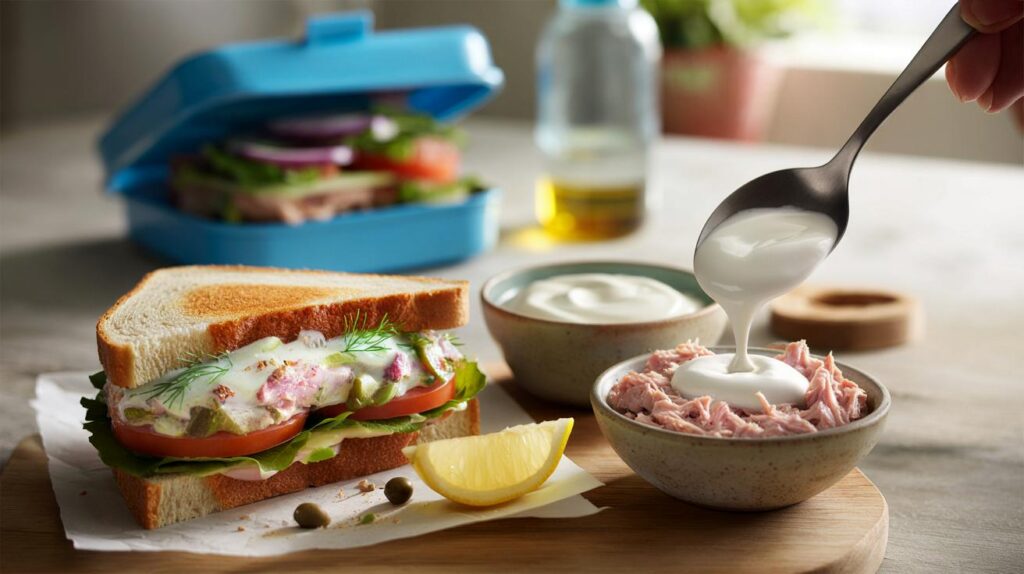
Britain’s lunchboxes deserve more than a dry mouthful. One tiny tweak turns an everyday tuna sarnie creamy, lively and properly filling.
Office diners, students and busy parents want speed, value and flavour in the same bite. A small pantry swap delivers all three, nudging a classic into fresher, lighter territory without denting your budget or your schedule.
The simple swap changing tuna sandwiches
Mayonnaise has long been the default binder in tuna fillings. It coats well and gives a rich mouthfeel. Yet many home cooks now reach for thick Greek yoghurt instead. The reason is simple: you keep the creaminess, gain a welcome tang, and trim the calorie load while lifting the protein count.
Swap 2 tablespoons of mayonnaise for 2 tablespoons of Greek yoghurt and you can save roughly 120–160 kcal while adding 5–8 g of protein.
That mild acidity from yoghurt brightens tuna’s savoury notes, helping herbs, capers or lemon sing. Because strained yoghurt is naturally dense, it binds fish just as well as mayo and holds up in a packed lunch without leaking.
What yoghurt really does in the mix
Greek yoghurt’s thickness comes from straining, which concentrates milk solids. The texture clings to tuna flakes and locks in moisture. Its lactic tang adds top notes that mayonnaise lacks, so the sandwich tastes fresher even hours later. A small splash of extra‑virgin olive oil restores a hint of mayo-like richness if you miss it.
Think of yoghurt as a creamy base with brightness, not a compromise—especially when you want lighter lunches that still satisfy.
How to make a creamier, lighter tuna filling
- Drain one tin of tuna packed in spring water; flake with a fork.
- Stir in 2 tablespoons of Greek yoghurt (2% or 5% fat for best texture).
- Add a squeeze of lemon, a pinch of salt and black pepper.
- Optional: 1 teaspoon Dijon mustard for warmth; 1 teaspoon olive oil for richness.
- Fold through chopped celery, red onion or gherkins for crunch and contrast.
- Spread on wholemeal bread, then add crisp leaves or sliced tomatoes.
Optional add‑ins that punch above their weight
- Herbs: dill, parsley, chives or tarragon for aroma.
- Briny boosts: capers or chopped olives to echo the sea.
- Heat: a few chilli flakes or a dash of hot sauce.
- Sweet balance: a few peas or sweetcorn kernels.
- Extra tang: a teaspoon of lemon zest or a splash of pickle brine.
Numbers that help you choose
| Ingredient (2 tbsp) | Energy (kcal) | Fat (g) | Protein (g) |
|---|---|---|---|
| Standard mayonnaise | 180–200 | 20–22 | <1 |
| Greek yoghurt, 0% fat | 25–35 | 0 | 8–10 |
| Greek yoghurt, 2% fat | 50–70 | 2–3 | 8–10 |
| Greek yoghurt, 5% fat | 80–100 | 5–6 | 6–8 |
Values are typical and vary by brand. Choose 2% or 5% fat if you prefer a rounder flavour and softer tang, especially when using lean, water‑packed tuna.
Which yoghurt and tuna to choose
Yoghurt: 0% fat gives maximum calorie savings and a sharper tang. A 2% pot lands in the middle—creamy, lowish in fat, and pleasantly balanced. A 5% tub tastes closest to a mayo-based filling and resists splitting when you add lemon or mustard. Aim for plain, unsweetened Greek yoghurt with no stabilisers for the cleanest flavour.
Tuna: Water- or spring‑water‑packed tins keep the mix from becoming greasy, which lets yoghurt shine. White albacore delivers big flakes and a milder taste; skipjack brings a darker colour and a more pronounced savouriness. Drain well to stop the filling turning watery.
If you miss mayo’s richness, whisk 1 teaspoon of olive oil into the yoghurt before folding in tuna. You keep the tang and regain body.
Safety, storage and health notes
- Refrigeration: Keep prepared tuna filling chilled and eat within 24 hours. Assemble sandwiches close to mealtime to protect texture.
- Allergy and intolerance: Greek yoghurt contains dairy; choose lactose-free yoghurt if needed.
- Mercury guidance: Most adults can enjoy 1–2 tuna sandwiches a week without concern. Those who are pregnant should favour smaller species and limit portions.
- Seasoning: Lemon and capers reduce the need for extra salt. Taste before adding more.
Cost and time: the £1 lunch test
Can this pass a strict budget? With own‑brand ingredients it often can. Example prices: a 145 g tin of tuna at 59p on offer, two slices of bakery loaf at around 10p, and two tablespoons of supermarket Greek yoghurt at roughly 20p. Add a squeeze of lemon and a pinch of herbs from the fridge and your total can sit near 95p. Even at full, non‑promo prices you usually land close to £1.20–£1.40—still strong value for a protein‑packed lunch.
Time matters on busy days. Draining, mixing and spreading rarely takes more than two minutes once the cupboard is organised. Keep a small jar of pre‑mixed yoghurt dressing in the fridge for the week; stir before using and fold through tuna just before you eat.
A two‑minute method you can memorise
Think 2–2–2: two tablespoons yoghurt, two flavour hits, two crunchy add‑ins. For flavour, start with lemon plus mustard. For crunch, use celery plus red onion. Adjust salt and pepper, then taste. If it feels too sharp, add a teaspoon of olive oil. If it feels flat, add a pinch of salt and a dash more lemon.
Ways to level up the sandwich
- Toast your bread lightly so it resists moisture and stays crisp.
- Layer leaves both sides to create a barrier that keeps crumbs dry.
- Switch to a wrap or pitta for a packable option that won’t squash.
- Add half an avocado in place of oil for creaminess and fibre.
- Finish with cracked pepper and a drizzle of olive oil if you want gloss.
Extra angles you may find useful
Protein target: If you’re aiming for roughly 25–30 g protein at lunch, combine one standard tin of tuna (around 20–24 g protein) with yoghurt (up to 10 g per 2 tablespoons) and wholemeal bread (around 6 g for two slices). You’ll hit the mark without leaning on heavy dressings.
Meal‑prep risk and reward: Mixing in advance saves time, but bread turns soggy when stored with the filling. Keep the tuna mix in a sealed tub and assemble just before eating. If you must build ahead, toast the bread and spread a thin layer of butter or hummus to form a moisture barrier.
Variation for kids: Use milder albacore, skip raw onion, and stir in sweetcorn. The yoghurt keeps things gentle while still packing protein and calcium.
Warm option: Pile the yoghurt‑tuna mix onto wholemeal bread, top with a slice of cheddar and grill until bubbling. The tang cuts through melted cheese, giving a balanced, café‑style toastie in minutes.



Love the 2–2–2 method and the yoghurt swap. One question: do you find 0% Greek yoghurt splits more with lemon or mustard? I’ve had yoghurts curdle—any tips to keep it smooth? Would 2% be the sweet spot for flavour vs calories, or is 5% worth it?