
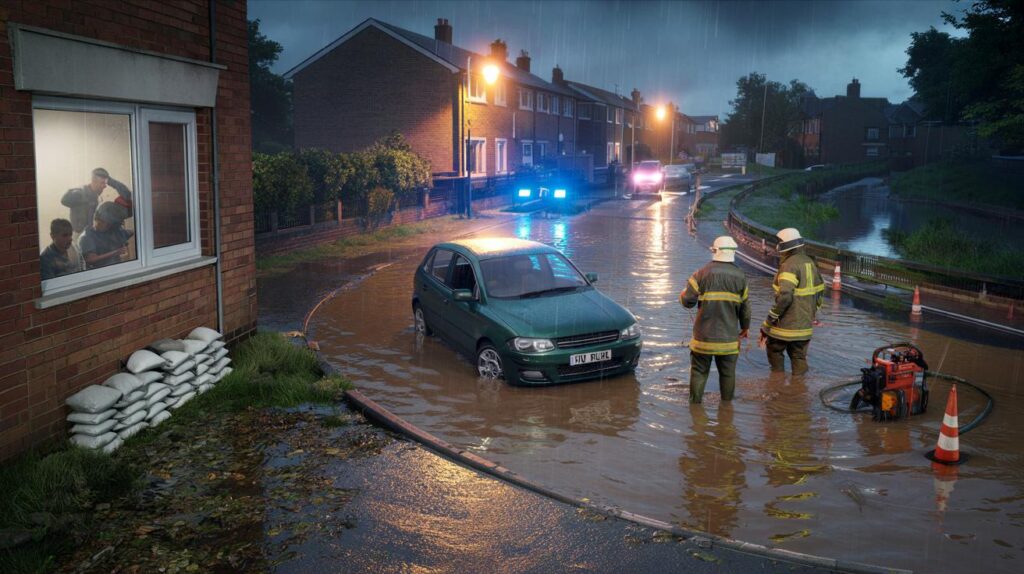
Sirens, standing water and sleepless nights framed a soggy weekend as relentless rain tested drains, motorists and patience across the north-west.
More than 20 hours of heavy rain pushed the region close to a standstill, with 28 flood warnings issued from Saturday into Sunday. Vehicles sat stranded in parts of Altrincham and Salford. Warrington declared a major standby incident as streets in Penketh filled like basins at the foot of a slope. Fire crews rescued three men from a car in Salford before dawn. By late morning, river levels eased and warnings were lifted, but the clean-up had only begun.
Where floodwater gathered
The heaviest impacts clustered around low-lying streets and funnel points. In Warrington’s Penketh, residents watched water surge downhill and collect where drainage struggled to cope. Sandbags arrived on doorsteps as crews worked pumps to protect homes and businesses. Locals described the familiar pattern: a few hours of intense rain, then a sudden conversion of roads into long, shallow ponds.
Greater Manchester saw alerts for Trafford, Stockport and south Manchester, while Altrincham and Salford reported vehicles stuck in brown, surging water. Across Merseyside, parts of Liverpool and the Wirral received alerts. In Lancashire, attention centred on areas near the River Darwen in Ewood and Waterfall in Blackburn.
Twenty-plus hours of rain. Twenty-eight flood warnings. One region adjusting plans, journeys and sleep to the weather’s tempo.
Pre-dawn rescue in Salford
Shortly after 04:00 BST in Swinton, Salford, rising water engulfed a car. Greater Manchester Fire and Rescue Service helped three men to safety, highlighting how quickly a routine journey can turn risky when floodwater hides potholes, lifts manhole covers and blurs the edge between carriageway and kerb.
Elsewhere, motorists who pushed through standing water risked breakdowns as engines inhaled spray and electrics failed. Onlookers filmed vehicles attempting to crawl through flooded dips, only to stall mid-way. Recovery firms reported busy phones through the night.
Warrington’s close call
A major standby incident signalled the strain on local services. Three warnings covered the area around Sankey Brook, where the gauge at Causey Bridge came within 10 centimetres of overspilling during the Sunday morning peak before levels fell back. Local representatives urged vigilance while crews distributed sandbags and monitored culverts.
In Penketh, householders described the fear of water creeping towards thresholds. Many who live at the base of slopes said they have endured repeat soakings during prolonged downpours and want longer-term fixes.
As river levels fell, the Environment Agency removed all warnings by late Sunday morning — relief, not a reason to drop guard.
Why drains struggled
Urban drainage works best when rainfall arrives in bursts with gaps to clear the gullies. This time, the rain barely paused. Leaves, grit and litter formed mats across grates. Once blocked, water ran around the obstruction, collecting in low points and bowing kerbstones. Ground already damp from earlier showers offered little storage, so runoff accelerated into the road network and smaller streams.
Older systems also face limits. Parts of the region rely on combined sewers that handle both wastewater and stormwater; long-duration downpours can overwhelm them. When pressure builds, backflow appears in unexpected places. Modern sustainable drainage — swales, permeable paving, rain gardens — helps slow the flow, but coverage remains patchy.
At a glance
| Duration of heavy rain | More than 20 hours |
| Flood warnings at peak | 28 across north-west England |
| Rescues reported | Three men helped from a car in Swinton |
| Sankey Brook, Causey Bridge | Peaked about 10 cm below flooding threshold |
| Met Office warning window | Saturday 09:00 to Sunday 06:00 BST |
Voices from the street
Residents in Penketh described anxiety as water advanced across the carriageway and lapped at driveways. Those at the base of the slope felt especially exposed, watching sheet flow race toward their homes. Many argued the drains could not keep pace and called for regular gully clearing before forecast deluges. Others praised the rapid arrival of pumps arranged locally, which helped pull levels down before interiors were breached.
Local MPs urged people to stay alert until rivers receded, acknowledging the stress for families who have faced repeat flooding. Town halls issued updates on sandbag depots and asked residents to report blocked drains and culverts.
Do not drive through floodwater. Depth can mislead, currents can unseat, and 30 centimetres can move a small car.
Transport and services
Standing water caused delays on local routes, with vehicles abandoned in trouble spots until levels fell. Bus operators adjusted services where roads became impassable, while rail lines on higher ground fared better. Utilities fielded calls about foul smells as combined systems vented stormwater. Insurance helplines experienced predictable spikes by mid-morning.
Street sweepers followed the retreating water, clearing debris from grates to speed drainage. Residents used brooms to divert trickles from their thresholds and laid sandbags to bridge gaps under gates and doors.
How to cut your risk today
- Move cars from low points and underpasses; park on higher ground where possible.
- Lift valuables and soft furnishings off floors; use plastic boxes for fast, dry storage.
- Clear leaves from grates near your home; sweep debris upstream so water finds the drain.
- Photograph any damage before tidying; it helps claims and future mitigation planning.
- Prepare a small grab bag with medication, chargers, torches and key documents.
- Check whether your policy includes flood cover and alternative accommodation.
- Fit door barriers or temporary flood boards if you have them; seal air bricks with covers.
- Avoid wading through water; hidden hazards include lifted manhole covers and contamination.
The wider picture
Long, soaking episodes like this test both personal resilience and public infrastructure. The region mixes old drainage with growing surfaces that shed water quickly. Investment in sustainable drainage and routine maintenance can reduce flash pooling, yet major storms will still probe the limits. Catchment management upstream — restoring wetlands, re-meandering streams, planting riparian trees — helps slow runoff before it reaches the culverts beneath our streets.
Weather scientists note that warmer air holds more moisture, raising the odds of short, intense bursts and prolonged spells that saturate ground. That does not mean every wet weekend is unprecedented; it does mean communities benefit from plans that assume heavier downpours will visit more often.
What to watch after waters fall
When warnings end, hazards linger. Tarmac may have lifted. Sinkholes can appear beside weakened verges. Electrical sockets near floors may need checks before use. If floodwater touched your garden, wash hands after handling soil and keep pets away until residues disperse. Dry homes slowly to prevent cracking; run dehumidifiers with windows cracked open for airflow.
For households seeking deeper protection, property flood resilience offers practical upgrades: non-return valves on drains, raised sockets, tiled ground floors, and flood-compatible plaster. Community flood wardens can monitor local risk points, share alerts and co-ordinate volunteer clear-ups. Schools and small firms benefit from simple continuity plans that list who calls whom, what kit moves first and where operations can relocate for a day.
Many asked how to interpret alerts. A “flood alert” signals possible flooding and a need to prepare. A “flood warning” means flooding is expected and action is needed. Both are prompts to shift cars, protect doorways and check on neighbours who may need a hand. Acting early often costs minutes and saves hours.



So we’re still building on floodplains and then acting shocked when roads turn into “long, shallow ponds”? After twenty hours of rain, the pattern is painfully clear. Colour me unsurprised, but realy frustrated.
Why did the gauge at Causey Bridge come within 10 cm of overspilling if alerts were active? Were culverts monitered continuously, or did blocked grates tip it? Data links, anyone?