
Winter pantries often hide a heartbreak: shrivelled fruit and wasted work. A tiny pre-storage habit can change that story.
Across the UK, growers and allotment holders report the same pattern. A quick, careful check at harvest turns autumn baskets into winter bowls. Time it. Two minutes per crate can spare months of flavour.
The moment of picking shapes what happens next
Pick at the right stage
Harvest fruit at the right stage, not too green and not overripe. A mature apple snaps cleanly from the spur and shows brown seeds. Pears lift with a gentle tilt but finish ripening off the tree. Overripe fruit breaks down fast and invites mould. Underripe fruit shrivels because it never finishes its natural ripening pattern.
The two-minute step that changes your winter
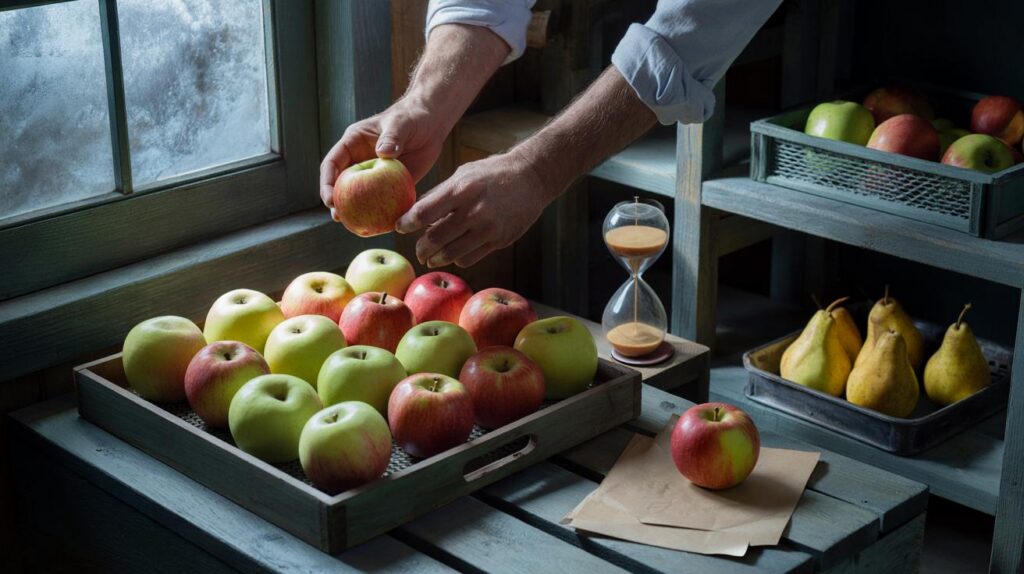
Stand by the crate before you head to the store room. Take two minutes. Scan, feel, and separate. Handle each fruit by the stalk. Set flawless fruit on a dry, breathable surface. Move anything bruised into a “cook soon” pile. You choose quality over speed, and you buy yourself weeks of calm later.
Two minutes at the crate—inspect, separate, and lay fruit in a single layer—can carry your harvest into January.
Sort to preserve, not to fuss
Spot small defects before they spread
Minor blemishes trigger major losses. Soft spots, tiny punctures, or scab lesions often turn into rot centres. Don’t leave them to mingle. Keep sound fruit together and redirect the rest into batch cooking, chutney, or freezing.
- Lift fruit, don’t squeeze it. Keep the natural bloom on the skin.
- Check for cuts, bruises, wasp stings, or cracked stalks.
- Set aside doubtful fruit for same-week cooking.
- Lay sound fruit in a single layer; avoid stacking.
- Label the crate with the variety and the date.
Handle and organise for the long haul
Use wooden slats, mesh racks, or open crates. Keep varieties apart. Early apples go in one tray, keepers in another. Rotate stock with a simple rule: first in, first out. Keep a small notepad or marker to track when a tray went in and when you last checked it.
Place matters more than you think
Cool, dark and aired beats fancy kit
A steady, cool space keeps fruit calm. Aim for 8–12°C in a cellar, shed, or porch cupboard. Darkness slows mould. Fresh air limits stale humidity. Don’t store near a boiler, a sunny window, or a vibrating appliance. Keep fruit apart from onions and potatoes, which add moisture and odours.
Aim for 8–12°C and 85–95% relative humidity. Cool, dark and a gentle airflow let fruit rest instead of rush.
Move air without drying the fruit
Space the trays. Leave a finger-width gap around each fruit. Use slatted shelves or wire racks to let air move under the trays. Crack the door once a week for a short airing. If the room feels bone-dry, place a shallow tray of water nearby, away from the fruit, to lift humidity.
| Fruit | Ideal home storage temp (°C) | Relative humidity (%) | Typical storage length | Ethylene note |
|---|---|---|---|---|
| Apples (late varieties) | 3–8 | 90–95 | 90–180 days | High emitter; keep away from leafy veg |
| Pears (European) | 2–5 | 90–95 | 30–90 days | High emitter; ripen at room temp when needed |
| Quinces | 4–8 | 85–90 | 30–60 days | Moderate emitter; very fragrant |
| Persimmons (kaki) | 8–12 | 85–90 | 20–45 days | Emitter; handle softly to avoid splits |
If your cellar cannot reach the cooler end for pears, keep them in the chilliest corner and plan to eat them first. You can ripen pears on the kitchen counter for a day or two, then chill leftovers again to slow them down.
Weekly rituals that stop rot in its tracks
Ten-second scan per tray
Once a week, take a slow look. Lift one or two fruits from each corner. If you see softening, dark spots, or a musty smell, remove the culprits. Wipe the tray if any juice leaked. The rest stays safe.
Layout that buys you time when things go wrong
Leave a few centimetres between fruits. Use separate trays for each variety. Slip a square of clean paper under a suspect fruit if you need to watch it for a day. If rot appears, quarantine that tray and use its contents promptly. Distance limits damage.
One bad apple can seed a dozen mould patches. Space, paper, and quick decisions stop the domino effect.
From autumn baskets to winter bowls
Keep flavour without jars or freezers
This method relies on habit, not hardware. You harvest at the right stage. You sort for two minutes. You store in calm conditions. Then you cook the bruised fruit into compote, pies, or sauce the same week. Every step uses what you already have and keeps food moving to the plate.
Why this pays off during a cost-of-living squeeze
A 10 kg crate of apples can cost £15–£25 if you buy it. If you grow your own, it carries your time and care. Losing half that crate to rot hurts either way. A quick triage and a weekly scan protect that value. Families get fruit for packed lunches in January without extra shopping runs.
Useful extras you can try
Simple kit that helps without breaking the bank
- A basic fridge thermometer to track the room temperature.
- A cheap hygrometer to check humidity near the trays.
- Brown paper bags to ripen pears or shield delicate fruit.
- Soft pencils and card labels for dates and varieties.
- Newspaper sheets to separate layers if you must stack briefly.
Ethylene, neighbours and what to keep apart
Fruit breathes out ethylene gas as it ripens. Apples, pears and persimmons give off plenty, which speeds ripening nearby. Keep them away from cabbage, kale and salad greens. Don’t store fruit with onions or potatoes, which shed moisture and odours. If you keep bananas in the house, sit them far from any ripening bowl.
A quick plan you can copy this weekend
Pick for one hour. Spend two minutes per crate to sort and lay fruit in a single layer. Label and store in the coolest, darkest space you have. Each Sunday, budget ten minutes to check every tray. Move anything doubtful into the kitchen. Cook or freeze that fruit the same day. You turn small habits into steady supplies.
Risks, trade-offs and what to expect
Cold snaps can push a shed below zero. Use old towels and cardboard under trays to buffer cold. Heatwaves can spike a garage above 15°C. Open the door at night and close it at dawn to keep the coolest air. If mould appears, act fast and learn the lesson for next week. Different varieties behave differently. Late keepers such as Bramley or Granny Smith last longest. Soft dessert apples want eating sooner. The pattern becomes clear after one season of notes and labels.



Just tested this on my first two crates: quick scan, softies to “cook soon,” labels on the rest. Honestly took under 2 minuts and already feels calmer. Curious to see if we make it to January without the usual mush. Thanks for the practical, no-gadget advice! 🙂
120 days sounds optimistic. In a semi-heated flat without a true cellar, does 10–12°C still happen reliably? Any tips besides a hygrometer for keeping humidity above 85%?