
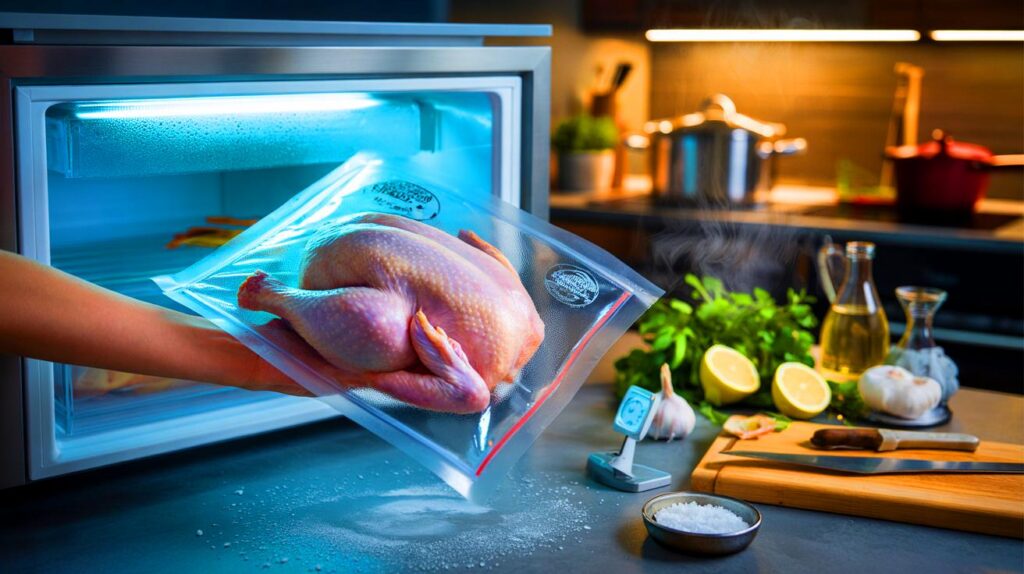
You tidy the freezer and spot a chicken dated two years ago. Keep it for dinner or send it packing?
Many households face this moment between batch-cooking sessions and heaving drawers. You want a fast, confident answer that saves money without risking a bad night. Here is how to judge it in half a minute, and how to cook it so it still tastes good.
Risk or rougher texture: what two years in deep-freeze really means
Freezing at −18 °C halts bacterial growth. That matters if the cold chain was never broken and the packaging stayed sealed. In that scenario, time affects flavour and tenderness more than safety. The longer the freeze, the more moisture migrates, and the more likely the surface dries.
At −18 °C with no thawing episodes, age in the freezer reduces quality, not safety. The question is texture, not germs.
Freezer burn shows up as pale, white or grey patches. It looks alarming but it is only dry meat where ice has sublimated. You can trim these areas before cooking. Trouble comes with odours, unusual colour, or a slimy feel once thawed. Those are the red flags that mean bin it.
The 30-second test: your quick yes–no checks
Stand at the freezer with the packet in hand. You have half a minute to decide whether it deserves a careful thaw.
- Check the date and label. If it is a whole bird or raw pieces frozen at home, two years is long, but not an automatic write-off.
- Scan the packaging. Tears, a loose seal or a swollen bag suggest air or temperature swings. That means quality suffered and safety could be uncertain.
- Look at ice. A thick rim of frost or large, pebbly ice crystals point to long storage or partial thawing during outages.
- Examine the surface through the bag. Patchy white or grey areas are freezer burn. Trim later if everything else looks normal.
If the pack is intact, the ice layer is thin, and the surface looks normal, move to a slow fridge thaw and do a final smell–texture check there.
How long the quality really holds in the freezer
These windows reflect best eating quality at −18 °C or colder when packaging is tight and the temperature stays rock-steady.
| Item | Best quality window | Notes |
|---|---|---|
| Whole chicken, raw | Up to 12 months | Vacuum-sealed birds hold texture better. |
| Chicken pieces, raw | 6–9 months | More surface area means faster drying. |
| Any raw poultry | 6–12 months | Beyond this, quality drifts; safety depends on temperature history. |
| Cooked chicken | Up to 3 months | Season first, cool fast, wrap tight before freezing. |
| Minced/ground chicken | 2–3 months (3–4 if vacuum-packed) | Finer grind oxidises faster, so quality fades sooner. |
Two years sits beyond those quality targets, especially for pieces. If your inspection passes, you can still cook it. Just manage expectations and moisture.
Thawing and cooking that keep you safe
Thaw the right way
Defrost in the fridge on a tray to catch drips. Plan 24 hours for small packs and up to 48 hours for a whole bird. Skip worktop thawing. That keeps the surface warm while the centre stays frozen and invites trouble.
Microwave defrosting works if you cook straight away. Keep rotations short to avoid partially cooking the edges.
Cook to a reliable core temperature
Use a thermometer and aim for 75 °C in the thickest part of the meat. Check more than one spot if pieces are uneven. Rest the meat for a few minutes to finish carry-over cooking.
Target 75 °C at the centre; verify with a thermometer rather than guessing by colour or juices.
If it passes but tastes tired: smart salvage
Time dries meat. Moist methods bring it back. Choose dishes that add liquid and fat, and that forgive a firmer texture.
- Poach, then shred into soups, congee, ramen or a spiced broth.
- Simmer gently in a curry, chilli, stroganoff or creamy pie filling.
- Braise pieces under a lid with aromatics, stock and a splash of oil.
- Brine for 4–6 hours (6% salt solution) to restore some juiciness before cooking.
- Trim freezer-burnt patches; cube the rest for fried rice or tacos where sauce carries flavour.
A butcher’s trick helps for next time: portion a whole bird before freezing. Smaller pieces freeze faster and form fewer internal ice pockets, which means less drying on thawing.
Prevent the next mystery chicken
Label every pack with cut, weight and date. Keep a simple freezer list on the door and use oldest first. Wrap tightly with minimal air. Double-wrap or vacuum-seal if possible. Store poultry deep in the freezer, not in the warm door shelves.
Fit a cheap freezer thermometer and aim for −18 °C or below. If you had a long power cut or you find meat that thawed and refroze, do not risk it. Drip loss and odd odours after thawing are your signal to let it go.
What to do if you are unsure after thawing
Open the pack and smell. A clean, neutral scent is fine; sour, sweetly rancid or sulphurous notes are not. Touch the surface. It should feel moist but not sticky or slimy. Look at the colour. Dull is acceptable; green or iridescent sheens are not. Any doubt means you stop there.
Money, waste and a quick kitchen calculation
Households waste kilograms of meat each year. One minute of labelling saves pounds and prevents awkward decisions later. A £5 thermometer and a roll of freezer bags can rescue far more in food value over a winter.
If you batch-cook regularly, schedule a monthly “freezer first” week. Build meals around the oldest packs. Rotate stock from back to front. Set phone reminders at the six and nine-month marks for poultry, so you cook it while it still tastes its best.



Two-year-old chicken? So… basically a time‑capsule dinner. Brave or bonkers?