
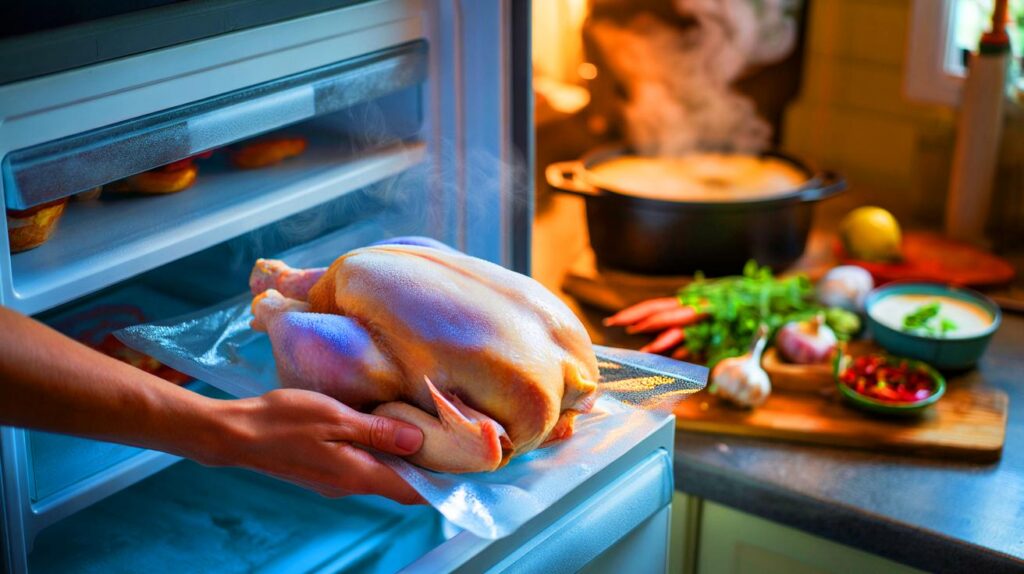
There’s a mystery bird at the back of your freezer. It’s dated, it’s frosty, and dinner plans hang in the balance.
Across thousands of kitchens, a long-forgotten pack of chicken surfaces during a clear-out. The question arrives fast: can you cook it, or should you cut your losses and move on?
The 30-second reality check: can you cook it tonight?
Freezing halts bacterial growth when food stays at -18°c or colder, and the cold chain hasn’t been broken. That means time in the freezer does not make chicken inherently unsafe. Quality drops first, not safety. Your decision hinges on a quick inspection.
- Packaging test: if the bag is torn, unsealed, ballooned, or packed with heavy internal frost, be cautious.
- Look test: grey-white, dry patches signal freezer burn. They’re not harmful but will dry the meat. Trim them off.
- Smell test: sour, rancid or “old fat” odours mean it’s not for the table.
- Touch test: any sliminess after thawing is a red flag.
- Colour test: unusual greenish tones or dark blotches that look wrong are grounds to bin it.
If it’s been frozen solid at -18°c, shows no off odour, no slime and only minor freezer burn, it’s generally safe to cook. Expect some dryness.
Defrost safely in the fridge, never on the worktop. Microwave defrost only if you’ll cook immediately. Cook to 75°c at the thickest part, with clear juices.
How long chicken stays its best in the freezer
These are quality windows, not hard safety deadlines, assuming -18°c and no thaw-refreeze cycle.
| Product | Quality window at -18°c | Notes |
|---|---|---|
| Whole chicken (raw) | Up to 12 months | Best tightly wrapped or vacuum-sealed |
| Pieces (breasts, thighs, wings) | 6–9 months | Texture holds better than long-stored whole birds |
| Cooked chicken | About 3 months | Beyond that, dryness and off-flavours creep in |
| Minced/ground chicken | 2–3 months (3–4 months if vacuum-sealed) | Finely ground fat oxidises faster |
| Homemade stock | 2–3 months | Freeze flat for easy portions |
| Marinated raw pieces | 3–6 months | High salt or acid can firm the surface over time |
Past these windows, safety still hinges on constant -18°c. What fades first is juiciness, aroma and tenderness.
What two years really means for safety
Two years sounds alarming, yet freezing stops bacterial growth. Problems arise when the bird partly thaws and refreezes, packaging leaks, or ice crystals damage the fibres. Thick frost inside the bag often hints at temperature swings. If the pack stayed buried and rock-hard in a stable freezer, safety risk remains low, while quality takes the hit.
Look for these clues of past warming: ice clumps melted and refrozen into sheets; pooled frost around meat; bag stuck to the meat. Any of these hints at compromised texture, and possibly taste.
Freezer burn decoded
Those pale, papery spots are moisture loss. They taste dry and cardboard-like when seared. Trim them away and use moist cooking to compensate. Severe burn across a wide area can leave disappointingly stringy results; redirect that meat into soups or shredded dishes.
Make a drier bird taste good
Once your check passes, treat older chicken gently. Moisture and low heat help rebuild tenderness.
- Wet brine: 5% salt in cold water for 2–4 hours after thawing brings back juiciness.
- Dairy marinades: yoghurt or buttermilk tenderise and protect proteins in the pan.
- Slow heat: braise, stew or poach rather than blast-roast; finish with butter or oil.
- Shred and sauce: pull the meat and fold into curry, chilli, ramen or creamy pies.
- Broth first: simmer bones or trimmings for stock; finish meat in the hot liquid.
Older frozen chicken shines in wet dishes: curries, noodle soups, pot pies, enchiladas and saucy stir-fries.
The safe-thaw and cook plan
Move the chicken to the fridge the day before cooking. Allow roughly 24 hours per 2.5 kg for a whole bird. Keep it on a tray to catch drips. Pat dry before seasoning; surface moisture fights browning. Aim for 75°c in the thickest point, rest five minutes, then carve. Refreeze only once it’s fully cooked and cooled quickly.
The quick decision tree you can use tonight
- Still frozen solid, well sealed, no odd smell after thawing? Cook with moisture and trim burn.
- Bag gassy, meat slimy or sour-smelling, colour looks wrong? Don’t risk it.
- Unsure about a slight off-note? Bin it and plan a cupboard supper instead.
Prevent the next freezer mystery
Label every pack with date and cut. Freeze flat in small portions. Wrap tightly with minimal air; double-wrap or use vacuum bags for long storage. Keep your freezer at -18°c and avoid stashing long-term meat in the door shelves. Rotate on a first-in, first-out basis each month when you meal-plan.
Many cooks break down whole birds before freezing. Large cavities trap air and form internal ice, which dries breast meat. Smaller pieces freeze and thaw faster, keeping texture closer to fresh.
Extra context that helps your choice
Freezing pauses microbes; it does not reset spoiled meat. If the chicken smelt wrong before freezing, no deep-cold miracle will fix it. Don’t wash raw chicken, as splashes spread bacteria around sinks. Clean boards and knives with hot soapy water, and keep raw and ready-to-eat foods separate.
If you’re budgeting, weigh the trade-off. A two-year-old pack that passes the checks can be turned into a hearty pot of soup, eight lunches of chicken rice with vegetables, or a family curry. If it fails the checks, the cheapest, safest move is to discard it and prevent a repeat with better labelling and rotation.



Two-year-old chicken = poultry archaeology. Can brining really undo that much dryness, or am I chasing a lost cause?
Great explainer. The -18°C point and the quick packaging/look/smell/touch checks make this feel doable on a weeknight. Bookmarked!