
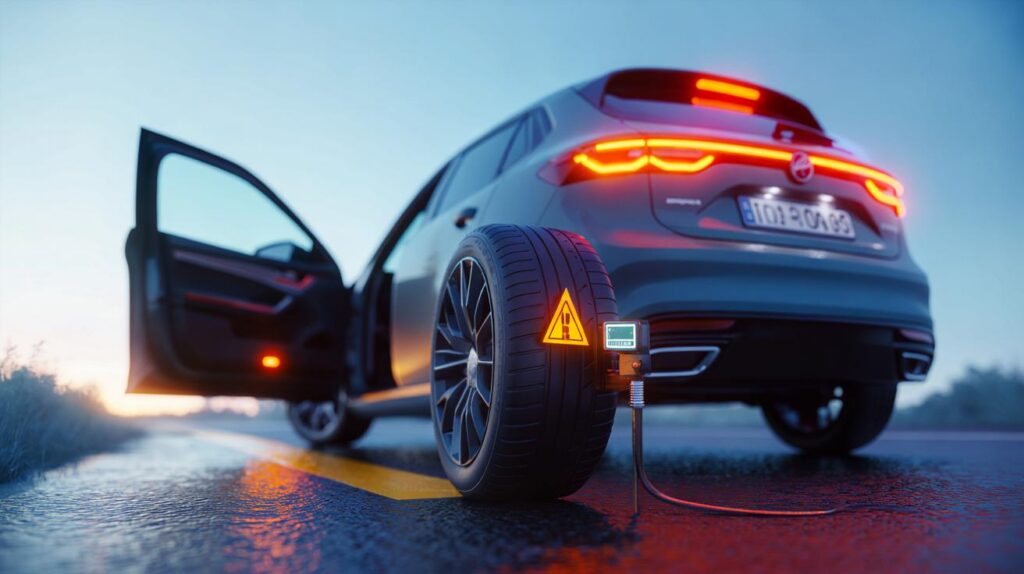
That glowing horseshoe with an exclamation mark is the dashboard equivalent of a drip from the ceiling. Irritating, persistent, awkwardly timed — and the only thing stopping a small problem becoming a motorway drama.
It starts on a cold morning, when the windscreen fogs and the radio mumbles headlines you barely hear. The car hums onto the ring road, coffee lid rattling, school bag sliding across the back seat. Then — ping. The little amber tyre light blinks on, small and smug, like it caught you out. You grimace, say you’ll sort it later, and carry on. Traffic thickens. Someone cuts in and you stab the brake a touch too hard. I felt that tiny pinch of dread. Two miles later, the steering goes just a fraction heavier to the left — subtle, but there. You wonder if it’s in your head. It isn’t. The car already knew.
Why that tyre light feels annoying — and why it’s right to
We’ve all had that moment when a warning light arrives in the middle of real life, not a neat diary slot. The tyre pressure symbol is especially naggy because it pops up after a chilly night or a fast run on the motorway. It also lingers, like it wants a conversation you don’t have time for. Still, there’s a reason it’s persistent. Cold mornings trigger warnings because the air in your tyres shrinks, and the system doesn’t care about your schedule. It cares about grip, braking and heat — the stuff that matters when things go wrong.
A friend called Amira spent a fortnight dismissing that light, topping up air at the supermarket, then blaming the forecourt gauge. On a Friday, she found a slim screw glinting in the tread — a slow puncture that could have turned ugly at speed. Breakdown services log thousands of tyre-related callouts every month, many starting with “the light came on last week”. It’s not drama for the sake of it. It’s an early whisper before the roar.
The tech behind the nag is simple enough. Some cars use sensors inside each wheel to measure pressure directly; others compare wheel speeds via ABS to spot a tyre rotating differently. Both systems are sensitive to changes. Air contracts roughly 1 psi for every 5–6°C drop in temperature — a proper frost can nudge you below the threshold. Most systems flag when a tyre falls around 20–25% under its set baseline, which means braking distances stretch and heat builds faster. Annoying, yes. Blunt? Also yes. Effective when you need it most.
What to do when it pops on — a calm, exact routine
Take a breath, find a safe place, and give the tyres a slow visual once-over. If one looks saggy or the car leans, don’t drive far. Check the pressure label on the driver’s door jamb or fuel flap for the right numbers — they differ front to rear, and if you’re fully loaded. Use a decent gauge on cold tyres if you can, and top up gradually. Listen for a hiss at valves and caps. If the light stays on after inflating to the sticker spec, you may have a small leak or a sensor playing tricks.
Life is busy. That’s why a simple habit helps: check pressures when you refuel, not “sometime soon”. Hot tyres read higher, so measure them again when cold to set your baseline. Run your palm around the tread for embedded gravel or metal. If you find a nail, leave it there so the hole stays plugged until repair. Keep an eye on one tyre that keeps losing a few psi — that’s your canary. Let’s be honest: nobody actually does that every day.
This isn’t about being a perfect car person; it’s about stacking the odds your way. Slow punctures hide in plain sight and often reveal themselves only under load or heat. The light is the nudge to pause, not panic.
“Nine out of ten scary blowouts start days earlier as a quiet, fixable leak,” a tyre fitter told me. “When the lamp talks, it’s cheap to listen.”
- Find the pressure sticker and match units (bar vs psi)
- Check when cold; top up in small bursts
- Inspect tread and sidewalls for cuts, bulges, screws
- Re-seat valve caps; consider a pocket gauge
- If the light returns, book a puncture repair or sensor check
Where this little light leads next
That amber symbol is a bore until the day it isn’t. It trims risk on wet roundabouts. It keeps heat in check on summer motorways. It spares you the call to the AA with a lorry whistling past your shoulder. There’s also money here: underinflated tyres scrub their edges, burn more fuel and go noisy long before they go bald. Run them right and the car feels calmer, lighter, surer in the hands. TPMS is not a babysitter, though. Think of it as a decent mate — the one who texts when you’ve left your bag at the café. It pings, you roll your eyes, and then you’re quietly grateful. Sometimes the smallest warnings are the most generous.
| Key points | Details | Interest for reader |
|---|---|---|
| Why the light triggers | Temperature drops, slow leaks, threshold set around 20–25% below baseline | Explains false alarms vs real risks |
| What to do next | Check sticker, measure cold, top up gradually, inspect tread and valves, re-check | Gives a quick, confident routine |
| Hidden benefits | Shorter stops, better grip, lower fuel use, longer tyre life | Saves money and stress over time |
FAQ :
- Can cold weather trigger the tyre pressure light?Yes — colder air contracts, dropping pressure by roughly 1 psi per 5–6°C. Top up to the door-sticker spec when tyres are cold.
- Is it safe to drive with the light on?If the car feels normal and no tyre looks visibly low, you can drive gently to a pump or garage nearby. If a tyre looks flat or the steering pulls, stop and get help.
- Do I need to reset the TPMS after inflating?Some cars reset themselves after a short drive; others need a button press or menu confirmation. Check your manual or the infotainment TPMS page.
- Why does one tyre keep losing pressure?Likely a slow puncture, a leaky valve core, or corrosion around the wheel rim. A repair shop can test it in a water bath and fix it properly.
- Can I rely on the fuel-station gauge?They’re handy but not always accurate. A small digital gauge in the glovebox keeps your baseline honest.



That little horseshoe light feels smug because it is—fine, I’ll check my tyers after coffee.