
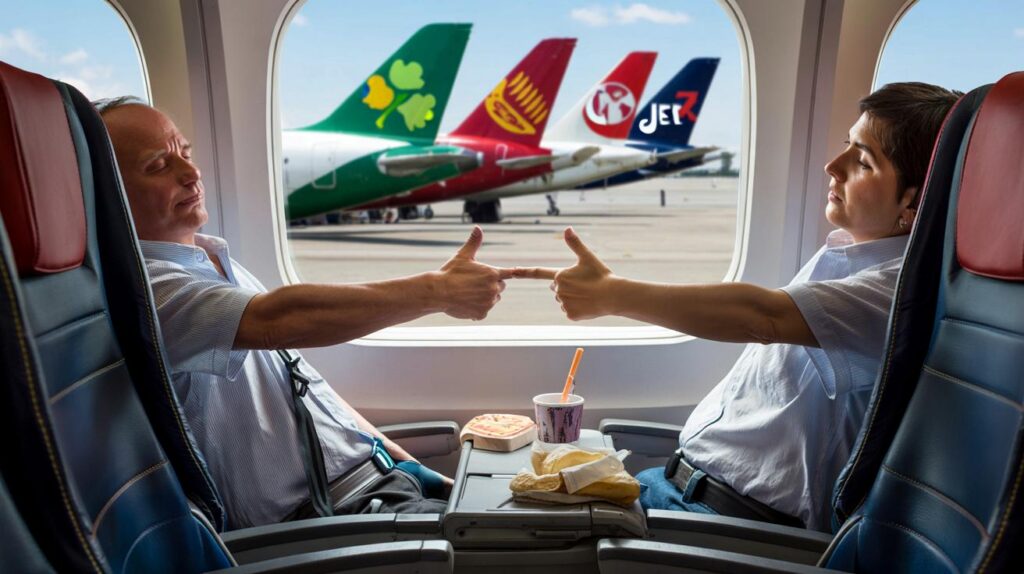
Short flights can feel long when inches disappear. New figures reveal where space tightens most, and which carriers still give your hips a breather.
Seat width varies more than many travellers realise, and that gap shows up the moment your elbows meet your neighbour’s. A fresh look at short-haul cabins names several airlines with the narrowest economy seats at roughly 17 inches, while others offer around 18. That single inch changes how you sit, eat and sleep, and it isn’t the usual suspects many people blame.
The numbers that decide your comfort
On European short-haul routes, standard economy width usually falls between 17 and 18 inches, measured from armrest to armrest. It sounds small. It feels big once you’re belted in. Research from consumer testers last year compared seat plans and cabin layouts and found clear winners and losers on width alone.
The narrowest economy seats come in at about 17 inches on several major carriers — and it’s not easyJet or Ryanair topping that list.
Who gives you 18 inches, who gives 17
Airlines using wider cabins on certain aircraft manage to offer roughly 18 inches in economy, while others come in at around 17. That one-inch swing sets the tone for your shoulders and knees for the whole flight.
- Widest seats (about 18 inches): Wizz Air, TAP Portugal, easyJet, Lufthansa.
- Narrowest seats (about 17 inches): Aer Lingus, Loganair, Jet2, Norwegian.
The takeaway is simple. If width matters to you, several budget and legacy carriers do provide 18-inch seats on many short-haul services. The tightest fits sit around 17 inches, shared by more than one brand. The worst offender isn’t easyJet or Ryanair this time.
Why a single inch changes the whole flight
Width controls how easily you keep your shoulders inside your space. It also governs how often you nudge the armrest and how stable your tray feels when you eat. A little more width reduces armrest sparring, makes seatbelts less pinching, and gives your thighs room to relax. Taller travellers and those with broader frames notice this immediately; parents juggling snacks and tablets do as well.
Legroom matters, too. Typical short-haul economy pitch sits in the 28–31 inch range. Pitch affects knees and the angle of your hips. Width affects the upper body and how you share a row. Balance both, but don’t underestimate the strain that narrow seats put on shoulders during a two- to three-hour hop.
Tricks to gain space without paying extra
Bulkhead and exit rows: room up front, trade-offs at your hips
Bulkhead seats give you clear space in front. You won’t stare at a reclined seatback. You also avoid knees knocking the magazine pocket. But many bulkhead and exit-row seats hide tray tables in the armrests, which can shave valuable width. You win on legroom, you may lose at the hips. If you choose these rows, check whether the armrests are fixed.
Back-row quirks and mid-flight moves
The rear cabin sometimes tapers or shifts galley and lavatory layouts. That can reduce the number of seats in the last rows on certain aircraft, creating a chance at an empty middle. You trade that for noise and foot traffic near the loos. If the seat map shows gaps at the back, it can work for you on shorter sectors.
Once airborne, scan the cabin discreetly. If you spot empty seats, ask the crew if you can switch after take-off. A polite request often gets a nod when the headcount allows. Passengers with specific needs — very tall, pregnant, recovering from injury — should mention them early to improve the odds of a move.
Ask early, ask kindly, and ask again once the doors close: empty middles are the cheapest comfort upgrade.
How aircraft type affects width
Aircraft shape sets a lot of the rules. The Airbus A320 family usually has a slightly wider fuselage than the Boeing 737 family, which often translates into broader economy seats when configured in a six-abreast layout. That’s why some airlines that fly mostly A320-series jets tend to hit the 18-inch mark, while carriers with 737-heavy fleets often land near 17 inches. Fleet mixes vary by route, so check the aircraft on your booking before you pay for a seat.
Cabin refits also change the picture. A single airline can offer different widths on different planes. Some refits add slimline seats to increase knee space without altering pitch; others install fixed armrests or move tray tables, trimming usable width. The same logo doesn’t guarantee the same feel across the fleet.
What to check before you book
Look for three details on the booking page: aircraft type, stated seat pitch, and any mention of seat width or “extra space” rows. If the airline doesn’t list width, use the aircraft type as a clue. Search the seat map for bulkhead rows, exit doors and missing middles near the rear galley. If you plan to work, consider an aisle seat for shoulder relief and easier movement. If you plan to sleep, a window gives you a wall to lean on, which matters more when width shrinks.
A quick comfort plan for different travellers
Broad shoulders: prioritise carriers and routes offering around 18 inches, then pick window seats to offset elbow contact. Bring a soft-sided jacket to pad the armrest.
Long legs: choose rows with extra pitch, even if it means a slightly narrower seat due to armrest tables. Angle your feet under the seat frame, not just into the magazine pocket space.
Families: aim for a block of three with a window. Keep the middle for the child to reduce armrest friction with strangers. Pre-board if offered, as installing child seats in tight rows takes time.
Key terms that shape your ride
Width: measured between armrests. It sets shoulder and thigh space. Pitch: the distance from your seat to the one ahead, measured at a fixed point on the frame. It sets knee space. Usable width can shrink if the armrests are fixed or house tray tables. Usable pitch can feel smaller if the seat ahead reclines or if the pocket bulges with safety cards and menus.
If you want to simulate the difference at home, place two chairs 17 inches apart and sit between. Add one inch, then repeat. The improvement feels modest for a minute and significant after an hour. On a two-hour short-haul with a full tray and a winter coat, it can define your mood for the rest of the trip.



If airlines switch between A320s and 737s on the same route, how do we check seat width before paying for a seat selection? Does the booking page reliably show the aircraft, or do we need SeatGuru/seat maps? Any tips for catching last-minute equipment swaps?
17 inches? Ouch. My elbows are already nervous.