
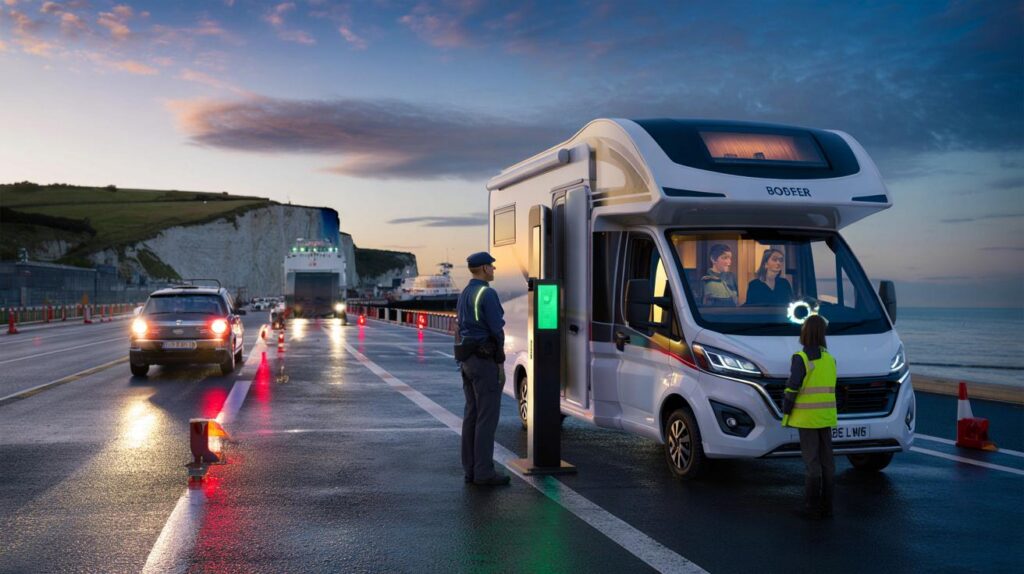
Border tech is changing across Europe. Holiday plans will still work, but the first crossing could feel slower and more hands-on.
From 12 October, the EU’s new Entry/Exit System begins. UK residents heading for short stays on the continent will face biometric checks before boarding or at arrival, with a phased roll-out that could vary by port.
What is changing on 12 October
The EU will switch on its Entry/Exit System (EES), a biometric register for non‑EU visitors making short stays in the Schengen area. UK travellers fall into that category. The scheme records each entry and exit and replaces passport stamping.
From 12 October, first-time EES enrolment applies to UK citizens visiting Schengen for up to 90 days in any rolling 180 days.
Officials will capture a facial image and take fingerprints the first time you cross after launch. The first enrolment takes longer than a normal check. Repeat crossings should move more quickly because your data sits in the system.
Who this hits most
Motorhome and caravan owners often stay near the 90/180 limit and cross at peak times. That combination magnifies queuing and schedule risk. Families travelling in one vehicle will enrol each person aged 12 and over for fingerprints and everyone for a facial image. Children under 12 do not give fingerprints, but they still need their passport scanned and a face image taken.
People with EU residency or a long‑stay visa are processed under different rules. The Irish Republic is not in Schengen, so trips between the UK and Ireland fall outside EES.
How the entry/exit system works
Border officers scan your passport, capture biometrics once, and register the date, time and border point. The system starts the 90 days counter automatically. It also flags overstays and previous refusals.
- First crossing after launch: allow extra time for photos and fingerprints.
- Later crossings: expect quicker processing, as your record already exists.
- No more passport stamps: the system logs every movement digitally.
- Data rules: biometric data is held for a set period and then deleted under EU law.
Where you enrol if you depart from Britain
Juxtaposed controls mean French border police check you on UK soil at three key departure points. Your first EES enrolment will likely happen there.
| Route | Border point | What to expect |
|---|---|---|
| Port of Dover (ferry) | French controls at Dover | Kiosks and officers capture biometrics before boarding. Queues may build at busy times. |
| Eurotunnel, Folkestone | French controls at Folkestone | Checks happen before the shuttle. LPG-powered vehicles remain prohibited on Le Shuttle. |
| Eurostar, St Pancras | French controls at St Pancras | Face and fingerprint capture on the concourse before security and boarding. |
Other sea routes, such as Newhaven–Dieppe, apply the same principle: you complete EES checks before sailing.
Authorities will phase the system in over roughly six months, so procedures and waiting times can differ by port until April 2026.
Impact on motorhome and caravan trips
Tourers often plan early ferries and tight arrival windows. The first EES enrolment can add 45–90 minutes during peaks. That could push a late afternoon campsite arrival past reception hours. Build a buffer into your booking and driving plan.
Borders may route larger vehicles to specific lanes. Follow signage for motorhomes and caravans, and keep everyone in the vehicle until instructed. Parents should prepare children for a quick face photo. The process is routine, but clear guidance speeds it up.
Documents to carry
- Passport with at least three months’ validity beyond your planned return date.
- V5C logbook (or rental paperwork), insurance certificate, and UK identifier on the rear.
- Breakdown cover proof and European accident statement.
- International Driving Permit if required for your licence type and destination.
- Safety kit: high‑visibility vests (one per occupant), warning triangle, spare bulbs if recommended.
- Emissions stickers where needed (Crit’Air in parts of France, Umweltplakette in German cities).
Ferries, Eurotunnel and Eurostar
Ferry operators allow domestic gas cylinders when turned off and secured; staff can ask you to demonstrate isolation. Eurotunnel does not carry LPG‑powered road vehicles on Le Shuttle, though motorhome domestic gas for cooking or heating may travel in limited quantities if switched off and declared. Always check the latest operator limits before you set off.
Measure your height with roof boxes, satellite domes, bikes and air‑con units fitted. Toll classes in France and Spain can change with height and weight, which shifts your cost. Vehicles over 3.5 tonnes may face lower motorway speed limits in parts of Europe.
Timelines and what comes next
The EU aims to stabilise EES operations through winter, with a gradual ramp‑up to cope with next spring’s holiday rush. UK ministers say they continue to work with EU partners to streamline the process and manage queues at British departure points.
Another change sits on the horizon: ETIAS, a digital travel authorisation, is scheduled for late 2026. The authorisation will be linked to your passport, cost €7 for most applicants aged 18 to 70, last up to three years, and be valid for short stays. Under‑18s and many over‑70s will not pay the fee. ETIAS does not replace a visa for work or study.
Track your days: the 90/180 rule applies across all Schengen countries combined, not per country.
Practical tips to keep your holiday on track
- Arrive earlier than usual for your outbound crossing, especially during half‑term and bank holidays.
- Keep passports in hand and remove hats and sunglasses for faster photos.
- Stagger toilet and snack breaks so your party reaches the kiosk together.
- Plan a flexible first night: choose a site with late check‑in or aires/stellplätze nearby.
- Use a 90/180 day calculator and keep a simple log of entries and exits.
- If you hold EU residency or a long‑stay visa, carry proof and present it proactively.
If you tour for weeks or months
Many motorhome owners loop through France, Spain and Portugal for winter. The EES automates your remaining allowance, so you no longer rely on stamps. A typical pattern looks like 88 days in the Schengen area, then a break in the UK or non‑Schengen countries before re‑entry. Croatia, Italy, Spain, France and others all count together. Ireland, the Balkans outside Schengen, and some microstates give you breathing space without using Schengen days.
Overstays can bring fines and future entry problems. If you plan volunteer work or paid gigs, check visa categories well ahead. Campsite receipts and toll records help you evidence movements if a border officer asks questions when you exit.
A final checklist for motorhome and caravan owners
- Service your vehicle and check payloads; many police checks target overweight vans.
- Confirm gas bottle rules with your operator 48 hours before departure.
- Store documents in a grab‑bag: passports, V5C, insurance, EHIC/GHIC, pet papers if relevant.
- Set expectations: explain to your passengers that a quick face photo and, for those 12+, fingerprints are part of the process.



If I enrol at St Pancras on Eurostar, does that make my next ferry crossing quicker, or do I need to do it again? We’re a family of five (three over 12). Any tips to avoid the dreaded 90‑minute queu at peak times?
Passport stamps out, fingerprints in—what could possibily go wrong?