
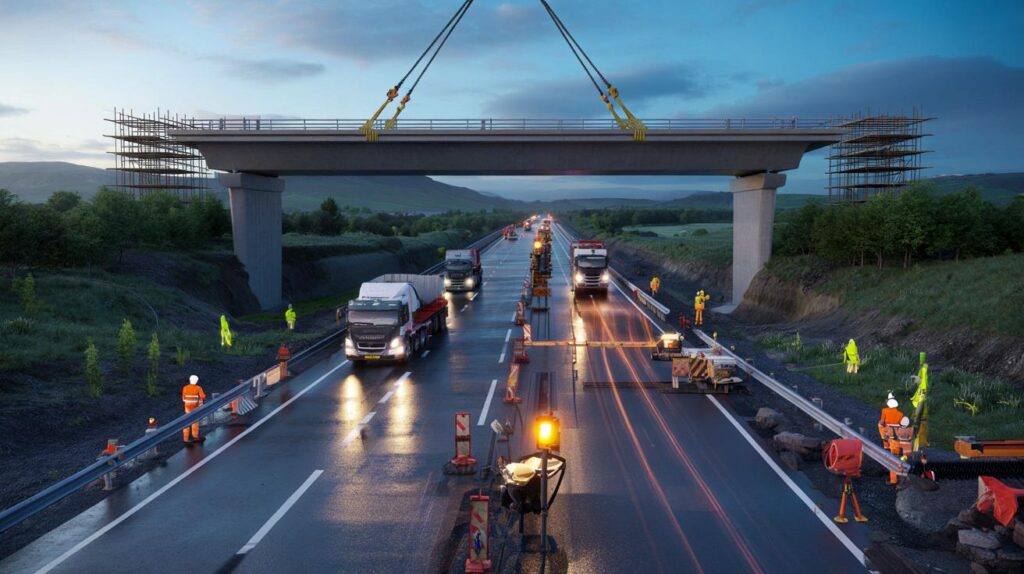
After years of jams, detours and white-knuckle overtakes on single-lane stretches, the UK’s billion‑pound A66 upgrade just crossed a line everyone on the route could feel. Work has tipped from early ground prep to full-scale building. Now comes the messy, decisive bit.
The first time I saw it, the verge outside Penrith was a chorus of beacons and diesel breath. A chain of lorries idled like patient cattle, while a crane swung slow over the fells, painting the sky with steel. We’ve all had that moment when a familiar road suddenly looks unfamiliar, as if it’s decided overnight to become something else.
I watched a crew lay the last panels of temporary barrier, boots thudding, radios crackling, a kettle steaming in the site canteen behind them. A supervisor grinned and tapped a laminated schedule: the huge milestone officials had hinted at was finally in black and white. I wrote the time down on a receipt and kept it in my pocket. The upgrade isn’t a rumour anymore. What happens next?
The milestone everyone felt
National Highways’ A66 Northern Trans-Pennine upgrade has slid into a new gear: every major section is now in the main build phase, with crews moving from earthworks to structures and junctions. On site, the shift is obvious. Fewer exploratory holes, more rebar cages. Less waiting, more pouring. Milestones are dry on paper and loud in real life.
Ask the haulier from Teesside I met by a lay-by. He pulled out a dog-eared notebook with journey times scrawled in biro, neat columns for rain and clear days. When sections go dual, his best days cut twenty minutes, sometimes thirty, and those minutes turn into wages, childcare pickups and one extra job before tea. For hauliers, minutes saved aren’t abstract—they pay the mortgage.
The milestone matters because it flips the roadworks rhythm. Early-stage projects nibble at edges; main works bite. Once structures rise, schedules tighten and the dominoes start falling in predictable sequence: bridges, drainage, blacktop, switchovers. It’s when disruption spikes and then, if the sequencing holds, starts to taper. The risk is higher, the visibility is better, and progress is easier to see through a windscreen.
What’s next on the ground
Here’s the immediate choreography. Expect rolling night closures, escorted convoys at off-peak times, and temporary speed limits that follow crews like a moving shadow. The trick for drivers is simple: plan for the worst half-hour and treat anything quicker as a gift. Use live works maps rather than only sat‑nav suggestions. They’re updated by the people holding the stop/go boards.
For locals and small firms, the rhythm is different. Delivery windows narrow, school runs change by five minutes, and Saturday football kicks off with a longer warm‑up in traffic. Let yourself over-communicate—tell customers what you know, even if it’s “we’ll text at 8am with the day’s diversion”. Let’s be honest: nobody actually reads every traffic bulletin every day. A single clear message beats five perfect PDFs.
Project teams sketch the next steps as a straight line: complete earthworks, lift beams, pour decks, surface, switch traffic, tidy up. Reality wiggles, but the direction holds. Below is how they’re framing the coming months, in their own words and in plain English.
“We’ve reached the point where the A66 stops being a promise and starts looking like the road people were sold,” a senior engineer told me at dawn. “That means more cones now, less pain later.”
- Structures: bridge beams lifted in sequences, with overnight closures and visible progress.
- Junctions: temporary roundabouts and lane shifts, then permanent layouts bedding in.
- Environmental works: culverts, planting, and wildlife crossings installed alongside surfacing.
- Traffic management: speed cameras calibrated to roadworks limits; patrols increased on switch nights.
- Community updates: drop-ins monthly, with site walks when it’s safe to host them.
Where this could take us
When big roads change, so do the stories we tell about a place. The A66 is more than a line on a map; it links work in Teesside to beds in Cumbria, freight to ferries, nurses to night shifts. Once dualled, it makes risky overtakes rarer and winter closures shorter, and it chips at the North’s lopsided travel times. Big roads shape small lives.
There’s a win beyond minutes saved. Safer junctions should mean fewer blue lights at 3am, fewer families waiting for a late call. Freight gets smoother. Bus operators can run tighter timetables. Tourists stretch weekends into full weeks because the drive doesn’t feel like a gamble. The economy doesn’t surge overnight; it quietly gains options.
And yes, the questions are still there: carbon, cost, the balance with rail and clean freight. The delivery team point to new habitats stitched along the verges, low‑carbon concrete trials, and a strict spoil‑reuse plan that keeps trucks off local lanes. None of it erases the debate. It just meets it on the tarmac.
There’s a human measure that doesn’t make glossy leaflets. Construction is loud and intimate. One Tuesday your kid learns a new word—“planer”—because the road sang through bedtime. Another day a neighbour texts that their commute, for once, felt easy. Live with a project long enough and its mood seeps into yours. That’s the real metric.
The milestone is a turning point, not a finish line. Crews will work through weather, holidays and the odd stubborn junction, and then another night you’ll drive a stretch that’s suddenly smooth, lights bouncing off new barriers. You might not celebrate out loud. You’ll notice. Share that moment with the person in the passenger seat and make it a story worth retelling.
| Key points | Details | Interest for reader |
|---|---|---|
| Main works milestone | All major A66 sections now in full construction with structures starting | Signals visible progress; what you’ll actually see on the road |
| What’s next | Night closures, traffic switchovers, bridge lifts, junction upgrades | Plan trips, avoid pinch points, reduce stress on busy days |
| Why it matters | Safety, reliability, regional links, and measured environmental steps | How minutes saved and safer layouts change daily life |
FAQ :
- Which project is this and where is it happening?The A66 Northern Trans‑Pennine upgrade, running between Penrith and Scotch Corner across Cumbria, County Durham and North Yorkshire.
- What exactly is the “huge milestone”?The project has moved the full corridor into main construction, shifting from prep works to building bridges, junctions and new dual carriageway sections.
- When will I first notice a difference?In the near term, through clearer construction progress and some traffic switchovers; the bigger benefits arrive section by section as each stretch opens.
- Will this cut journey times significantly?Yes, especially at former bottlenecks. The gains vary by time of day and weather, but reliability improves most.
- What about the environment and local communities?Expect wildlife crossings, new planting and drainage upgrades, alongside regular drop‑ins and updates to keep residents in the loop.



Great to see the A66 move into full build—about time. If the switchovers are managed well, this could finally kill those bottlenecks near Penrith. Hats off to crews working through the weather; please keep the live works map accurate and we’ll plan around the closures.